






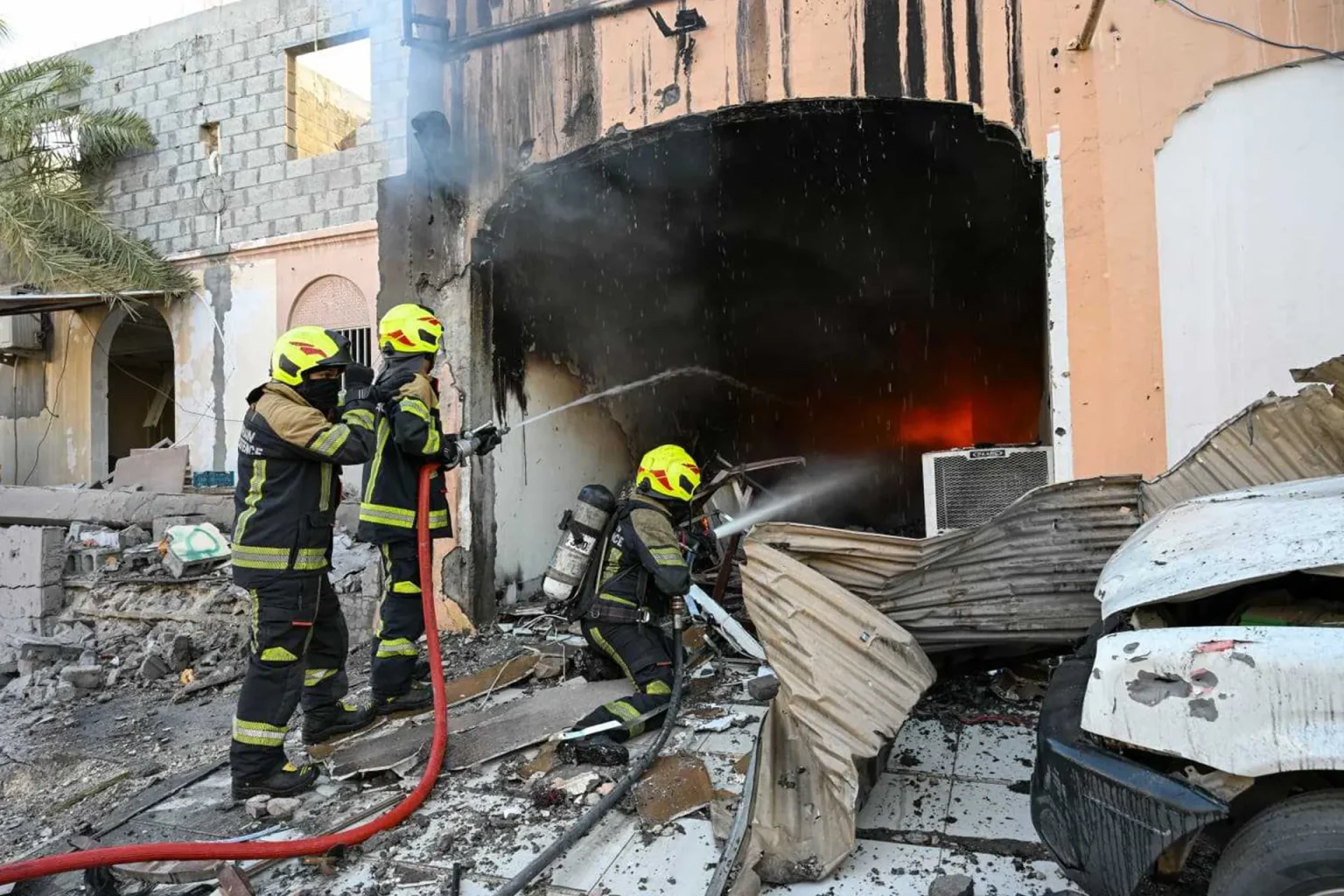

Iran attacks on Kuwait and Bahrain: immediate reports and claims
Arab states condemned new Iran attacks on Kuwait and Bahrain on Wednesday, calling for de-escalation and respect for sovereignty. The incidents, which the Kuwaiti military said involved hostile missiles and drones and triggered alarms in Bahrain, prompted statements of support from Qatar, Oman, Egypt and Jordan and raised fresh concerns over Gulf tensions and regional security.
What happened on the ground
According to official statements, Kuwait’s military reported intercepting “hostile missile and unmanned aerial vehicle” incursions near its territory, while Bahrain’s interior ministry said air-raid sirens sounded multiple times over roughly two hours. The incidents followed an Iranian Revolutionary Guard Corps statement claiming it had struck 85 U.S. military facilities in Kuwait and Bahrain with rockets and drones in retaliation for recent strikes on southern Iran.
Meanwhile, U.S. Central Command (CENTCOM) said it launched strikes against Iranian targets in response to attacks on commercial vessels transiting the Strait of Hormuz. The British Maritime Trade Operations agency reported three tankers were targeted during that period, causing minor damage, and later Saudi and Qatari authorities identified two of the affected vessels as national-owned tankers.
Regional reactions and Arab condemnations
Qatar’s foreign ministry strongly denounced the Iran attacks on Kuwait and Bahrain as a blatant violation of both states’ sovereignty and an affront to international law, urging restraint and a return to diplomacy. The ministry said Doha stands in full solidarity with Kuwait and Bahrain and called for efforts to preserve regional stability through dialogue and the ongoing memorandum of understanding framework.
Oman’s foreign ministry also condemned the strikes and expressed solidarity with the two Gulf states, warning that escalating military tensions threaten navigational safety, international trade flows and energy supplies. Oman reaffirmed its rejection of any actions that jeopardize civilian shipping or undermine regional security, according to its official release.
Egypt’s foreign ministry issued some of the strongest language, calling the strikes “a heinous targeting” and a flagrant breach of sovereignty that risks destabilizing the Gulf. Cairo called for restraint and urged regional actors to pursue de-escalation to safeguard wider Middle East stability. Jordan, in its statement, described the attacks as a grave violation of international law and reiterated full support for Kuwait and Bahrain’s steps to protect their territories and populations.
Why this matters for Gulf tensions and maritime incidents
The latest incidents underscore how quickly localized confrontations can widen amid ongoing U.S.-Iran clashes and competing regional interests. Analysts note that attacks affecting Gulf states and commercial shipping raise the economic stakes, since the Strait of Hormuz is a critical chokepoint for global energy shipments. Therefore, even limited damage to vessels or military installations can have outsized economic and security repercussions.
Furthermore, the claims by the Iranian Revolutionary Guard that it targeted U.S. facilities in Gulf states complicate diplomatic channels. Host nation responses and allied reactions could accelerate military posturing or prompt rapid international diplomatic activity aimed at preventing further escalation, according to security specialists following the events.
Context: U.S.-Iran confrontations and a fragile diplomatic track
These incidents come amid a tense backdrop of reciprocal strikes that began in late February, with Tehran reporting thousands of casualties from U.S. and allied actions and conducting retaliatory attacks that have at times hit military and civilian targets in the region. Washington and Tehran signed a memorandum of understanding in mid-June, mediated by Pakistan and Qatar, and have continued difficult negotiations toward a broader agreement, sources say.
Despite those diplomatic efforts, recent assaults on commercial vessels and strikes involving third-party territories have repeatedly tested the limitations of de-confliction mechanisms. The presence of U.S. forces in the region and their stated right to defend shipping and partner states increases the risk that local engagements could draw in external actors and widen hostilities.
Operational and legal implications for the affected states
Kuwait and Bahrain now face immediate operational questions about air defense readiness, maritime security patrols and coordination with allied forces. Authorities in both kingdoms have signaled intent to take necessary measures to protect sovereignty and civilian life, while also relying on diplomatic channels to seek support and verification of hostile actions.
Legally, the attacks—if independently verified—could constitute violations of state sovereignty and international norms governing the use of force. International law experts say affected states might pursue diplomatic protests at the United Nations or seek collective security measures through regional bodies, although such steps depend on evidence and alliance politics.
What to watch next
Observers should monitor official verification from independent sources and follow announcements from Kuwait, Bahrain, CENTCOM and the Iranian government for further details on targets and damage. Attention will also turn to diplomatic activity in Doha and Islamabad, where mediation efforts have been ongoing, and to any proposed confidence-building measures aimed at reducing the chance of miscalculation.
In the near term, shipping companies and national navies are likely to reassess routes and force protection measures for transits through the Strait of Hormuz, while regional capitals may brief partners and convene emergency consultations to coordinate responses to further maritime incidents or cross-border strikes.
Conclusion and next steps
The Iran attacks on Kuwait and Bahrain have intensified concerns about a broader escalation in the Gulf and renewed calls for restraint from Arab states and international actors. Going forward, key indicators to watch include the verification of claimed strikes, the pace of diplomatic contacts among regional mediators, and any changes in commercial shipping advisories. Stakeholders say the coming days will be critical in determining whether diplomatic tracks can outpace military responses and restore a measure of stability to the region.