


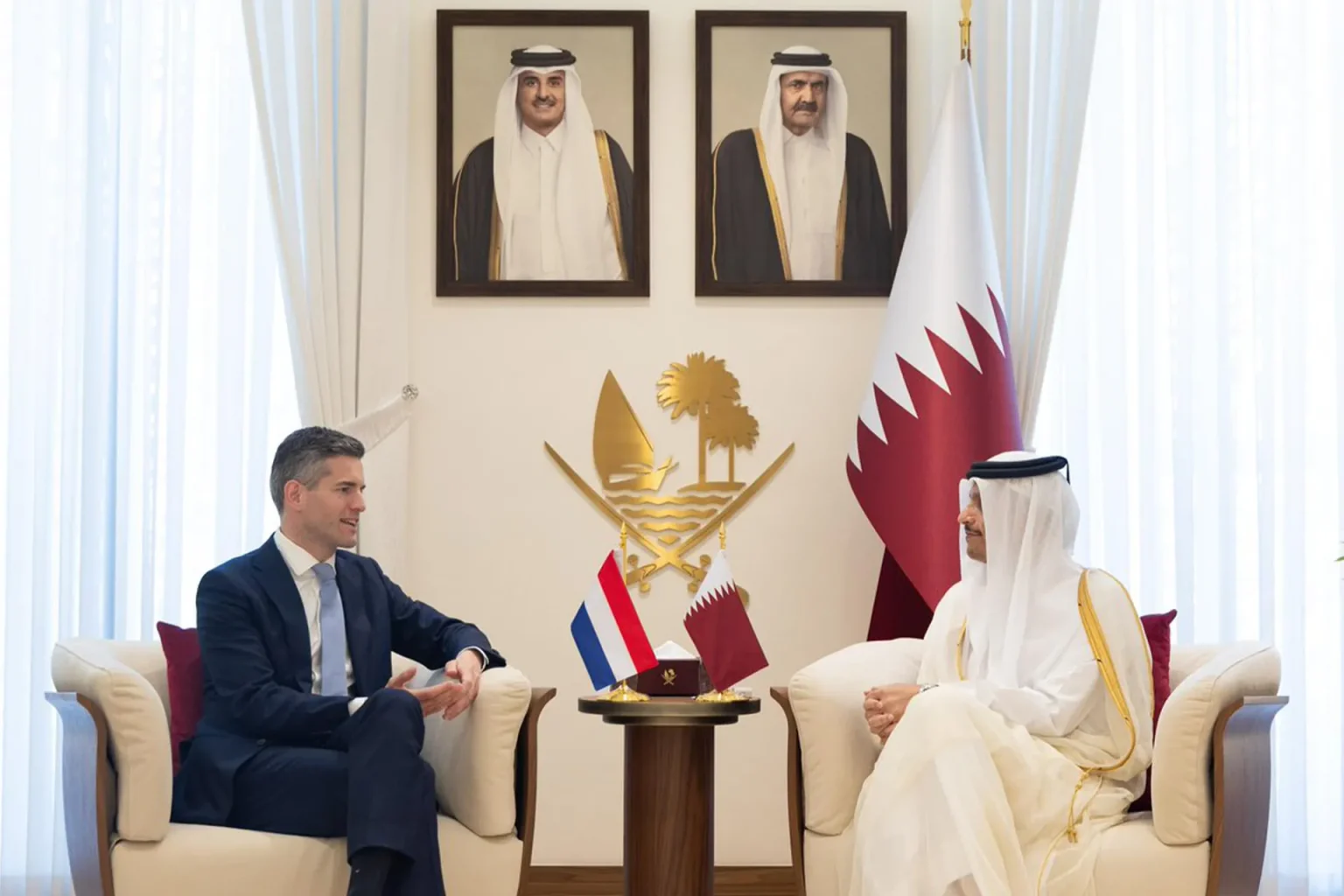

Qatar-Dutch relations: Doha hosts bilateral talks with Dutch foreign minister
Doha on Tuesday, June 23, 2026, hosted a high-level meeting that officials said aimed to strengthen Qatar-Dutch relations. Sheikh Mohammed bin Abdulrahman Al Thani, Prime Minister and Minister of Foreign Affairs of Qatar, received Dutch Foreign Minister Tom Berendsen to review bilateral cooperation and regional developments, the Qatari Ministry of Foreign Affairs stated.
The meeting, held at the prime minister’s office, brought both sides together to discuss practical steps to deepen diplomatic, economic and security ties. According to the ministry, the discussion also covered ongoing diplomatic efforts around recent US-Iran talks and related regional stability questions.
Key outcomes for Qatar-Dutch relations
Officials from both capitals described the talks as constructive, with an emphasis on bilateral mechanisms to enhance dialogue and expand cooperation. Qatar’s foreign ministry said the two ministers explored ways to support trade, investment and cultural exchange, while reaffirming commitments to diplomatic engagement on shared global issues.
Qatar stressed full support for diplomatic channels aimed at reducing regional tensions, a position reiterated during the meeting. Meanwhile, the Dutch delegation highlighted areas for collaboration on economic diversification and sustainable development projects, officials said.
Discussion on US-Iran talks and regional security
One of the central topics was the recent memorandum of understanding between the United States and Iran, a development Doha has framed as an opportunity for de-escalation. Qatar and Pakistan jointly announced the conclusion of high-level talks in Bürgenstock, Switzerland, and the meeting in Doha reviewed the diplomatic fallout and next steps from those sessions.
Sheikh Mohammed emphasized Qatar’s backing of ongoing US-Iran negotiations, saying Qatar supports efforts to resolve outstanding issues through dialogue and peaceful means, according to the ministry. The ministers discussed how diplomatic progress could contribute to broader regional security and open avenues for cooperation and economic recovery, the statement added.
Diplomats noted that a joint Qatari-Pakistani communiqué described the first day of the Lucerne lake summit as positive and constructive, with encouraging progress and the establishment of a mechanism for continued technical talks. Discussions in Doha considered how third-party facilitation and multilateral coordination might sustain momentum from the Bürgenstock summit and follow-up meetings.
Implications for European and Gulf security
For the Netherlands, engagement with Gulf partners is part of a broader European interest in stability and secure energy flows. Dutch officials signaled interest in coordinating with Qatar on counterterrorism, maritime security, and energy sector resilience, though the meeting did not produce public details of specific agreements.
Analysts say the Doha meeting exemplifies how middle powers and regional players are positioning themselves as interlocutors in a period of recalibrated US-Iran relations. Therefore, bilateral dialogue such as this could help shape pragmatic responses to security challenges while advancing economic and humanitarian objectives.
Areas of cooperation: trade, investment and diplomacy
Beyond security, both delegations addressed practical measures to expand trade and investment links. Qatar’s agenda reportedly included discussions on market access, potential partnerships in renewable energy and infrastructure, and opportunities for Dutch expertise in logistics and technology.
Additionally, ministers covered consular and cultural cooperation, including people-to-people exchanges and educational ties. Officials indicated that enhancing institutional contacts and business delegations could accelerate project development and mutual investment flows.
Diplomatic cooperation featured plans for more frequent consultations between foreign ministries and technical working groups to follow up on agreed priorities. These mechanisms are intended to maintain continuity of engagement and to translate broad commitments into implementable initiatives.
International context and diplomatic mediation
The Doha meeting occurred against the backdrop of intensive diplomacy following the June 15 announcement that the United States and Iran, mediated by Pakistan, reached a memorandum of understanding to address the conflict that began in late February. The Qatar-Pakistan facilitation and the Bürgenstock talks in Switzerland have been cited by officials as elements of a wider diplomatic effort to stabilize the region.
Qatari officials framed their role as supportive of negotiation processes that favor de-escalation and durable settlements. The Dutch side, according to the Qatari statement, reiterated support for multilateral approaches and international law as foundations for long-term security and prosperity in the Middle East.
Conclusion and what to watch next
The Doha meeting underscored a mutual interest in deepening Qatar-Dutch relations while aligning on broader diplomatic objectives tied to US-Iran talks and regional stability. Both ministries said they would maintain contact and pursue technical follow-up work to convert discussion points into concrete projects.
Observers should watch for joint communiqués or technical agreements in the coming weeks and for scheduled follow-up visits by ministerial or business delegations. The next expected milestones include the establishment of the technical mechanism announced at Lucerne and any subsequent rounds of mediated talks that could arise from the memorandum of understanding between Washington and Tehran.