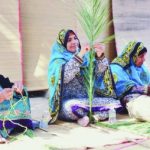








Kiswa of the Kaaba highlighted as new covering is unveiled for Hijri year 1448
Coinciding with the annual replacement of the Kiswa of the Kaaba at the start of Hijri year 1448, the Royal Institute for Traditional Arts, Wirath, outlined the artistic and craft processes behind the sacred textile. The institute showcased how hand embroidery, Islamic calligraphy and traditional crafts combine to produce the ceremonial covering used on Islam’s most revered structure in Mecca.
Who carried out the work and where the craft takes place
The institute said experts and master artisans carried out the work in workshops dedicated to preserving heritage techniques. The manufacturing, conservation and final installation took place as part of a coordinated event tied to the religious calendar in Mecca, Saudi Arabia. Officials described the Kiswa of the Kaaba as both a ritual object and an ensemble of sustained craft knowledge.
Techniques behind the Kiswa of the Kaaba
The Royal Institute emphasized the role of meticulous hand embroidery in producing the panels that bear Quranic verses and ornamental motifs. Artisans use gold and silver-wrapped threads to embroider verses, while skilled calligraphers lay out the compositions using Thuluth script for its legibility and visual authority. Furthermore, the production process integrates textile cutting, sewing and decorative finishing to create a unified ceremonial covering.
Embroidery and materials
According to the institute, embroidery is central to the Kiswa of the Kaaba’s visual impact. The use of luxury threads, often gold- and silver-wrapped, contrasts with the black ground to highlight the inscriptions and geometric forms. Meanwhile, the selection of silk and the dyeing process contribute to colorfastness and durability, factors that conservation specialists say are essential for a piece that is displayed and transported under strict conditions.
Role of Islamic calligraphy and design
Islamic calligraphy functions as both text and image on the Kiswa of the Kaaba, with the Thuluth script frequently used for its elegant curves and formal proportions. The institute noted that calligraphers work in tandem with embroiderers to ensure that the scale and rhythm of the letters read correctly when viewed at a distance. Additionally, decorative borders and repeating arabesque elements are designed to frame the inscriptions and maintain a coherent visual language across the textile.
Heritage skills and the importance of traditional crafts
The institute framed the Kiswa of the Kaaba as more than a ceremonial textile: it serves as an archive of traditional crafts and living skills. Training programs and apprenticeships help transfer knowledge from master artisans to a new generation, the institute said. Furthermore, workshops that preserve hand embroidery and calligraphic practices underscore the broader cultural value of maintaining artisanal techniques tied to national and religious heritage.
Education and craft transmission
Officials highlighted educational initiatives connected to the production cycle, including formal instruction in needlework, pattern making and script execution. These efforts aim to sustain a pipeline of skilled practitioners who can both produce and conserve future cloths. Therefore, the production of the Kiswa of the Kaaba doubles as a training ground for preserving traditional crafts in a contemporary context.
Conservation, symbolism and public presentation
Conservation specialists described how the Kiswa of the Kaaba embodies symbolic, religious and aesthetic values that require careful stewardship. After removal, panels frequently undergo documentation and conservation to ensure their long-term preservation. Exhibitions, when authorized, provide the public with interpretive context about materials, techniques and the historical evolution of the design.
Furthermore, the institute’s presentation underscored how the ceremonial covering conveys continuity: the same motifs and inscriptions have been rendered in successive generations while techniques have refined. The relationship between sacred text, material luxury and artisanal labor remains central to how the Kiswa of the Kaaba is experienced and understood.
Implications for cultural heritage and craft economies
The institute suggested that the visibility of the Kiswa of the Kaaba reinforces interest in craft-led economies and cultural preservation. Artisans involved in production support specialized supply chains for luxury threads, silks and textile tools, which in turn sustain related trades. Additionally, public programming and exhibitions linked to the textile can bolster understanding of Islamic calligraphy and hand embroidery among wider audiences.
Therefore, the practical demands of producing the covering also catalyze investments in training, materials research and conservation science. These efforts help to professionalize craft sectors while maintaining the intangible heritage associated with ceremonial objects.
What to watch next
Looking ahead, observers should watch for follow-up exhibitions or conservation reports that document the condition and history of the removed panels. The institute indicated that further educational programming and research initiatives will accompany the ongoing preservation of panels from the current covering. Readers can expect updates on training cohorts, material studies and exhibition timelines in coming months.
In conclusion, the recent change of the Kiswa of the Kaaba for Hijri year 1448 drew attention to the layered workmanship behind a central religious symbol. The Royal Institute for Traditional Arts, Wirath, framed the covering as a living repository of hand embroidery, Islamic calligraphy and traditional crafts, with ongoing efforts to preserve skills, materials and public understanding. Watch for conservation disclosures and educational events as the next steps in documenting and sharing this material heritage.