





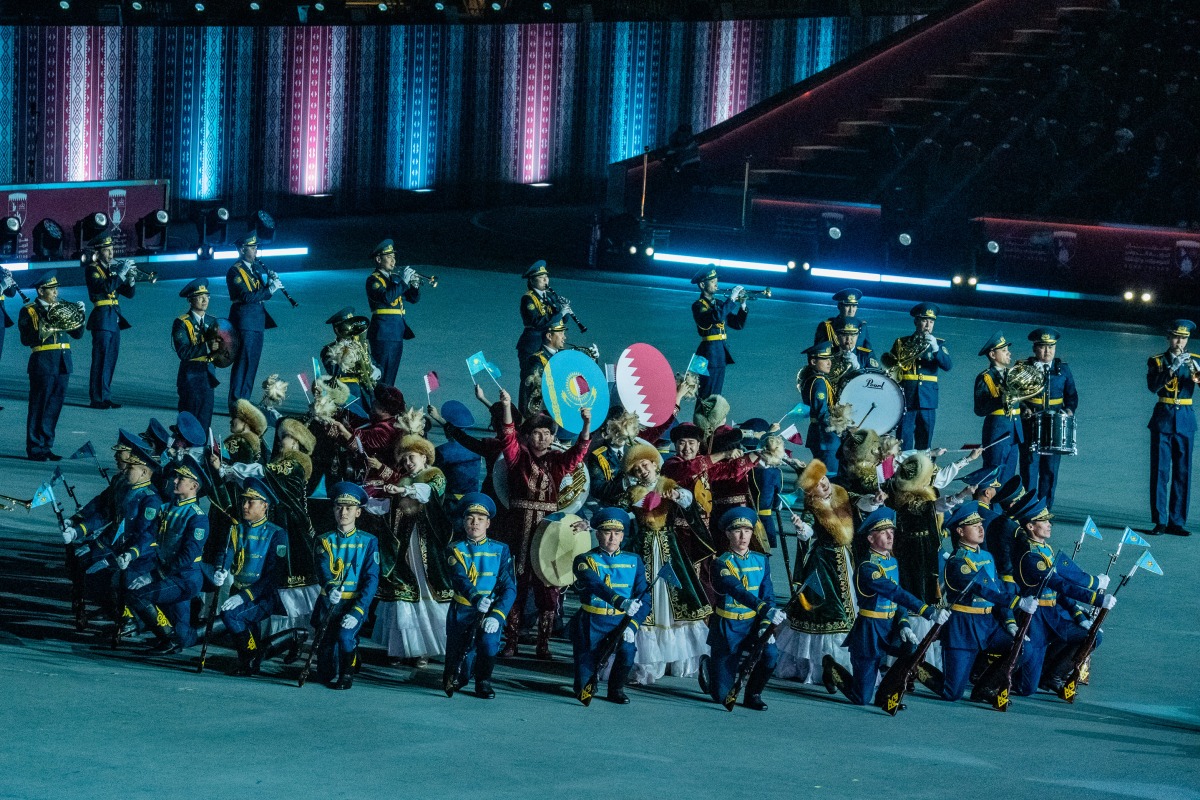

The Central Military Band of the Armed Forces of the Republic of Kazakhstan recently captivated audiences at The Pearl-Qatar with a performance of the patriotic song “Lel Ulla Ya Watani” by Qatari artist Fahad Al Hajri. This special showcase, held in Doha, Qatar, served as a gesture of gratitude following the band’s participation in the prestigious Doha International Music and Marching Festival 2025 (Doha Tattoo). The performance highlights the growing cultural exchange between Qatar and Kazakhstan.
The band performed across the streets and promenades of The Pearl-Qatar, integrating traditional Kazakh instruments into the rendition of the popular Qatari anthem. This event followed a series of impressive displays during the Doha Tattoo, where the Kazakh band demonstrated its skill alongside other leading military music institutions from Asia. The initiative underscores Qatar’s commitment to fostering international relations through cultural events.
Kazakhstan Military Band’s Performance at The Pearl-Qatar: A Symbol of Appreciation
The decision to perform “Lel Ulla Ya Watani” specifically was a deliberate one, according to organizers. It was intended as a direct expression of thanks to the State of Qatar for its hospitality and the opportunity to participate in the Doha International Music and Marching Festival. The song itself is a well-known and beloved nationalistic piece in Qatar, making the gesture particularly meaningful.
The Doha International Music and Marching Festival, often referred to as the Doha Tattoo, is a significant event in the region, attracting military bands and performance groups from around the globe. The festival aims to promote cultural understanding and showcase the artistic talents within armed forces. This year’s event, scheduled for 2025, featured a diverse range of musical styles and precision marching displays.
Showcasing Kazakh Musical Tradition
The Central Military Band of the Armed Forces of the Republic of Kazakhstan is widely recognized as one of Asia’s premier military music ensembles. Their performances at the Doha Tattoo included both traditional Kazakh musical pieces and contemporary arrangements. They skillfully blended brass and woodwind instruments with the unique sounds of instruments native to Kazakhstan.
Additionally, the band’s presentations emphasized the discipline and professionalism inherent in military music. Precise formations and synchronized movements were key components of their showcases, demonstrating the rigorous training undertaken by the performers. This attention to detail contributed to the overall impact of their performances.
The inclusion of traditional instruments in their performance of “Lel Ulla Ya Watani” at The Pearl-Qatar added a unique dimension to the song. It demonstrated a willingness to embrace and incorporate elements of Qatari culture into their own artistic expression. This fusion of musical styles was well-received by the audience.
The event at The Pearl-Qatar was not a formal concert, but rather a series of pop-up performances designed to engage the public in a more informal setting. This approach allowed for greater interaction between the band and the audience, fostering a sense of connection and shared appreciation for music. The choice of The Pearl-Qatar as a venue provided a picturesque backdrop for the performances.
The Kazakh band’s participation in the Doha Tattoo and subsequent performance at The Pearl-Qatar are part of a broader trend of increasing cultural exchange between Qatar and Central Asian nations. Qatar’s Ministry of Foreign Affairs has been actively working to strengthen diplomatic and economic ties with countries in the region, and cultural initiatives like this play a vital role in building those relationships. Further collaboration in various fields, including defense and tourism, is anticipated.
Looking ahead, the organizers of the Doha International Music and Marching Festival are expected to announce details regarding the 2026 event in the coming months. The success of this year’s festival, and the positive reception to performances like that of the Kazakh military band, will likely influence the selection of participating groups and the overall program. The continued development of cultural ties between Qatar and Kazakhstan remains a key area to watch, with potential for further artistic collaborations and exchange programs.
The impact of these cultural performances extends beyond mere entertainment; they contribute to a more nuanced understanding and appreciation of different cultures, fostering goodwill and strengthening international bonds. The use of Qatar’s cultural heritage alongside international acts is a deliberate strategy to promote its image on the global stage.