





Worldwide methane emissions are continuing to rise, jeopardizing global climate goals despite a 2021 pledge by numerous countries to curtail the potent greenhouse gas. A new warning delivered to the COP30 climate summit highlights that current efforts are insufficient to meet the targets established by the Global Methane Pledge. The findings underscore the urgency of drastically reducing methane levels to limit global warming.
The assessment, detailed in the 2025 Global Methane Status Report from the United Nations Environment Programme (UNEP) and the Climate and Clean Air Coalition (CCAC), indicates that while some progress has been made, the world is unlikely to limit warming to 1.5°C by 2050 without accelerating emission reductions. Methane, a powerful greenhouse gas, originates from sources like fossil fuel production and livestock, contributing significantly to the climate crisis.
The Challenge of Rising Methane Emissions
While carbon dioxide receives significant attention in climate discussions, the International Energy Agency (IEA) emphasizes methane’s substantial impact, estimating it’s responsible for roughly 30% of the increase in global temperatures since the beginning of the industrial revolution. Because methane traps heat more efficiently than carbon dioxide, reducing its concentration in the atmosphere offers a comparatively rapid pathway to mitigating temperature increases.
However, the latest report reveals a concerning trend: methane emissions are still on the rise, signaling a failure to meet existing reduction commitments. UNEP and CCAC project a net reduction of only 8% in methane emissions by 2030 based on current national policies and pledges. This falls considerably short of the 30% reduction goal outlined in the Global Methane Pledge, which has been endorsed by 159 countries and the European Commission.
“Reducing methane emissions is one of the most immediate and effective steps we can take to slow the climate crisis while protecting human health,” stated UNEP Executive Director Inger Andersen. This urgency is driven by methane’s shorter atmospheric lifespan – 10 to 12 years compared to carbon dioxide’s centuries – allowing for quicker climate benefits from emissions cuts.
The report stresses that leveraging existing legislation and regulations, such as those adopted by EU member states, is the most viable strategy to achieve substantial methane reductions by 2030. Implementing solutions like leak detection and repair programmes in the oil and gas sector, plugging abandoned wells, and optimizing water management practices for rice cultivation are key components of this approach.
European Commissioner for Energy Dan Jørgensen acknowledged the need to expand the use of technological solutions to help industries diminish their methane output. He also asserted, “The Global Methane Pledge has transformed ambition into tangible progress,” highlighting the positive momentum already generated. Jørgensen pointed out that reducing methane emissions brings added benefits, like improved air quality and stronger economies.
Cost-Effective Mitigation Potential
According to the report, over 80% of the required 2030 methane emission reductions can be achieved at a low cost. The energy sector provides the largest mitigation potential, accounting for 72% of the overall reduction target, followed by the waste management sector (18%) and agriculture (10%).
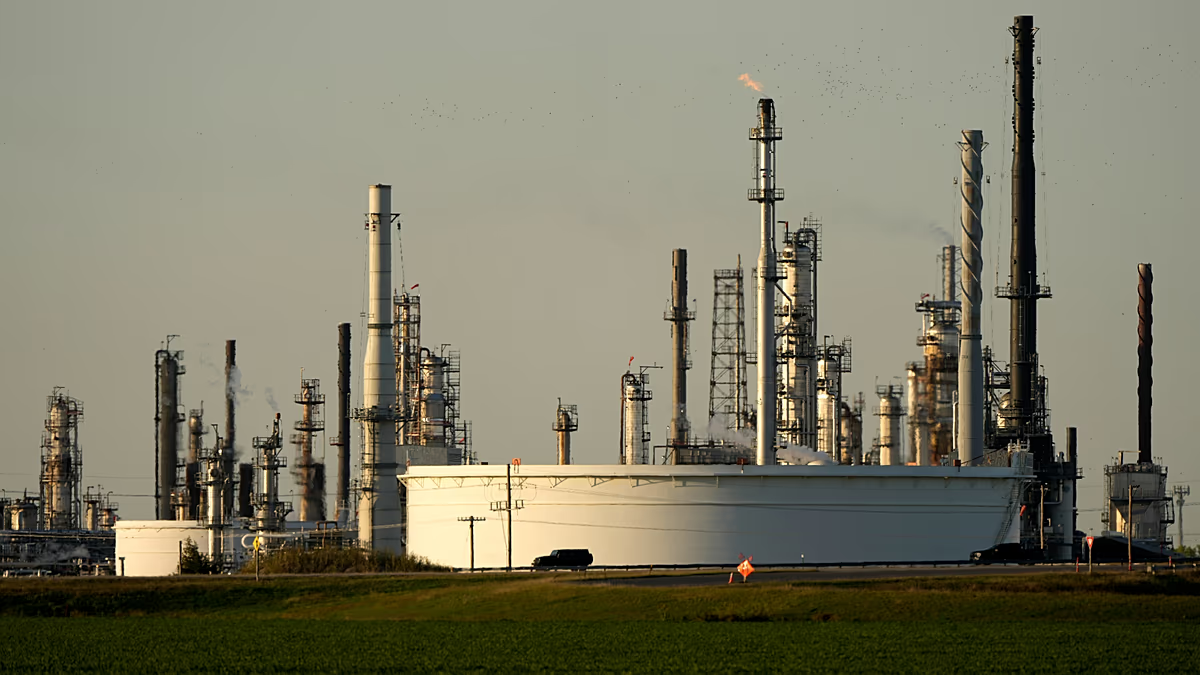
Jonathan Banks, Global Director of the Methane Pollution Prevention programme at the Clean Air Task Force, emphasized the significant potential of the energy sector, which could cut its methane emissions by up to 86% by 2030. This equates to approximately 94 million tonnes of emissions avoided annually, achieved through cost-effective solutions that represent a small fraction of the sector’s income. Banks urged for “urgent and coordinated action” to capitalize on this opportunity and “bend the curve on climate change.”
However, enforcement and monitoring remain critical areas of concern. The report specifically notes that the coal sector “lags significantly behind” in emissions reduction efforts, citing a lack of comprehensive global initiatives despite readily available solutions. Ember, an environmental think tank, identified Poland as the EU’s largest coal mine methane emitter, responsible for over 60% of the bloc’s total coal mine emissions in recent years.
Sabina Assan, Ember’s senior analyst, believes the EU’s methane law, enacted in 2024, offers a pathway to reduce Poland’s emissions. Nonetheless, she cautioned that insufficient enforcement and a lack of substantial penalties could undermine its effectiveness. “Member states must unite behind full implementation,” Assan stated, “to position the EU as a leader in delivering significant methane cuts.”
As policymakers and industry leaders grapple with the implications of these findings, increased scrutiny of methane emissions and a renewed commitment to ambitious reduction targets are essential. The success of the Global Methane Pledge, and ultimately the ability to meet global climate goals, hinges on swift, concrete action to address this potent greenhouse gas. Monitoring the implementation of new regulations, especially the EU methane law and improvements in enforcement across key sectors, will be crucial in the coming years.