








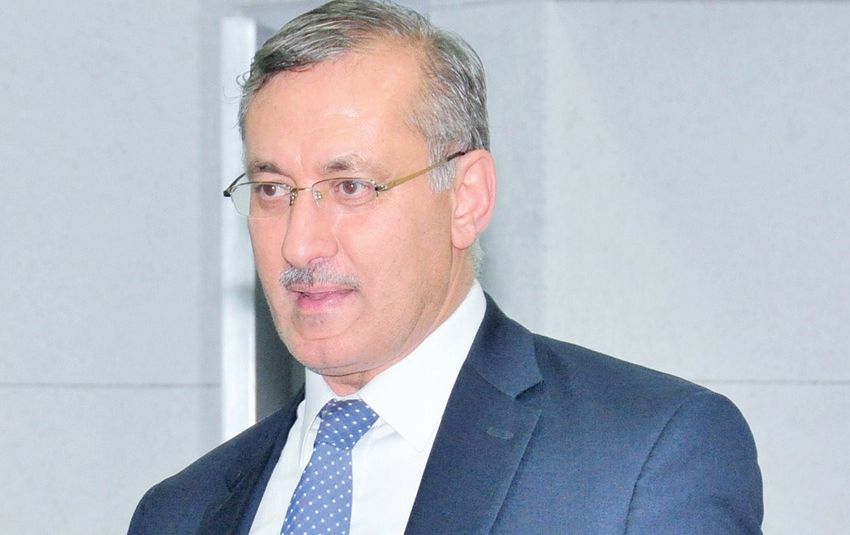

AI-enhanced education gains focus in Arabian Gulf University lecture
Professor Dr. Ouda Al-Jiyousi of Arabian Gulf University recently delivered a specialist lecture on AI-enhanced education and the rapid shifts underway in university teaching and learning. The event, hosted within the university’s Faculty of Education and Administrative and Technical Sciences, outlined why higher education institutions face a critical juncture to redesign educational and knowledge roles. The lecture emphasized generative AI as a transformative force rather than a set of isolated digital tools.
Design and institutional readiness for higher education transformation
Al-Jiyousi argued that the principal gap for many institutions is not a lack of knowledge but a design shortfall that hampers effective adoption of new technologies. Therefore, universities must invest strategically in technical transformation, integrating emerging systems within pedagogy, assessment, and data analytics. Furthermore, officials and academic leaders need frameworks to align infrastructure, staff development, and governance with the expected pace of change.
AI-enhanced education reshapes academic roles and practices
According to the lecture, AI-enhanced education redefines the instructor’s role from knowledge transmitter to designer of solutions who employs empathy and problem framing to generate models and test outcomes. Teachers are expected to move beyond compiling information toward creating insight and fostering critical judgment. Meanwhile, the use of generative AI will extend beyond routine tasks into scenario planning and foresight, which can accelerate decision-making in research and curriculum design.
Curriculum, assessment and Bloom’s framework adaptation
Al-Jiyousi recommended adopting Bloom’s taxonomy as a guiding structure for AI-supported learning, aiming to strengthen comprehension, application, analysis and evaluation. In practice, this implies new assessment methods that value synthesis and creativity over rote recall, with analytics offering continuous feedback loops. Additionally, project-based and problem-based learning tied to industry and local community needs will likely rise as dominant pedagogies in the coming years.
Human-machine partnership and cultural reframing
The lecture underscored a needed shift in mindset from a survival-of-the-fittest view toward a “journey of integration” between humans and machines. Al-Jiyousi emphasized that machines do not replace human judgment, creativity or contextual insight; instead, they augment speed and data abundance to enable deeper analysis. As a result, universities should prepare “designer-thinkers” who can responsibly combine technical fluency with ethical reflection.
Operationalizing generative AI responsibly in campus environments
Practical integration of generative AI into campus workflows calls for policies around data governance, transparency and assessment validity, the lecture noted. Institutions should pilot tools in controlled settings, measure learning outcomes, and refine educator training before scaling. Moreover, cross-disciplinary teams that include ethicists, learning designers and IT specialists can help ensure that deployments support equitable access and academic integrity.
Faculty development and skills evolution
Faculty development must shift from tool training to capability building in pedagogy, data literacy and scenario design. Faculty who learn to craft prompts, interpret model outputs and guide students in critical evaluation will be better positioned to lead classroom innovation. Meanwhile, administrative leaders should align incentives and workload models to reward curricular experimentation and interdisciplinary collaboration.
Implications for research, community impact and sustainability
Al-Jiyousi framed the adoption of AI-enhanced education as part of a broader institutional mission to support sustainable development and regional capacity-building. The university’s role as a knowledge hub can expand by applying AI to local industry problems and public-sector challenges, generating socially relevant research. Therefore, strategic partnerships with business, government and civil society will be central to translating academic innovation into community impact.
What universities should watch next
Higher education transformation will unfold in stages—from exploration and pilot adoption to fuller integration—Al-Jiyousi explained. Institutions should monitor learning outcome metrics, faculty uptake rates and the evolution of regulatory guidelines governing AI use. Additionally, stakeholders ought to watch developments in generative AI capabilities and assessment technologies that can validate creative and analytical skills reliably.
Conclusion and next steps
In closing, the lecture urged universities to treat AI as a digital partner that expands creative and analytical capacities rather than a threat to employment or pedagogy. The next expected steps include targeted investments in instructional design, iterative pilot programs, and institution-wide conversations on cultural adaptation and ethics. Observers should look for formal strategy documents and pilot evaluations from universities in the region over the coming academic year as indicators of progress.