






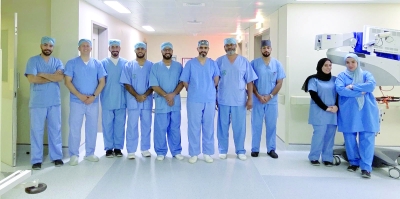

Rustaq Hospital spinal surgery marks regional milestone
Rustaq Hospital spinal surgery achieved a significant clinical milestone recently when a local team, supported by specialists from Khoula Hospital, performed two complex operations to treat severe spinal fractures. The procedures took place at Rustaq Hospital and included one cervical fracture and one lower spine fracture, with one patient arriving from the intensive care unit in critical condition, officials said.
Who performed the operations and where
The two surgeries were carried out by a specialized spinal surgery team from Khoula Hospital, led by Dr. Abdulrahman Al-Subhi, consultant in spinal surgery, alongside Dr. Waleed Al-Kalbani, a senior spinal specialist. Local surgical, anesthesia and nursing staff at Rustaq Hospital prepared the theatre and provided perioperative critical care, according to a statement from health officials.
Furthermore, hospital representatives described the missions as part of coordinated efforts between tertiary and regional facilities to expand access to advanced orthopedic and neurosurgical interventions within governorates across Oman.
Details of the complex operations
Both cases required high-precision surgical techniques and intraoperative coordination. One patient presented with a fracture to the cervical spine — a region that demands careful stabilization to protect neurological function. The other patient had a severe injury to the lower lumbar or sacral area, which similarly required reconstruction and stabilization to preserve mobility and reduce long-term disability.
Case summaries
In the first case, the team applied instrumentation and stabilization methods appropriate for cervical fractures, with intraoperative imaging support and continuous neuromonitoring where available. In the second case, posterior stabilization and fixation techniques were used to address instability in the lower spine. Meanwhile, the critically ill patient was stabilized in the intensive care unit before and after surgery to manage respiratory and hemodynamic needs.
Why the initiative matters for decentralizing care
The ministry stated this achievement underscores a broader policy direction: bringing specialized surgical services closer to patients rather than relying exclusively on central referral hospitals. Therefore, performing high-complexity spinal procedures at Rustaq Hospital reduces the need for transfers, shortens time to definitive treatment for spinal fractures, and can limit the logistical and financial burden on families, officials said.
Additionally, decentralizing such care builds local capacity through hands-on collaboration, training and shared protocols, which further strengthens regional preparedness for trauma and orthopedic emergencies.
Collaboration, training and clinical governance
The joint effort demonstrates integrated clinical governance between tertiary centers and regional hospitals. Specialists from Khoula Hospital worked alongside Rustaq’s teams to ensure adherence to surgical standards, perioperative safety checklists and postoperative rehabilitation planning. According to the hospital report, nursing teams and anesthesiologists played a central role in preparing a critically ill patient for surgery and in providing postoperative intensive care.
Furthermore, this model of temporary specialist deployment and on-site mentorship aims to leave a lasting skills transfer, enabling Rustaq clinicians to manage a wider range of spinal injuries in the future while referring only the most complex or resource-intensive cases to higher-tier centers.
Implications for patients and regional health outcomes
Timely surgical stabilization of spinal fractures is associated with better neurological and functional outcomes, according to clinical literature and international practice guidelines. Therefore, offering these interventions locally can improve recovery prospects and reduce complications related to delayed treatment, officials suggested.
Moreover, successful local procedures may encourage earlier rehabilitation referrals and coordinated follow-up, which are critical for restoring mobility and reducing long-term disability. Secondary keywords such as spinal fractures and critical care are central to understanding the patient pathway in these cases.
What to watch next: monitoring outcomes and future plans
Health authorities indicated they will monitor postoperative outcomes and report on recovery trajectories as part of quality assurance efforts. The next steps include auditing surgical results, tracking functional recovery and assessing whether similar specialist-led missions should be expanded to other regional hospitals as part of a planned decentralization strategy by the Ministry of Health.
Furthermore, training sessions and joint clinical reviews are expected to follow, enabling continued capacity building in spine trauma management and broader orthopedic care.
Conclusion and outlook
The twin procedures at Rustaq Hospital, carried out with support from Khoula Hospital specialists, represent a strategic move toward more accessible specialized surgical care in Oman. Rustaq Hospital spinal surgery now stands as an example of how collaboration and decentralization can expand local treatment options for spinal fractures, officials said. Moving forward, stakeholders will likely focus on outcome tracking, continued training and evaluating the scalability of this collaborative approach across other governorates.