






Bahrain Shura Council Secretariat advances legislative support
The Bahrain Shura Council Secretariat reported steady institutional progress during the fourth sitting of the sixth legislative term, officials said. Karima Muhammad Al‑Abbasi, Secretary‑General of the Shura Council, told reporters that the secretariat concentrated resources on enhancing legislative work and parliamentary support in Manama throughout the session.
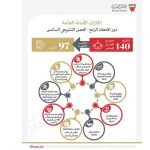
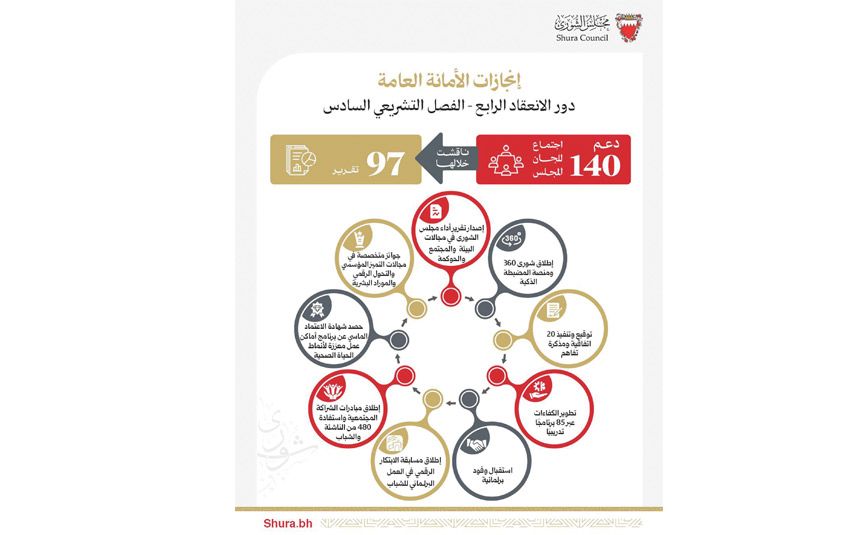
According to Al‑Abbasi, the period covered close coordination with the council leadership and the Crown Prince’s guidance, and included 140 committee meetings that produced 97 reports. The report indicates these activities were aligned with royal directives to strengthen the legislature’s role in national development.
Digital transformation and institutional modernization
The secretariat prioritized digital transformation as a core element of its modernization strategy, launching an integrated platform named “Shura 360” with 19 new features, officials said. Furthermore, the body introduced a smart minutes system and adopted artificial intelligence tools to improve document analysis, content management and archival processes.
These upgrades were implemented alongside broader institutional reforms to raise operational readiness and professional capacity. Additionally, Al‑Abbasi noted that the secretariat completed a series of internal system updates designed to streamline legislative procedures and shorten processing times for agenda items.
Parliamentary support, committees and capacity building
The secretariat provided extensive parliamentary support during the session, coordinating attendance by representatives of government and civil society at committee meetings. The coordination, Al‑Abbasi said, ensured technical input for committee deliberations and supported members in exercising their constitutional duties effectively.
Capacity building was evident in 85 training programs for secretariat staff, including 32 initiatives delivered under bilateral agreements. The secretariat also implemented specialized programs for members, such as workshops on cybersecurity developments and a dialogue session on human rights in Bahraini legislation, to support informed lawmaking.
Partnerships, exchanges and youth engagement
International and domestic partnerships formed a central part of the secretariat’s outreach. Al‑Abbasi confirmed exchanges with the Jordanian Senate secretariat and parliamentary counterparts from Montenegro, and maintained around 20 memoranda of understanding with legislative offices, universities and research institutes.
Community engagement included hosting nearly 400 students from 18 schools, organizing the eighth edition of the “Young Parliamentarian” program with more than 50 participants, and running over a dozen awareness events. The secretariat also launched a digital innovation competition for youth in collaboration with the Ministry of Youth Affairs and Bahrain Polytechnic, attracting 60 entrants with projects aimed at supporting legislative work.
Awards, standards and accountability
The secretariat received multiple awards recognizing institutional excellence and human capital development. Al‑Abbasi highlighted four specialized awards in areas such as digital transformation and HR innovation, including top prizes at regional human resources forums and distinctions for employee well‑being strategies and leadership development programs.
In addition, the secretariat secured the Ministry of Health’s diamond accreditation for the “Healthy Workplaces” program, the ministry’s highest category. The office also published the first bilingual report on the council’s performance in environment, governance and social areas, a document described as a benchmarking tool for parliamentary transparency and accountability.
Implications for Bahrain’s legislative work and governance
Officials said these developments aim to deepen the legislature’s capacity to support national development plans and foster cooperative relations with the executive branch. Furthermore, the secretariat’s investments in technology and training are intended to improve the efficiency and quality of legislative drafting, review and oversight.
The combined focus on digital tools, staff development and stakeholder engagement suggests a trajectory toward more data‑driven and consultative lawmaking. Moreover, the international exchanges and memoranda are positioned to enhance comparative learning and legislative best practices.
Outlook and next steps
Looking ahead, the secretariat indicated ongoing evaluation of the newly implemented systems and continued rollout of training modules for both staff and members. Officials said follow‑up will include measuring the impact of Shura 360 on workflow and publishing periodic assessments of committee outputs.
Readers should watch for the secretariat’s next session reports and additional bilateral agreements that may expand technical cooperation. Meanwhile, the secretariat plans to sustain youth engagement initiatives and build on award‑winning practices to reinforce parliamentary support and legislative work in the coming months.