





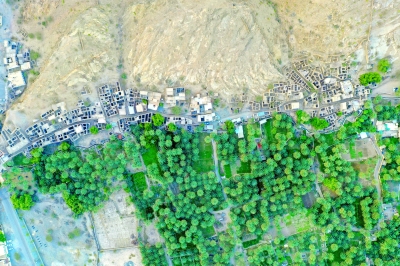

Izki historic neighborhoods in Oman are drawing renewed attention as officials and local communities explore ways to convert ancient quarters into sustainable tourist and economic assets. Located in Wilayat Izki within Al Dakhiliyah Governorate, the Yemen and Nizar districts date to pre-Islamic times and are central to recent heritage surveys and restoration efforts, officials said.
Dr. Ibrahim bin Mohammed Al‑Amri and engineer Abdullah Al‑Riyami described ongoing documentation and selective restorations that began with a ministry-led architectural survey completed in 2013 and recent local initiatives to reopen repaired homes and public spaces. The projects aim to balance preservation with community-led investment and job creation.
Izki historic neighborhoods: heritage, mapping and early documentation
Government and academic teams have completed detailed surveys of key elements in Izki historic neighborhoods, including street networks, wells, defensive towers and public assemblies, according to ministry statements and published reports. The 2013 architectural documentation of the Yemen quarter is cited as one of the most complete records of an Omani old quarter, with measured plans and material analyses.
Furthermore, recent conservation work has focused on mosque repairs and well maintenance in several hamlets around Izki, reflecting a combined state and community approach. These records provide the baseline needed for any tourism or adaptive‑reuse plan that respects the area’s historic fabric and construction techniques.
Tourism potential and planned community-led models
Local planners and scholars say Izki historic neighborhoods are well-positioned to host living museums, craft workshops and interpretive trails that link cultural sites with natural attractions. The proposed model emphasizes community ownership of projects, with families and local artisans operating guesthouses, craft stalls and guided walks, so revenue remains local and incentives for preservation increase.
Recommendations from the recent Izki Through History symposium promote mixed uses beyond accommodation: craft training, seasonal festivals, interpretive signage for falaj water systems and village-to-village walking routes. Additionally, organizers suggest linking Izki routes to broader circuits such as Nizwa and the Jabal Akhdar area to broaden visitor stays and regional economic benefits.
Challenges: property rights, regulation and investor expectations
Multiple ownership patterns and legal clarity over titles remain critical constraints for development. Officials acknowledge delays in issuing formal ownership deeds for many heritage houses, and stakeholders say streamlined titling could unlock investment while protecting historic fabric. The ministry has reportedly accelerated procedures, but observers say clarity is still needed.
Investors often seek quicker returns and flexibility to introduce modern services, whereas heritage authorities prioritize traditional materials and visual authenticity. These competing priorities have led to friction in project approvals. Experts propose incentives such as tax breaks or grants tied to conservation standards and joint governance arrangements that include community representation.
Regulatory and technical coordination
Project success requires clearer technical guidelines that permit sensitive upgrades—such as concealed services or reversible interventions—while preventing irreversible alterations. Officials suggest a phased approval process with pilot projects to demonstrate viable compromises between conservation and commercial viability.
Examples of restoration and community initiatives
Early pilots in Izki include restored homes adapted as a café and a renovated council space reopened for public use. Conservation teams have repaired mosque walls and arcades, and local groups have documented wells and public fountains. These moves aim to show that heritage conservation can support small enterprises and attract cultural tourism without wholesale reconstruction.
Local training programs for traditional crafts and hospitality are also being discussed, with the goal of employing local youth and reinvigorating artisanal livelihoods. Such initiatives align with regional strategies for heritage tourism that emphasize authenticity and resident participation.
Implications for regional heritage tourism and local economy
If implemented as envisioned, strategies for Izki historic neighborhoods could create sustainable income streams for residents, preserve rare architectural types and expand Oman’s cultural tourism offer beyond established sites. Planners note that achieving this will require consistent funding, technical support and marketing that positions Izki as a complementary destination within Al Dakhiliyah.
Digital promotion and interpretive programming are expected to play a major role in reaching international and domestic visitors, while maintaining the everyday life and privacy of residents. Observers say transparent benefit-sharing mechanisms are essential to avoid community fatigue or cultural commodification.
What to watch next: ownership, pilot projects and regional links
Readers should watch for the issuance of property deeds and the launch of pilot adaptive‑reuse projects scheduled by local authorities. Progress on regulatory guidance from the ministry and any public–private or community cooperative agreements will indicate how quickly plans move from study to implementation.
Successful integration of Izki historic neighborhoods into broader tourist circuits, coupled with visible community leadership in operations, would mark a significant step toward turning an ancient settlement pattern into a living cultural economy. Officials and residents expect further announcements in the coming months about pilot openings and development timelines.