






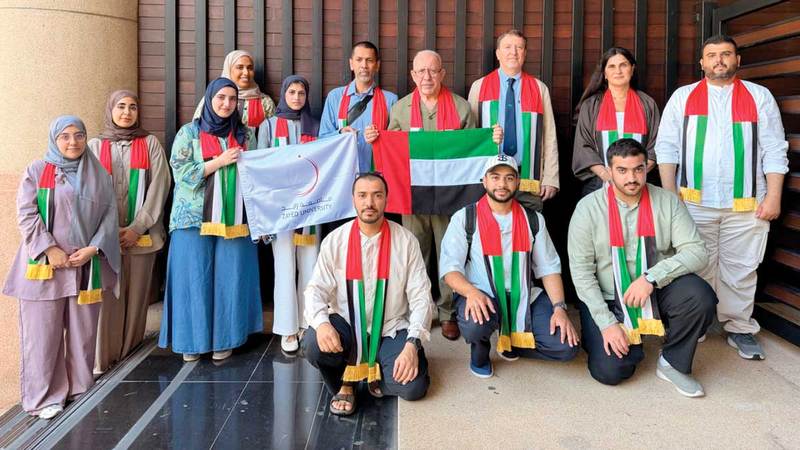

Thailand field study: Zayed University students assess coastal flooding and sea level rise
Eight students from Zayed University’s Master of Science in Environmental Science and Sustainability returned from a Thailand field study that examined coastal flooding, sea level rise and urban environmental pressures. The weeklong program, which began in Bangkok and continued in Krabi province, moved students from classroom theory to hands-on environmental impact assessment and resilience research, according to the participants.
Field work in Bangkok: urban environmental impact assessment and resilience
The field program opened in Bangkok, one of Asia’s most flood-prone capitals, where students conducted an environmental impact assessment focusing on air quality, noise pollution and the sustainability of urban transport systems. Students said the Thailand field study exposed them to real-world models of flood risk and urban vulnerability while they attended expert seminars on flood risk management and adaptation planning.
During urban sessions, participants used modern monitoring tools to measure particulate matter and sound levels and to evaluate public transit efficiency. Furthermore, the study included a specialist lecture titled “Reassessing Historic Major Floods in Bangkok to Understand Future Marine Flood Risks,” which framed coastal flooding and sea level rise as intersecting challenges for low-lying megacities, according to faculty supervisors.
Coastal and marine research in Krabi: geology, biodiversity and sea level rise
Field activities moved south to Krabi province, where students carried out applied research on Koh Poda, an island within a marine national park. There they analyzed coastal geological formations and mapped vulnerable shorelines to gauge potential impacts of sea level rise on sensitive coastal habitats.
In addition, students observed conservation practices in a wildlife sanctuary and recorded field data on habitat conditions and species presence. Meanwhile, faculty emphasized the links between biodiversity protection and long-term coastal resilience, noting that healthy ecosystems often reduce the severity of coastal flooding and erosion.
Research methods and academic supervision
Academic oversight was provided by Dr. Youssef Nazzal, coordinator of the master’s program in Environment at Zayed University, with support from Dr. Jamees Nabri, dean of the College of Natural and Health Sciences, and Dr. Rania Dghaim, head of the Environmental Science and Sustainability department. The team designed field protocols that integrated quantitative monitoring, spatial analysis and stakeholder interviews.
Students applied environmental impact assessment techniques, including air and noise sampling, transport system analysis and shoreline vulnerability mapping. Additionally, interactions with researchers and graduate students at Chulalongkorn University offered comparative perspectives on regional adaptation strategies and data analysis approaches.
Student perspectives: translating classroom theory into practical skills
Participants reported that the Thailand field study strengthened both technical and analytical skills. Rashid Hasan Ubaid Al-Bayah said the trip shifted his understanding from theoretical climate-change concepts to direct observation of coastal hazards, improving his ability to evaluate risk scientifically. Ahmed Mansour Ahmed Al-Kaabi noted the Bangkok project refined his research skills by requiring integration of air-quality, noise and transport data to support sustainable urban planning.
Sultan Abdullah Ali Abdulghani Al-Khozouri highlighted the value of geological fieldwork in assessing shoreline response to sea level rise, while Mariam Ali Al-Shamsi said working within coastal ecosystems and wildlife reserves clarified the practical relationship between biodiversity conservation and sustainability. Other students, including Mariam Al-Mousawi, Shatha Ahmed Mubarak Ahmed, Mariam Al-Tunaiji and Noor Khalid Ali Al-Junaibi, described gains in data handling, use of monitoring instruments and confidence in applying research results to environmental management.
Why this field program matters for UAE sustainability education
University officials said the program reflects Zayed University’s applied-learning philosophy, combining classroom instruction, field experience and international research partnerships to prepare professionals for environmental and natural resource management. Dr. Nazzal noted that practical exposure to coastal flooding and sea level rise strengthens decision-making based on empirical evidence, which is increasingly important for government and private-sector planning in the Gulf region.
Dr. Jamees Nabri added that international fieldwork helps produce specialists equipped with both scientific knowledge and practical experience, enabling them to contribute to sustainable solutions. Dr. Rania Dghaim observed that hands-on learning fosters a culture of practice-based education and better prepares graduates for research and applied roles after completing the program.
Implications for regional adaptation and future research
The students’ findings underscore the need to integrate environmental impact assessment into urban planning and coastal management. Bangkok’s case illustrates how urban transport, air quality and noise are entwined with flood vulnerability, while Krabi’s shoreline research highlights the ecological dimensions of sea level rise. Therefore, cross-disciplinary approaches that combine geology, ecology and urban studies are critical for effective adaptation.
According to the program team, the Thailand field study will inform subsequent coursework and research projects at Zayed University and may support collaborative initiatives with Thai institutions. Furthermore, data collected on air quality, noise levels and shoreline vulnerability can contribute to comparative analyses across regional coastal cities facing similar climate pressures.
Conclusion: next steps and what to watch
The field study concludes a phase of direct learning and data collection, and the next expected step is formal analysis and presentation of the students’ research results to academic and policy audiences. Readers should watch for upcoming publications or seminars where the team will share detailed environmental impact assessment findings and recommendations on coastal flooding and sea level rise adaptation. Meanwhile, Zayed University plans to continue international field collaborations to strengthen student competencies in sustainability and resilience planning.