






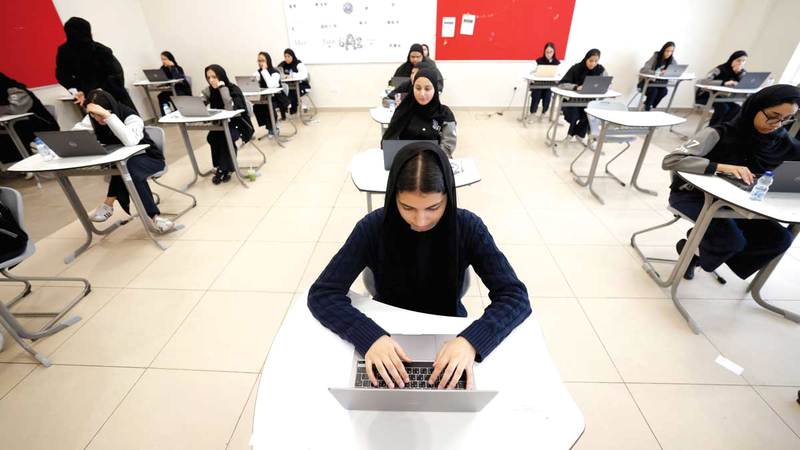

Grade 12 physics exam strikes balance between direct questions and analysis
Students in Grade 12 across general, advanced and elite tracks completed the Grade 12 physics exam yesterday as part of end-of-term assessments for the 2025–2026 academic year, according to media reports. The test combined straightforward curriculum-based items with a limited number of higher-order questions requiring analysis and problem-solving, while pupils prepare to sit the Arabic language paper today.
Student feedback: clear curriculum alignment and measured difficulty
Several students told Emirates Today that the paper adhered closely to the prescribed syllabus and respected individual differences in ability. Most described 20 of the 25 questions as direct and accessible, with five items intended to test analytical and inferential skills, including problems on equivalent resistance and magnetic field interpretation.
Students noted the exam required performing multi-step calculations on scratch paper before selecting final answers, and that certain items—particularly one on force direction in a magnetic field and a electricity question based on graph interpretation—generated varying responses during the electronic assessment. Therefore, time management was highlighted as a key factor for success.
Exam design and administration: ministry confirms smooth conduct
The Ministry of Education did not report any complaints or inquiries related to the physics exam, and officials said testing proceeded according to established procedures within examination venues. The ministry’s guidance indicates that monitoring and standardized protocols were in place to preserve integrity and ensure consistent conditions for all candidates.
Meanwhile, the administration of the end-of-term exams remains electronic in many centers, a format students said can amplify differences in response times when questions require multiple solution steps. The ministry has publicly documented policies for exam administration and contingency measures, which appear to have been applied during this sitting.
Teachers’ evaluations: coverage of learning outcomes and assessment philosophy
Physics teachers who reviewed the paper characterized it as balanced across cognitive levels and aligned with learning outcomes for the third term. One secondary-level physics instructor said direct items offered students the opportunity to demonstrate foundational knowledge, while the subset of analytical questions aimed to evaluate application, inference and data-interpretation skills consistent with the current assessment philosophy.
Another instructor observed that questions related to magnetic fields and graph analysis demanded careful reading of given data, distinguishing rote memorization from deeper conceptual understanding. Therefore, classroom instruction that emphasizes interpretation and problem-solving was seen as directly relevant to the paper’s demands.
Question composition and time allocation
The paper reportedly contained 25 questions in total: 20 straightforward items and five that required extended reasoning. Students generally considered the allotted time sufficient for working through the exam and conducting a review, although some suggested certain multi-step tasks could benefit from additional minutes, particularly those involving graphical analysis or multi-stage calculations.
Inclusion and accommodations for students with special needs
The Ministry of Education reiterated its evaluation framework for students of determination, noting standardized procedures to ensure equitable assessment. According to the ministry’s guidance document for the 2025–2026 academic year, individualized education plans and the specific accommodations they prescribe—such as adapted formats, extended time or alternative assessment mechanisms—are applied where appropriate.
Students whose plans include curricular modifications undergo tailored assessments aligned with their objectives, and teachers are responsible for preparing customised tasks that match those targets. This approach is intended to balance fairness with academic standards while respecting diverse learning requirements.
Context and implications for secondary assessment
Education experts view the tempered balance between direct items and analysis as part of a broader shift toward competency-based assessment in secondary education. End-of-term exams that mix knowledge checks with tasks that require application and interpretation are intended to provide a fuller picture of student readiness for higher education or vocational pathways.
Furthermore, the continued use of electronic testing platforms raises considerations about digital readiness and equitable time allocation. Schools and teachers may need to reinforce exam technique alongside content knowledge to help students manage multi-step questions more effectively in future sessions.
What students and schools should watch next
The next scheduled assessment for many Grade 12 students is the Arabic language exam, which candidates are sitting today. Students and parents should monitor official ministry channels for any further guidance or clarifications regarding exam results timelines and appeals procedures.
Schools are expected to receive provisional marks according to the ministry’s reporting cycle, after which teachers will advise students on remedial steps, subject-specific support and preparation for any externally moderated assessments. Therefore, classroom follow-up and targeted revision will likely be priorities in the coming weeks.
Conclusion: balanced assessment and forward view
The Grade 12 physics exam for the 2025–2026 third term appears to have achieved a measured balance between straightforward curriculum items and a modest set of analytical tasks, with the Ministry of Education reporting normal administration. Moving forward, observers should watch result publication timelines, post-exam reviews by schools, and how feedback informs teaching strategies ahead of final certifications and next academic milestones.