


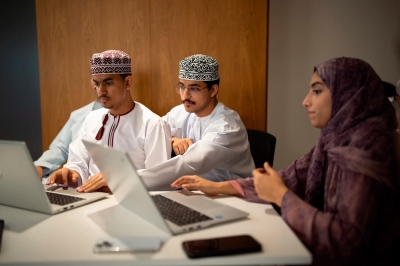

Oman youth highlighted as country joins International Youth Day observance
Oman youth are at the center of national plans as the Sultanate joins other countries in observing International Youth Day on August 12, officials said. The Ministry of Culture, Sports and Youth announced a series of programs and events across 2025–2026 aimed at strengthening youth participation, skills and civic engagement, with new initiatives scheduled through late 2026.
The ministry emphasized that young people are a core component of national development and the Vision 2040 agenda, and it outlined achievements from recent years including youth dialogues, debate championships, cultural awards, volunteer training, and targeted funding for start-up initiatives.
Oman youth: national programs driving participation and skills
The Ministry of Culture, Sports and Youth described several flagship offerings designed to boost youth empowerment and civic readiness. According to ministry statements, the “Tharwa” program launched its first edition in September 2025 to bring youth into evaluation and design of ministry projects and to align new initiatives with the eleventh five-year plan. A second edition is scheduled for October 2026 to deepen youth understanding across six national contexts: economic, political, cultural, legal, institutional and media.
Officials also reported annual support for youth-led initiatives, noting 61 projects supported in 2025 and 68 in 2026, reaching roughly 12,000 beneficiaries per year. The ministry said these grants and technical supports cover financial, cultural, health, environmental and innovation themes including cybersecurity and leadership.
Youth empowerment through dialogue, debate and creative industries
To cultivate critical thinking and public discourse, the ministry hosted the Asian Arabic Debate Championship in 2025 with nearly 300 participants from educational institutions across Asia; Sultan Qaboos University claimed first place. Domestically, the ninth national Arabic debate championship in 2026 drew substantial participation from universities, schools and clubs. The ministry also launched the Tawasul short film prize for youth filmmakers in 2026 to spotlight emerging Omani talent.
In parallel, a national mapping project for creative industries documented 483 economic activities and 1,020 creative occupations, a development described by creative sector advisors as foundational for planning and investment. The report said this baseline data helps convert the creative sector from a conceptual category into a measurable component of the national economy.
Volunteering, camps and leadership pathways
Volunteer training and leadership development sit high on the ministry agenda. The “Isnad Oman” volunteer program for 2026 aims to train 500 young volunteers through workshops, workcamps and specialized training. Officials said camps and training modules are designed to sharpen practical skills and civic responsibility while enabling youth to contribute directly to community development.
National camps and programs such as “Mustaed” target 18–29-year-olds and emphasize self-reliance, teamwork and personal development, with around 500 participants expected in 2026. A separate military-discipline program, implemented in cooperation with the Ministry of Defence and the Ministry of Education, involves four-week courses blending military training, specialized workshops and athletic competitions; this year’s edition reportedly included 1,000 participants from all governorates.
Regional engagement and digital content focus
On the Gulf level, the ministry is coordinating with the GCC Secretariat to host the fourth Gulf Youth Forum in September 2026 in Dhofar under the theme “The Future of Digital Content Production.” The forum aims to promote cross-border dialogue among young Gulf content creators and address shared challenges such as digital literacy, platform policy and monetization.
Officials also announced an upcoming project on youth and artificial intelligence to examine fast-moving developments in AI and their implications for education, employment and innovation. The ministry said the initiative will include awareness campaigns and capacity-building opportunities for young professionals.
Education, sport and cultural pathways for young people
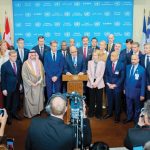
Programs targeted at diplomacy and global engagement were also outlined. The “Young Ambassadors” initiative prepares youth for international participation by enhancing negotiation skills, diplomatic literacy and familiarity with UN bodies and committees. The ministry noted annual delegations to regional and international youth forums, including the UN Economic and Social Council Youth Forum in New York.
Sport and culture remain key channels for talent discovery. The ministry highlighted stories from diverse participants, including young athletes recruited through federations and clubs, and creatives who advanced through national competitions. Officials said sport programs foster discipline and teamwork while cultural prizes and competitions have produced practitioners who now represent the country abroad.
Building ecosystems: finance, data and creative clusters
Industry experts cited the need to convert creative energy into sustainable enterprises. Advisors recommended three concurrent tracks: completing national efforts to measure the creative economy so it appears in official indicators; developing more flexible financing mechanisms tailored to creative ventures; and establishing integrated creative hubs that unite makers, entrepreneurs and investors.
The ministry’s publications and the semiannual youth newsletter aim to document success stories and share project outcomes. Together with the creative sector mapping, these communication efforts are intended to inform policy, attract investment and expand employment pathways for young people.
Outlook and what to watch next
Officials invited young Omanis to participate in forthcoming milestones: the Gulf Youth Forum in September 2026 and the second Tharwa edition in October 2026. Observers should also watch the rollout of the youth-and-AI project and the next cycle of initiative funding, which the ministry said will emphasize employability and digital skills.
For policymakers and community partners, the priority appears to be sustaining momentum: continue building measurable datasets, broaden funding instruments for creative and social enterprises, and expand training that links civic participation with economic opportunity. The ministry signaled that these steps are central to ensuring that Oman youth play a decisive role in national development and the realization of Vision 2040.