



Overview of the State Budget and Committees’ Work Plans
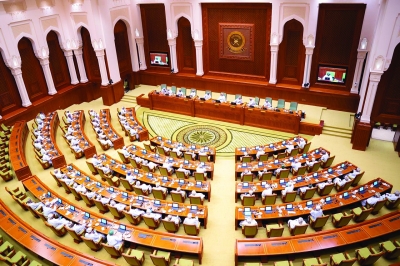
This Sunday, the Shura Council commenced its fourth ordinary session for the 2026-2027 period, discussing the state budget and the approval of work plans for its permanent committees. The session took place under the leadership of His Excellency Khalid bin Hilal Al Maawali, Chairman of the Council, with the participation of esteemed members and the Council’s Secretary-General, Sheikh Ahmed bin Mohammed Al Nadabi.
The opening of the session was based on the royal orders of His Majesty Sultan Haitham bin Tariq, underlining the importance of the Council’s role in national governance and legislative duties.
Commencement of the Session
During his introductory speech, His Excellency emphasized the continued support from His Majesty Sultan Haitham bin Tariq for the Council of Oman and underlined the duty of members to fulfill their responsibilities towards the nation. He reflected on the remarkable achievements of the current Renaissance era, which have positively impacted various sectors across Oman.
His Excellency praised Omani foreign policy, acknowledging its success and wisdom, fostering diplomatic and economic relationships. As the Council embarks on this new season, it recognizes the substantial responsibilities it holds and is committed to enhancing national development through substantive discussions on legislation, economic frameworks, and public welfare initiatives.
State Budget Proposal for 2027
In this session, members received a briefing on the draft state budget for the fiscal year 2027. The presentation aimed to align the Council’s oversight responsibilities with financial and economic policies of the nation, emphasizing the necessity of strategic spending that resonates with national development goals.
The Economic and Financial Committee has embarked on a detailed examination of the budget draft, inviting insights from various experts in related economic and financial fields across Oman. This collaborative approach aims to enrich the discussions surrounding financial policies and anticipated expenditures.
Permanent Committees’ Work Plans
Committee rapporteurs presented their annual plans, outlining topics for study and discussion throughout the session. The committees include: Legislative and Legal Committee, Economic and Financial Committee, Health and Social Committee, Education, Scientific Research and Innovation Committee, Public Services and Facilities Committee, Youth and Human Resources Committee, Food and Water Security Committee, and Media, Tourism, and Culture Committee.
Each committee’s plan includes key objectives, priorities, and collaborative measures to enhance legislative efficiency. The plans focus on addressing pressing national issues while ensuring alignment with the overarching goals of sustainable development and national interest.
Legislative Developments on Voluntary Work
The council reviewed a report concerning the unified voluntary work law across the Gulf Cooperation Council countries. The report underscored the legal framework’s significance in organizing voluntary activities and fostering a spirit of community service throughout the region. Members provided insights and suggestions for improving the legislation to boost its effectiveness in local contexts.
Following discussions, a consensus was reached to refer the project to the State Council for further legislative processing, indicating the council’s commitment to enhancing social responsibility through regulated voluntary work.
Amendments to Financial Regulations
Additionally, the Council examined a proposal to amend specific provisions of the Financial Instruments Law. This initiative aims at refining the legal structures governing the financial sector in Oman while adapting to dynamic economic changes. The Economic and Financial Committee provided insights on the proposed changes, leading to constructive debates among the members regarding the implications of these amendments on market integrity and investor protection.
Ultimately, the proposal was referred to the State Council for continued legislative scrutiny, reflecting a proactive approach to ensuring that Oman’s financial regulatory framework remains robust and responsive.
Next Steps and Future Outlook
The Council’s discussions and decisions are a testament to its evolving legislative role in Oman. The approved plans and ongoing legislative proposals reflect both immediate needs and long-term aspirations for national development. As the Shura Council continues its sessions, members and stakeholders are encouraged to stay engaged and contribute to the national dialogue on these critical issues.
Looking ahead, the focus will remain on effectively implementing the discussed laws and financial frameworks, with timelines for execution set to be defined in future sessions. Observers await the outcomes of deliberations that pertain not only to the current legislative cycle but also to the broader developmental objectives of Oman.