





Bar’ah competition concludes Taqah program of Khareef Dhofar
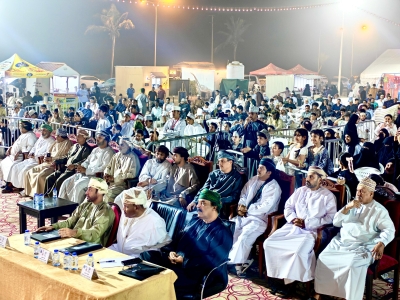
The Bar’ah competition concluded the Taqah segment of the Khareef Dhofar festival last night, bringing a week of traditional displays to a close. The final event drew a large audience and focused attention on the Bar’ah competition as a central showcase of regional music, rhythm and communal performance. Officials said the festival aimed to strengthen the presence of traditional Omani arts in the tourist season.
The closing ceremony featured intense rivalry among participants and a public celebration of heritage. According to organizers, the first-place team — Ahed bin Abdullah bin Hamed Safyan and Zayed bin Ahmed bin Mustahil Saadallah — received a cash prize of 2,000 Omani rials. Second place went to Ahmad bin Mohammed Al-Kathiri and Abdulhakim bin Mohammed Al-Kathiri with 1,000 Omani rials, while Abdullah bin Mohammed Al-Mushaikhi and Saeed bin Ali Al-Mushaikhi took third place and received commemorative silver khanjars.
Judging criteria and panel for the Bar’ah competition
The Bar’ah competition was evaluated by a three-member panel that included artist Ahmed bin Mubarak Ghadeer Al-Mushaikhi, poet Saad bin Rajab Al-Mughanni and Ayman Al-Ansi. The judges said the final round demonstrated a high level of technical ability and strong engagement from younger performers, underscoring continued interest in this art form among new generations.
Judges explained that their decisions were based on a set of established criteria: rhythm and timing, accuracy of performance, technical skill, adherence to the traditional principles of Bar’ah and the ability to connect with the audience. Additionally, they noted that the contest served not only to award the top performers but also to highlight emerging talent and to familiarize visitors with the aesthetic and cultural value of the art.
Cultural significance within Khareef Dhofar and local heritage
Bar’ah is one of several traditional expressions rooted in the Dhofar region and is often presented alongside other elements of the Khareef Dhofar cultural program. Meanwhile, the Office of the Wali of Taqah has supervised the program with the explicit objective of preserving and promoting regional customs. Organizers said that featuring the Bar’ah competition during Khareef Dhofar helps integrate cultural preservation with the annual tourist season.
Furthermore, the event organizers emphasized that such competitions reinforce community identity and provide opportunities for intergenerational transmission of skills. Cultural specialists and local officials noted that showcasing Bar’ah within a structured contest encourages younger performers to refine their technique, while exposing wider audiences to the nuances of traditional Omani arts.
Community response and festival impact in Taqah
Attendees reacted positively to the final performances, with visible audience interaction and applause throughout the evening. The public turnout reflected renewed local interest, and organizers reported that attendance at the Taqah events contributed to broader festival goals of increasing cultural visibility and enriching the tourist experience during Khareef Dhofar.
Event coordinators praised the competitors for their dedication and the quality of their presentations. They also commended the team from the Office of the Wali of Taqah for facilitating a platform where performers could display their skills in a formal setting. The closing ceremony was attended by Engineer Khwaidem bin Mohammed Al-Maashani, member of the Shura Council representing Taqah, who presided over the final proceedings.
Program objectives and preservation of traditional Omani arts
The Bar’ah competition is part of a broader program that the local office oversees to promote traditional Omani arts and ensure their continuity. Officials said the initiative seeks to institutionalize cultural activities within community events and to create sustainable pathways for the transmission of knowledge to younger generations. In practice, these goals translate into organized competitions, workshops and public presentations during the Khareef season.
According to organizers, integrating cultural competitions into the festival calendar helps to professionalize folk arts and to attract both local and visiting audiences. This approach supports preservation by creating incentives for training and performance, while also offering recognition through awards and public exposure. The inclusion of prizes, such as cash awards and symbolic silver khanjars, adds a tangible dimension to efforts aimed at sustaining interest.
Looking ahead: what to watch next
Organizers indicated that the Bar’ah competition’s success in Taqah will inform programming for upcoming events within the Khareef Dhofar season and other community occasions. Officials suggested that future efforts will continue to emphasize opportunities for youth engagement, educational outreach and broader participation across governorate communities.
Therefore, observers and cultural stakeholders should watch for announcements from the Office of the Wali of Taqah about forthcoming workshops, competitive events and showcases. The festival’s organizers said they remain committed to presenting traditional Omani arts in ways that both honor heritage and adapt to contemporary cultural platforms.