






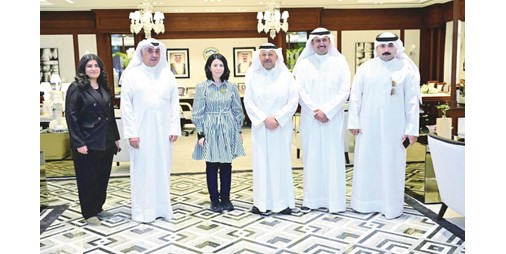

Al-Farwaniyah Governorate Hosts Meeting on Disability Services Collaboration
Al-Farwaniyah Governorate hosted a high-level meeting yesterday when Governor Sheikh Adhbi Al-Nasser received Dr. Dalal Al-Othman, director general of the Public Authority for the Disabled, and senior Authority officials at the governorate headquarters. The meeting focused on strengthening cooperation to improve disability services and community integration for persons with disabilities across the governorate.
Officials said the session covered service coordination, program support and mechanisms to enhance access to specialized care. Participants agreed the meeting aimed to translate policy commitments into practical steps that address local needs and improve quality of life for residents with disabilities.
Al-Farwaniyah Governorate and the Public Authority for the Disabled
The delegation from the Public Authority for the Disabled included Dr. Khalifa Al-Hila, acting deputy director for medical, psychological and social services, Basel Al-Sagheer, acting deputy director for administrative, financial and educational affairs, and Sheikha Al-Muaithim, head of public relations. According to officials, the gathering underscored the importance of local-authority partnerships in delivering coordinated disability services.
Governor Sheikh Adhbi Al-Nasser reiterated Al-Farwaniyah Governorate’s commitment to support initiatives aimed at serving people with disabilities. Furthermore, he emphasized backing community-level programs that complement national policies and support inclusive access to public facilities and services.
Key Topics Discussed on Disability Services and Inclusion
During the meeting, participants explored a range of topics, including service integration, outreach to families, and the expansion of specialized care where it is most needed. Additionally, officials reviewed procedures for joint planning, resource sharing and awareness campaigns that encourage community integration.
Dr. Dalal Al-Othman expressed appreciation for the governor’s attention and ongoing follow-up on measures that empower persons with disabilities. She highlighted the Authority’s role in providing specialized care and coordinating with local entities to deliver tailored support, according to a statement from the Authority.
Practical Measures and Local Implementation
Officials discussed potential practical measures such as coordinated referral pathways between the Public Authority for the Disabled and local health and social services, and targeted educational support within schools. Meanwhile, administrative and financial cooperation was identified as a priority to ensure sustainable local programs and scalable pilot projects.
Stakeholders also considered ways to improve accessibility in public infrastructure and municipal services, aligning local work with broader national strategies to promote community inclusion. The meeting emphasized collaborative planning to reduce duplication and speed up service delivery.
Implications for Community Integration and Quality of Life
Strengthened coordination between the governorate and the Public Authority for the Disabled is likely to accelerate improvements in disability services and raise standards of care. Therefore, residents with disabilities may see more consistent access to medical, psychological and social supports in their neighborhoods.
In addition, joint initiatives are expected to support inclusive education, employment pathways and community-based rehabilitation, contributing to social participation and improved quality of life. Officials said such outcomes depend on clear implementation plans and regular monitoring.
Related Policy Context and Stakeholder Roles
National and local authorities increasingly prioritize accessibility and inclusion, and the meeting reflects that trend toward closer institutional cooperation. According to participants, the Public Authority for the Disabled will coordinate technical support while the governorate will facilitate local implementation and community engagement.
Non-governmental organizations, educational institutions and health providers were referenced as potential partners in pilot programs, outreach campaigns and capacity-building efforts. Therefore, a multi-stakeholder approach was described as essential to deliver comprehensive, person-centered services.
Next Steps and What to Watch
Officials said the next steps include drafting a joint action plan that outlines responsibilities, timelines and performance indicators for priority initiatives. Furthermore, the governorate and the Public Authority for the Disabled plan to conduct follow-up meetings to finalize operational details and track progress.
Readers should watch for announcements on specific pilot projects, funding allocations and community outreach schedules in the coming months. Meanwhile, stakeholders indicated they will report progress through official channels as projects move from planning to delivery.
Forward-Looking Conclusion
The meeting between Al-Farwaniyah Governorate and the Public Authority for the Disabled signals a practical effort to improve disability services through local-national collaboration. Therefore, sustained coordination and transparent implementation will be critical to translate commitments into measurable improvements for people with disabilities. Officials have pledged to move from dialogue to action, and the public can expect further updates as joint programs are developed and launched.