




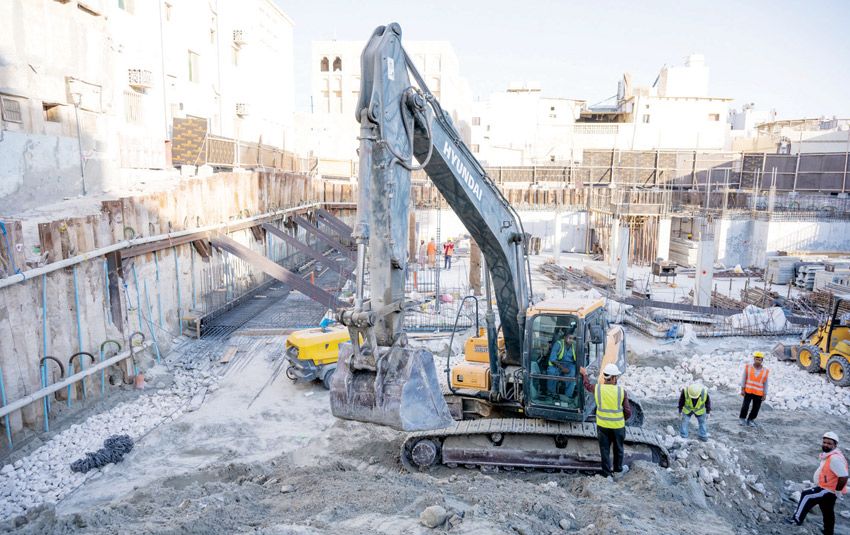

Muharraq city development shows 73% completion in first phase, officials say
Members of Bahrain’s Council of Representatives representing Muharraq Governorate reported that the Muharraq city development reached roughly 73 percent completion in its first construction phase, according to official statements. The project, overseen by the Ministry of Housing and Urban Planning and supported by royal directives, is taking place in Muharraq, Bahrain, and aims to restore and enhance the city’s historic character while upgrading services.
Parliament members and government officials provided the update during media briefings, noting visible progress on heritage restoration, public facilities and road works. They emphasized that the initiative follows high-quality technical standards and aligns with national development objectives endorsed by King Hamad bin Isa Al Khalifa and Crown Prince Salman bin Hamad Al Khalifa.
Muharraq city development: infrastructure upgrades and road network expansion
Work on urban infrastructure is a central component of the Muharraq city development, officials said, with internal road construction covering approximately 3.8 kilometers and the addition of more than 300 parking bays. These upgrades are intended to ease movement for residents and visitors and support commercial activity in the historic district.
Furthermore, sources indicate that the project includes utility upgrades and the construction of model residential units designed with a heritage architectural tone. Meanwhile, authorities stated that the infrastructure scope was planned to meet contemporary urban needs without compromising the authentic streetscape of Muharraq.
Heritage preservation and cultural revitalization efforts
The project places strong emphasis on heritage preservation, restoring six traditional neighborhoods and conserving key historic buildings, according to parliamentarians involved in oversight. This heritage preservation approach seeks to balance conservation with economic revitalization through improved tourism and civic amenities.
Officials noted completion of a visitor center and a furnished model housing unit among early deliverables, which will function both as public assets and interpretive spaces to showcase Muharraq’s cultural legacy. Additionally, the restoration work is intended to support community identity and encourage residents to return to revitalized neighborhoods.
Government coordination and project governance
Parliament members credited the progress to interagency coordination led by the Ministry of Housing and Urban Planning under Minister Amina bint Ahmed Al Rumaihi and the participation of multiple executing teams. The legislature said regular oversight and adherence to approved timelines have helped maintain momentum across the project’s components.
According to statements, project managers apply internationally recognized technical and engineering standards to ensure durability and quality. The government’s governance framework also emphasizes transparency and scheduled reporting to stakeholders, including municipal authorities and local communities.
Economic and social implications of the redevelopment
Authorities and local representatives stressed that the Muharraq city development is expected to generate sustained economic and social benefits, ranging from increased tourist visitation to improved quality of life for residents. The upgraded public realm and new commercial opportunities should support local businesses and create a platform for cultural events.
In addition, the initiative is framed as part of broader Bahrain development efforts to modernize urban services while safeguarding national heritage. Secondary objectives include strengthening local housing options and improving public transport links to integrate Muharraq more effectively into the national urban network.
Community impact and housing considerations
Several members of the Council of Representatives highlighted that the project includes housing packages reflecting traditional architectural motifs to encourage inhabitants to reoccupy renovated districts. They indicated that such measures aim to preserve the social fabric of Muharraq by enabling families to remain within their historical neighborhoods.
Officials also mentioned plans for ancillary services—such as visitor amenities, public lighting and landscaped public spaces—to complement housing and commercial elements and enhance daily life in the restored areas.
Monitoring completion and next phases to watch
While the first phase shows significant advancement, authorities emphasized that remaining works will focus on completing residual construction, finishing interior fits, and finalizing public facility handovers. Project teams are expected to proceed according to the approved execution schedule and to report further milestones publicly.
Observers should watch for announcements regarding the start of the next phase, the completion of the restored palace complex, and any new timelines for opening restored sites to the public. Officials suggest that subsequent stages will continue to combine heritage conservation with modern urban infrastructure upgrades.
Outlook: sustaining heritage within urban renewal
The Muharraq city development presents a model of integrating heritage preservation with contemporary urban planning, government sources said, and it reflects a policy direction that other Bahraini localities may follow. If authorities maintain current delivery standards and community engagement, the project could strengthen Muharraq’s role as a cultural and civic hub.
Readers should expect periodic progress updates from the Ministry of Housing and Urban Planning and from parliamentary monitors as the program advances toward full implementation. The next expected focus will be completing remaining construction elements and preparing restored sites for public use, consistent with the project’s stated timelines and quality requirements.