






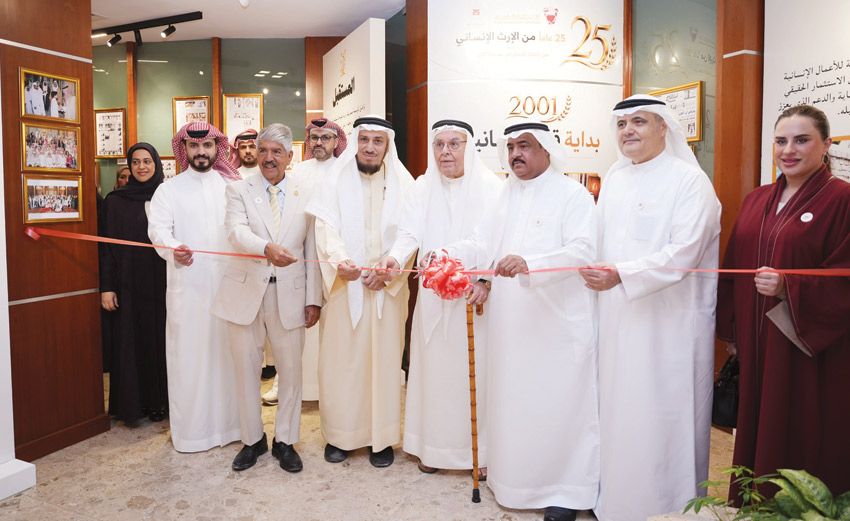

Memory of the Human Legacy exhibition opens at Akhbar Al Khaleej
The Memory of the Human Legacy exhibition opened this week at the headquarters of Akhbar Al Khaleej, showcasing 25 years of work by the Royal Humanitarian Foundation. Organizers said the documentary display, presented under the patronage of the Adel Fakhro and Mona Al Mowayyed Charitable Foundation, brings rare archival pages and photographs into public view for the first time.
Held in Manama, the exhibition assembled photographic records, film clips and documents that trace the foundation’s initiatives since its establishment in 2001. According to hosts, the event aims to preserve national memory and highlight long-term humanitarian projects that shaped social services in the Kingdom of Bahrain.
Memory of the Human Legacy exhibition: highlights and scope
The Memory of the Human Legacy exhibition is organized as a visual chronology that maps the Royal Humanitarian Foundation’s major programs and milestones. Visitors toured curated panels that display relief campaigns, family support programs and educational initiatives, along with previously unpublished archival material from the newspaper’s coverage.
Curators said the show includes a short documentary produced by Akhbar Al Khaleej and a sequence titled “From the Heart” featuring personal testimonials from beneficiaries. Furthermore, rare press photographs and correspondence document the foundation’s collaboration with government agencies, civil society and donors over a quarter century.
Senior officials and community leaders attend commemoration
The opening attracted senior figures connected to the foundation and to national philanthropy. Attendees included the newspaper’s editor-in-chief, Anwar Abdulrahman, general manager Abdulmajid Haji, acting secretary-general Ibrahim Dalhan Aldosari, and trustees and former officials who helped shape the institution’s policy and programs.
Notable guests praised the exhibit as a public record of sustained social investment. Sheikh Adnan Al Qattan and Dr. Mustafa Al Sayed, both associated with the foundation’s board, emphasized that the archival display serves an educational purpose and helps transmit institutional memory to younger generations.
How the exhibition documents the Royal Humanitarian Foundation
The exhibition documents programmatic areas that the Royal Humanitarian Foundation has prioritized, including child welfare, family empowerment, vocational training and social inclusion. According to organizers, the panels demonstrate how targeted interventions evolved into broader empowerment strategies that now underpin many national social policies.
Materials on display trace early relief and care projects through later efforts in capacity building and job training. Furthermore, testimonies by former beneficiaries illustrate long-term outcomes, such as professional careers and independent projects that arose from initial support provided by the foundation.
Voices from beneficiaries and program leaders
Speakers at the launch highlighted personal transformations that reflect the foundation’s aim to invest in human potential. A beneficiary who later joined the foundation’s staff described how institutional mentorship and training enabled a journey from dependent assistance to active contribution.
Organizers stressed that such stories were not anecdotal but illustrative of broader program success. For example, officials noted that many beneficiaries went on to roles in healthcare, education and public service, which underlines the foundation’s ripple effect on community capacity.
Context and significance for national philanthropy
Observers said the Memory of the Human Legacy exhibition places the Royal Humanitarian Foundation within a wider history of national philanthropic development. Bahrain’s model, they noted, combines royal patronage with institutional governance to sustain long-term social programming.
Experts at the event pointed out that documenting this evolution is important for policy learning. Therefore, the exhibition functions as both a commemorative archive and a resource for practitioners interested in designing scalable social interventions.
Media role and Akhbar Al Khaleej exhibition collaboration
Organizers credited Akhbar Al Khaleej for sustained coverage that helped preserve institutional records over multiple decades. The newspaper’s editorial team curated the exhibition materials, and the commemorative shield presented to the editor-in-chief recognized that partnership.
Furthermore, the collaboration underscores the role of independent press archives in conserving social history. Officials said that media documentation complements official records by providing contemporaneous reporting, photojournalism and public testimony.
What the archive reveals about leadership and vision
The materials displayed emphasize a consistent leadership message that framed welfare as dignified, rights-based support rather than episodic charity. Organizers recalled statements by national leaders expressing a philosophy of proximity and compassion toward citizens, and the exhibition illustrates how that vision was operationalized.
Contributors argued that those founding principles helped the foundation evolve from direct assistance to comprehensive programs for social inclusion. Meanwhile, trustees highlighted the ongoing importance of governance, donor engagement and program monitoring to sustain impact.
Conclusion: next steps and what to watch
The Memory of the Human Legacy exhibition closes a chapter of reflection and opens prospects for continued documentation and research. Visitors were encouraged to consult the exhibit materials while the newspaper and foundation consider making portions of the archive accessible online in coming months.
Readers should watch for an expanded digital archive and further public programming that builds on the exhibit’s themes, organizers said. Meanwhile, policymakers and practitioners may use the exhibition’s lessons to inform future social strategies and sustain the foundation’s aim of investing in people.