





By using this site, you agree to the Privacy Policy and Terms of Use.
Accept
Gulf PressGulf Press
  • Gulf News
    • Saudi Arabia
    • UAE
    • Oman
    • Kuwait
    • Qatar
    • Bahrain
  • Business
  • Technology
  • Real Estate
  • Sport
  • Travel
  • Lifestyle
  • Rankings
  • Explained
  • Opinion
Search
Countries
More Topics
Site Links
  • Newsletter
  • Terms
  • About Us
  • Advertise with us
  • Contact Us
© 2023 Gulf Press. All Rights Reserved.
Reading: EU Parliament to block Russian energy imports for landlocked countries
Share
Notification Show More
Latest News
Taif Governor Inspects Historic District, Vows Heritage Preservation
Saudi Arabia
National Committee Reviews Government Policy for Sustainable Endowments and Zakat Funds Wednesday
UAE
Are Rising Living Costs Changing Life in Gulf Countries?
Opinion
Saudi Arabia National Team Fixtures 2026 Match Schedule Results and FIFA World Cup Preparation
Sport
Families Swap Late Nights for Discipline Ahead of School Reopening
Saudi Arabia
Aa
Gulf PressGulf Press
Aa
  • Gulf News
  • Business
  • Technology
  • Real Estate
  • Sport
  • Travel
  • Lifestyle
  • Rankings
  • Explained
  • Opinion
Search
  • Gulf News
    • Saudi Arabia
    • UAE
    • Oman
    • Kuwait
    • Qatar
    • Bahrain
  • Business
  • Technology
  • Real Estate
  • Sport
  • Travel
  • Lifestyle
  • Rankings
  • Explained
  • Opinion
Have an existing account? Sign In
Follow US
  • Terms
  • About Us
  • Advertise with us
  • Contact Us
© 2023 Gulf Press. All Rights Reserved.
Gulf Press > Gulf News > EU Parliament to block Russian energy imports for landlocked countries
Gulf News

EU Parliament to block Russian energy imports for landlocked countries

News Room
Last updated: 2025/11/19 at 4:08 AM
News Room
Share
5 Min Read
SHARE

The European Parliament is resisting efforts to grant exemptions to landlocked EU member states that would allow them to continue importing Russian energy, even as the bloc aims to eliminate its reliance on Moscow by 2027. Disagreements over potential loopholes in the proposed ban are ongoing, with lawmakers arguing for a firm and complete cessation of Russian fossil fuel imports. These discussions highlight the challenges of achieving energy independence across the diverse EU landscape.

The European Commission initially proposed ending all EU energy dependency on Russia by 2027, but talks with EU governments and the Parliament have revealed a rift in approach. While an informal consensus suggested exemptions for countries like Hungary and Slovakia – states heavily reliant on Russian imports – the Parliament is pushing back against any such provisions. These nations argue that energy supply disruptions could severely impact their economies.

Parliament Challenges EU Plan to Ban Russian Energy

According to EU sources, lawmakers believe any exemptions would undermine the overall goal of reducing Moscow’s revenue and influence. They maintain that allowing continued imports, even temporarily, would create opportunities for Russia to circumvent sanctions. MEPs point to the significant financial flow to Russia from current EU purchases – totaling €210 billion despite a reduction in imports to 12% of the bloc’s total gas supply since August 2025, as detailed in the Commission’s State of the Energy Union report.

Latvian MEP Inese Vaidere of the European People’s Party recently stated that it is “incomprehensible” that EU nations continue to purchase Russian energy after three years of conflict in Ukraine. She emphasized the Parliament’s insistence on a complete ban on Russian gas and oil, including imports via intermediary countries, effective January 1, 2027, with no temporary suspensions.

However, some member states contend that achieving immediate independence is unrealistic, particularly for landlocked nations lacking diverse supply routes. They argue for a more gradual transition, acknowledging the complexities of securing alternative sources.

Alternative Pipelines and Infrastructure

Several lawmakers propose that existing and planned pipeline projects, such as those in Bulgaria and Romania, could provide viable alternatives for countries currently dependent on Russian energy. Romania’s recently completed Tuzla-Podisior pipeline, part of the larger Neptun Deep project, is specifically highlighted as a potential source of natural gas for Hungary and Slovakia. Transgaz estimates the project will allow Bucharest to increase capacity to Hungary significantly by 2029.

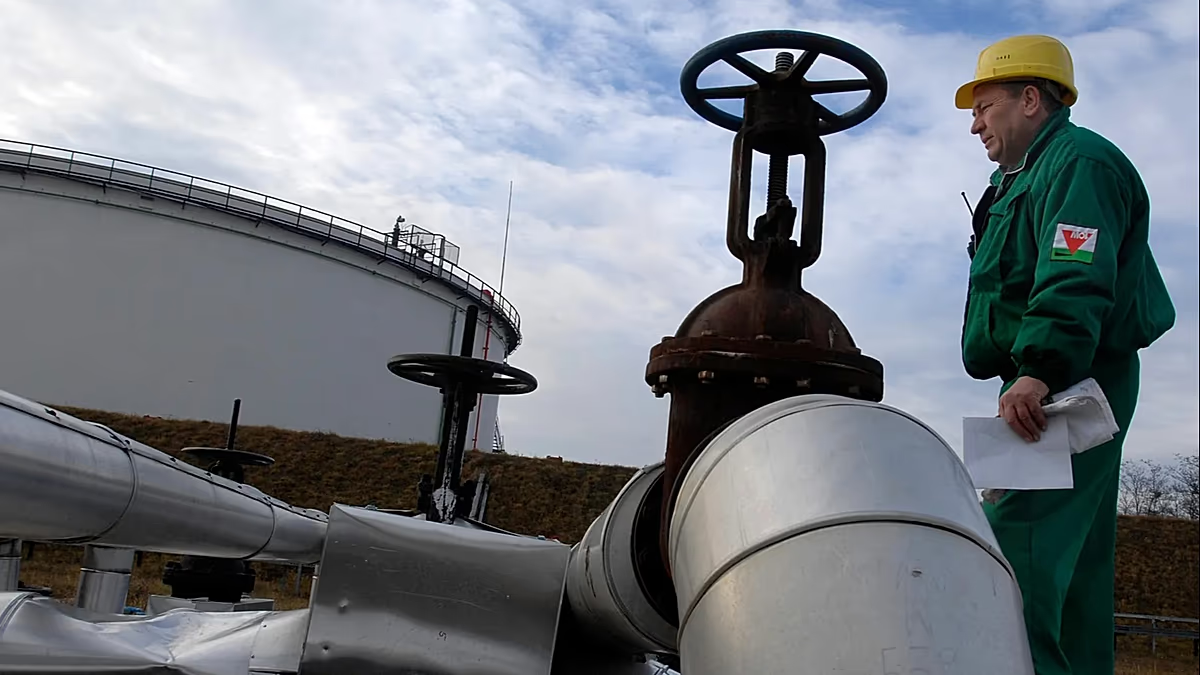
The Croatian Janaf pipeline (also known as Adria) is another potential route under discussion. Energy Commissioner Dan Jørgensen discussed diversifying oil and gas supplies using Janaf with representatives from Hungarian energy firm MOL, as an alternative to Russia’s Druzhba pipeline. However, MOL representatives expressed concerns about Janaf’s current capacity and alleged failures to meet contractual obligations, citing a lack of investment from Croatia.

Energy analysts agree that transitioning away from Russian supplies will require investment and adjustments. Homayoun Falakshahi, a senior energy analyst at Kpler, noted that eliminating the Druzhba pipeline’s supply would disproportionately affect landlocked countries and lead to higher feedstock costs, alongside technical modifications at refineries.

The Hungarian government has voiced strong opposition to the proposed ban, framing it as an infringement on national energy sovereignty. Foreign Affairs and Trade Minister Péter Szijjártó criticized the plan as politically motivated and detrimental to energy security, stating, “They call it diversification, but in reality, it cuts one of our vital oil routes.”

Despite these disagreements, EU diplomats remain optimistic that a political agreement can be reached before Christmas. The next round of negotiations is scheduled for Thursday, and participants are reportedly keen to finalize the legislation. The outcome will significantly impact the EU’s energy landscape and its relationship with Russia.

Stakeholders should monitor upcoming negotiations closely, as the details of the final agreement will determine the pace and scope of the EU’s transition away from Russian energy and affect energy security throughout the region.

Sign Up For Daily Newsletter

Be keep up! Get the latest breaking news delivered straight to your inbox.
[mc4wp_form]
By signing up, you agree to our Terms of Use and acknowledge the data practices in our Privacy Policy. You may unsubscribe at any time.
News Room November 19, 2025
Share this Article
Facebook Twitter Copy Link Print
Previous Article UAE plans 50-scientist Antarctica base and its own research ship
Next Article Temporary full road closure of Khalifa Al Attiya Interchange announced
Leave a comment Leave a comment

Leave a Reply Cancel reply

Your email address will not be published. Required fields are marked *

Stay Connected

235.3k Followers Like
69.1k Followers Follow
56.4k Followers Follow
136k Subscribers Subscribe
- Advertisement -
Ad imageAd image

Latest News

Taif Governor Inspects Historic District, Vows Heritage Preservation
Saudi Arabia June 5, 2026
National Committee Reviews Government Policy for Sustainable Endowments and Zakat Funds Wednesday
UAE June 5, 2026
Are Rising Living Costs Changing Life in Gulf Countries?
Opinion June 4, 2026
Saudi Arabia National Team Fixtures 2026 Match Schedule Results and FIFA World Cup Preparation
Sport June 4, 2026

You Might also Like

Saudi Arabia

Taif Governor Inspects Historic District, Vows Heritage Preservation

June 5, 2026
UAE

National Committee Reviews Government Policy for Sustainable Endowments and Zakat Funds Wednesday

June 5, 2026
Saudi Arabia

Families Swap Late Nights for Discipline Ahead of School Reopening

June 4, 2026
UAE

UAE Weather Tomorrow: Mostly Clear Skies Across the Emirates

June 4, 2026
Bahrain

Works Minister Inspects Sewer Network Progress at Al-Lawzi and Madinat Hamad

June 4, 2026
Kuwait

Pilgrims Tell Al-Anbaa Hajj Was Smooth and Exceptionally Organized

June 4, 2026
Oman

Oman Unveils Geneva Report Documenting Social Protection Redesign

June 4, 2026
Qatar

Iran Accuses Washington of Truce Breach Amid Regional Mediation Talks

June 4, 2026
//

GulfPress is a modern Gulf media platform delivering trusted news, business insights, technology updates, real estate trends, travel stories, explainers, and rankings from across the GCC and the Middle East.

Quick Link

  • About Us
  • Editorial Policy
  • Corrections Policy
  • Advertise with us
  • Contact Us
  • Privacy Policy
  • Terms of use

How Topics

  • Gulf News
  • Business
  • Lifestyle

Sign Up for Our Newsletter

Subscribe to our newsletter to get our latest news instantly!

[mc4wp_form]

Gulf PressGulf Press
Follow US

© 2023 Gulf Press. All Rights Reserved.

Join Us!

Subscribe to our newsletter and never miss our latest news, podcasts etc..

[mc4wp_form]
Zero spam, Unsubscribe at any time.

Removed from reading list

Undo
Welcome Back!

Sign in to your account

Lost your password?