








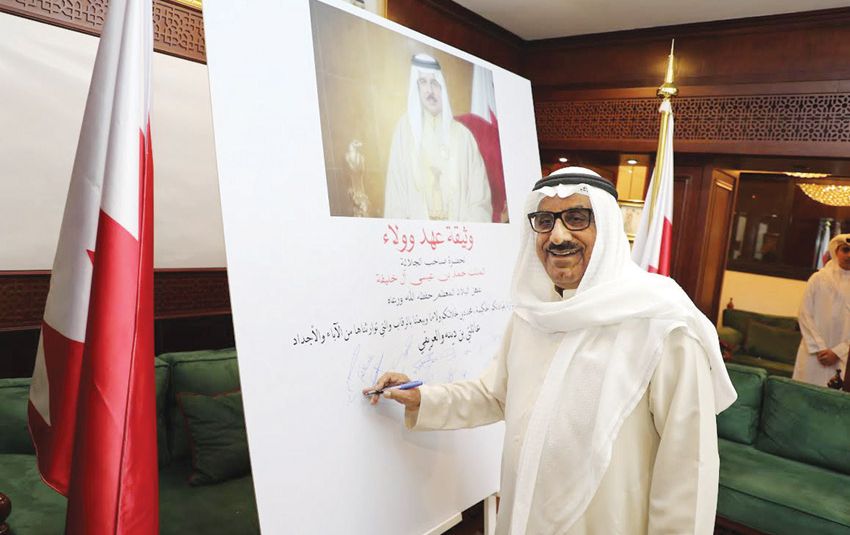

Bahrain pledge of allegiance reaffirmed by Bin Daina and Al-Areifi families
In a public ceremony in Bahrain, members of the Bin Daina and Al-Areifi families signed a formal document renewing their Bahrain pledge of allegiance to His Majesty King Hamad bin Isa Al Khalifa. The event, attended by family members and community leaders, emphasized continued loyalty to the monarchy and support for national unity and stability.
Officials at the gathering said the signing reflects long-standing traditions of allegiance and a shared commitment to protect the kingdom’s achievements and pursue development under the current leadership.
Who attended and what took place
The signing brought together senior figures from both families, local dignitaries, and representatives of civil institutions. Among those highlighted by organizers were Mohammed bin Mubarak bin Daina, identified as a ministerial figure, and Major General Mohammed bin Daina, director general of media and security culture, who underscored the event’s symbolic value.
Ahmed Khalid Al-Areifi, identified as a senior official at the National Contact Centre, also participated and described the pledge as a transmission of loyalty across generations. According to participants, the document signing included formal statements, collective signatures and short remarks reaffirming allegiance to the king and the constitutional order.
Officials’ statements and the national message
Speakers at the ceremony framed the Bahrain pledge of allegiance as both a moral duty and a practical foundation for civic cohesion. Officials stated that the pledge is rooted in historical sacrifices by earlier generations and is renewed to safeguard national security, social cohesion and continuity of governance.
They attributed recent developmental progress and ongoing stability to the vision of His Majesty King Hamad and the guidance of Crown Prince Salman bin Hamad Al Khalifa, whom they said continue to lead reforms and strategic initiatives across economic, social and environmental sectors.
Historical context and cultural significance
Observers noted that family- and community-led pledges are part of a wider pattern of public expressions of loyalty in Bahrain’s political culture. Such acts are understood as community endorsements of the monarchy’s role in national development and as affirmations of shared identity.
Furthermore, participants emphasized the intergenerational dimension of allegiance, saying the pledge serves to transmit values of national unity and civic responsibility from elders to younger generations. Analysts say these gestures can reinforce social bonds at a local level and contribute to broader state-society resilience.
Why the pledge matters for stability and development
The renewed Bahrain pledge of allegiance is portrayed by organizers as more than ceremonial; it is presented as a civic mechanism that supports institutional stability and public confidence. According to officials, such affirmations help maintain social consensus around national priorities and enable uninterrupted implementation of development plans.
Additionally, the event highlighted the role of communal leaders in underpinning the state’s ability to respond to challenges. In times of regional uncertainty, local unity and clear support for existing institutions are often cited by policymakers as central to preserving security and attracting investment.
Reactions, implications and related initiatives
Local reaction to the signing was described by participants as positive, with attendees framing the document as a reaffirmation of national solidarity. Organizers indicated that similar family or community pledges have occurred in other parts of the kingdom and may continue as part of public engagement strategies that emphasize national cohesion.
Government statements referenced at the event pointed to ongoing projects across infrastructure, environmental protection and social services as concrete outcomes of the leadership’s agenda. Analysts suggest such pledges, when combined with visible policy delivery, can boost public morale and provide an anchor for civic discourse.
Looking ahead: what to watch next
Readers should watch for official releases from the Ministry of Information or the National Contact Centre that may provide additional details about the ceremony and related community outreach. Observers will also look for how local pledges are integrated into broader communication efforts to sustain momentum for national projects.
In the near term, follow-up activities could include community meetings, public briefings on development initiatives, or further gatherings that reaffirm support for state priorities. Such steps would signal a continuing emphasis on unity as a strategic asset for Bahrain’s policy makers.
Conclusion
The signing of the allegiance document by the Bin Daina and Al-Areifi families underscored an enduring theme in Bahrain’s public life: the interaction between community leadership and the monarchy as a source of national cohesion. The Bahrain pledge of allegiance, reiterated at this event, is presented by organizers as a reaffirmation of loyalty, a commitment to preserve national gains, and a civic gesture designed to support the kingdom’s development path.
Officials said the event reflects an ongoing pattern of community engagement that aligns local identity with national objectives. Stakeholders and the public are likely to monitor subsequent statements and community activities to assess how these symbolic acts translate into sustained social and policy outcomes.