





Women in Media: A National Vision After 25 Years
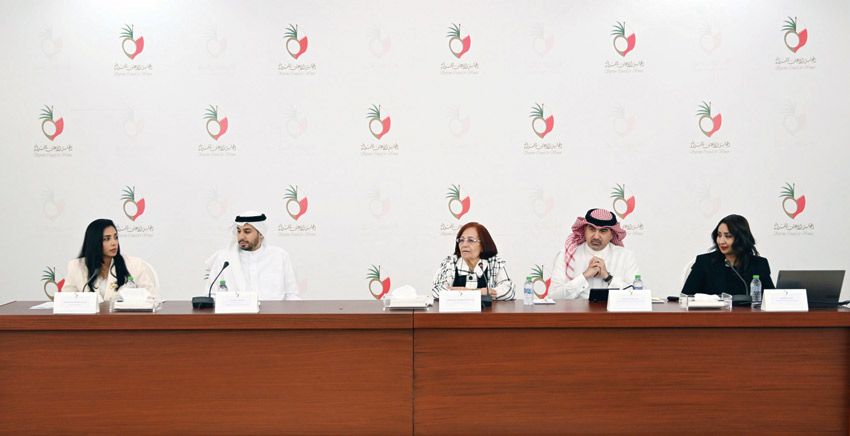
The Supreme Council for Women, in collaboration with the Bahraini Journalists Association, organized a dialogue session titled “Women and Media: A National Vision After 25 Years.” This event took place at the council’s headquarters, attended by Lulwa bint Saleh Al Awadhi, the Secretary-General of the Supreme Council for Women, along with several council members, journalists, and specialists. The session was part of a series of activities celebrating the silver jubilee of the Supreme Council for Women and Bahrain Women’s Day concurrently with the Year of the Great Isa.
Significance of the Dialogue Session
The session was inaugurated by Lulwa Al Awadhi, who conveyed greetings from Her Royal Highness Princess Sabika bint Ibrahim Al Khalifa, the consort of the King and President of the Supreme Council for Women. Al Awadhi praised the collaboration with the Bahrain Journalists Association, emphasizing the national efforts to enhance women’s presence in the media and highlight their achievements.
She underscored that the National Strategy for the Advancement of Bahraini Women, adopted by His Majesty the King in 2005, paid significant attention to the media sector. This was achieved by including a dedicated axis focused on media and awareness, reflecting in national initiatives aimed at enhancing Bahraini women’s representation in the media and shedding light on their realities. The upcoming National Strategy for the Advancement of Bahraini Women 2025-2026 continues to prioritize the media, particularly its role in raising community awareness about women’s rights, as enshrined in the National Action Charter, the constitution, and relevant legislation.
The Evolving Role of Women in Bahraini Media
During the session “Women and Media: A National Vision After 25 Years,” various speakers shared their insights. Rashid Nabil Al-Hamr, Vice President of the Bahrain Journalists Association and Editor-in-Chief of Al-Ayam Newspaper, highlighted the role of Bahraini journalism in documenting women’s progress over the past 25 years. He emphasized the necessity of preserving and showcasing these achievements, asserting that Bahraini women have been contributing effectively and efficiently to journalism.
According to Al-Hamr, Bahraini women’s progression in the field has transitioned from empowerment to seeking leadership across various sectors, including media. He noted the Supreme Council for Women’s successful initiatives in facilitating women’s accomplishments and supporting their rise to leadership roles in media.
Promoting Women’s Contributions in Media
Dr. Noura Al-Shamlan, a member of the Supreme Council for Women and an associate professor of criminal law at the University of Bahrain, spoke about the early participation of Bahraini women in the media sector. Her commentary encompassed their diverse roles, from journalism to broadcasting, and their advancement to leadership positions within the Ministry of Information. Al-Shamlan noted the evolution of women’s roles from merely conveying information to actively participating in decision-making processes.
Furthermore, Al-Shamlan discussed the council’s role in establishing strategic frameworks to support women’s involvement in the media, including developing initiatives, enhancing capacities, and improving opportunities. She also pointed out that the National Strategy for Advancing Bahraini Women 2025-2026 outlines cooperative frameworks between the Supreme Council for Women and media institutions, alongside metrics reflecting Bahraini women’s presence in the media industry.
Future Prospects for Women in Bahraini Media
Hesham Abu Al-Fattah, Chairman of the Women in Media Committee within the Supreme Council for Women, addressed the committee’s efforts to enhance the portrayal of women in media and develop their participation in new media and content creation amidst digital transformations. Abu Al-Fattah explained that the committee is working on studying the situation of women in media, analyzing their representation in programs, television dramas, and social media platforms.
This constructive dialogue indicates a recognition of the importance of women’s roles in shaping media narratives and the broader societal context. It reflects an ongoing commitment to advancing gender equality in Bahrain’s media landscape through strategic planning and collaborative initiatives.
As this dialogue unfolds, it stands as a pivotal moment for enhancing women’s visibility and effectiveness in the media, suggesting an optimistic trajectory for future advancements. The next steps will likely include increased collaboration with media institutions to refine strategies aimed at empowering women in this sector, setting a precedent for future progress in the coming years.