








Archaeological Discoveries in Dhahirah Province
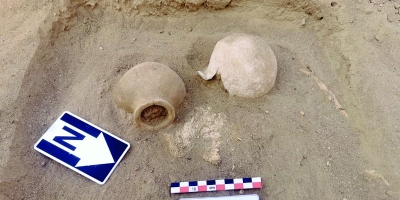
Recent excavation and digging activities conducted by the Department of Heritage and Tourism in Dhahirah Province have uncovered skeletal remains and complete pottery items within burial chambers. These findings, mostly linked to the Jemmada Nasr civilization in Mesopotamia, date back to the third millennium BCE. The dig occurred in a residential plan in the Ainain area of Abri, starting last week.
Waleed bin Hamad Al-Ghafri, Director of the Heritage and Tourism Department in Dhahirah Province, informed the Oman News Agency that the excavations at the site represent a rescue operation for archaeological graves located within a residential project in Ainain, Abri. He added that these digs aim to document and protect archaeological evidence, saving the discoveries from destruction due to rapid urban expansion in the region.
Significant Archaeological Findings
In addition to the human bones and pottery, the excavation team found various copper and bronze artifacts, including arrowheads, axes, and daggers. A significant number of beads related to the same time period were also discovered. These findings offer vital insights into the technological capabilities and cultural practices of the ancient inhabitants of the area.
The specialized team is continuing their excavation work at the site until the end of the month, and preliminary results underscore the site’s considerable importance. The discoveries highlight cultural exchanges and the continuity of civilization between Oman and neighboring regions during that historical period, enhancing the value of Omani heritage.
Protecting Cultural Heritage
The archaeological site reflects the rich and diverse history of Oman, positioning it as a critical area for historians and archaeologists alike. The ongoing efforts by the Department of Heritage and Tourism are essential for safeguarding these findings against the pressures of urban development.
As urban areas continue to expand, archaeological sites like those in Dhahirah assume greater significance. They serve as a tangible link to the past, providing evidence of the interactions and exchanges of civilizations through time. The knowledge gained from these digs not only increases the understanding of Oman’s historical context but also illustrates the broader global narratives of ancient cultures.
Implications for Future Research
Looking ahead, there are significant implications for future archaeological research and tourism in Oman. The ongoing excavation efforts enrich the knowledge base of the region’s historical narrative, further establishing Oman as a destination for cultural tourism. The discoveries could potentially attract both domestic and international interest, spurring education about Oman’s ancient civilizations.
As the team completes its work at the site, observers can anticipate further announcements regarding the findings and their implications for understanding the region’s past. The emphasis on heritage protection and discovery will likely shape policy and public interest in archaeological endeavors, ensuring that Oman’s rich cultural legacy is preserved for future generations.