








Global Security Forum 2026 Concludes in Doha
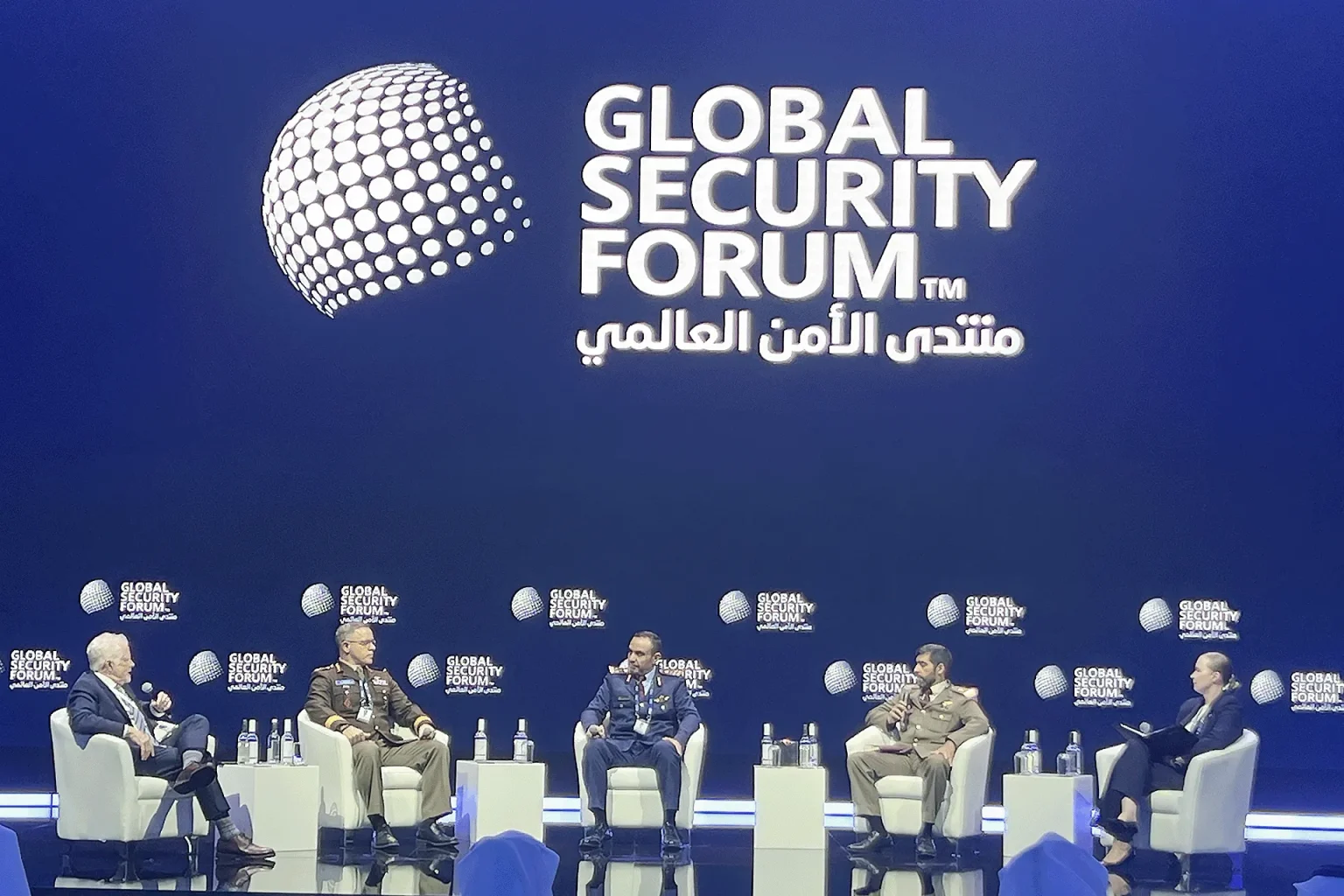
The Global Security Forum 2026 concluded in Doha after three days of intensive discussions centered on the theme “The Future of Alliances.” This gathering took place during a time of intricate international and regional challenges, marked by ongoing conflicts in the Middle East and the repercussions of the Russia-Ukraine war. These factors are testing the cohesion of the international system and the ability of traditional security frameworks to avert major cross-border confrontations.
On the final day, discussions were anchored on two strategic themes. The first focused on dismantling the “asymmetric deterrence dilemma” caused by an explosion in the technology of inexpensive drones and artificial intelligence against expensive traditional missile defense capabilities. The second theme revolved around targeting vital waterways, energy networks, and global supply chains as direct geopolitical pressure tools affecting the stability of communities and their economies.
Deterrence Erosion and Missile Defense Crisis
The unprecedented synchrony between the European conflict and escalating tensions in the Middle East has created a complex security scenario. Various operational theaters are competing for scarce and expensive defensive resources, putting international security agreements to a genuine test to protect vital corridors and energy facilities from direct attacks.
Military and strategic analyses during the sessions indicated that current confrontations have revealed fundamental shifts in the rules of engagement. Key points summarizing this evolution include:
- Depletion of Air Defense Systems: The widening scope of combat has led to severe shortages in intercept missiles for integrated air and missile defense systems, as ballistic missiles and drones are being deployed at an unprecedented rate, showing the inadequacy of traditional arsenals to keep up with ongoing wear and tear.
- Securing Maritime Passages as a Collective Responsibility: Discussions underscored that the protection of the Strait of Hormuz, Bab-el-Mandeb, and the Red Sea is not an isolated regional issue but a cornerstone of global economic security. It necessitates the activation of joint defense agreements, integration of surveillance systems, and development of collaborative naval mine clearance methods.
- Disruption of Non-Proliferation Regimes: Debates raised increasing concerns about the onset of a regional arms race, as regional actors compare the deterrence capabilities of nuclear states and disarmament efforts, concurrently with the rise of small modular reactors for securing clean energy, which requires innovative regulatory mechanisms to keep programs within peaceful frameworks.
- Sub-Nuclear Missile Deterrence: The reciprocal strikes in the region demonstrated the feasibility of engaging in missile exchanges and territorial incursions without sliding into a full-blown nuclear conflict. This has prompted countries to invest intensively in three strategic areas: early warning systems, multi-layered defenses, and precise strike capabilities.
Cheap Intelligence Revolution: How Drones Redefine Balance of Power
Drones and unmanned systems have transitioned from merely tactical support tools to comprehensive operational environments, fundamentally reshaping traditional power balances. Their low cost and ease of manufacture enable non-state actors and organized crime networks to acquire firepower rivaling conventional military forces at a fraction of the cost.
Discussions highlighted rapid transformations in drone warfare, outlining significant phases that reflect the battlefield evolution of these systems:
- Tactical Technological Leap: The swift transition from commercially available drones equipped with homemade explosives to high-speed tactical drones has culminated in systems guided by fiber-optic technology impervious to electronic interference, ultimately integrating artificial intelligence algorithms for autonomous targeting.
- Economic Cost Imbalance: Conventional armies face a disproportionate defensive equation; intercepting a low-cost drone entails launching intercept missiles with costs several hundred times that of the target, ultimately threatening to deplete military budgets and dismantle protective systems surrounding vital infrastructure.
- Civilian Innovation Deployment: Ongoing conflicts have demonstrated communities’ and technicians’ capabilities to repurpose agricultural and cinematographic software into advanced battle networks, producing millions of drones locally and integrating them into command and control systems.
Modern Threats: Organized Crime and Cyber Terrorism
Contemporary threats are fueled by the rapid advancement of generative artificial intelligence and open networks, enabling armed groups and organized crime to utilize these technologies to compensate for field and logistics losses, while circumventing reliance on experts through the use of open-source models and unregulated software.
Participants in the counterterrorism sessions cautioned about indicators suggesting the expansion of this threat:
- Reduced Threshold for Destructive Expertise: Individuals have been able to exploit generative smart models to extract detailed instructions for creating complex explosives, conducting field reconnaissance planning, and bypassing virtual security protections.
- Hyper Propaganda and Digital Recruitment: Leveraging intelligent algorithms to broadcast persuasive content in multiple languages within seconds, targeting vulnerable community segments through engineered social interactions designed for immediate psychological impact.
- Exploiting Alternative Infrastructures: Armed organizations have intercepted satellite internet networks in conflict zones, such as West Africa, to bypass government communication shutdowns and connect field operations with financing channels through cryptocurrencies.
- Regulatory Responsibility Gap: The widening gap between major tech companies racing to launch AI models for commercial gain and legislative and security bodies lacking proactive regulatory frameworks to mitigate the misuse of these technologies.
Supply Chains in the Context of Hybrid Warfare
Contemporary conflicts demonstrate that confrontation arenas are no longer confined to frontline positions but extend to maritime ports, energy stations, and desalination facilities. Targeting these infrastructures has become a geopolitical pressure tool, affecting international economic stability and global trade routes.
Forum discussions examined the implications of interlinkages between security in these areas and market stability:
- Maritime Straits as Sensitive Arteries: Any disruption in the Strait of Hormuz, Bab-el-Mandeb, or the Red Sea immediately impacts oil and liquefied gas prices, disrupts agricultural fertilizer supplies, and triggers inflationary waves across global economies, burdening consumers.
- Fragility of Isolated and Developing States: Nations relying entirely on maritime imports for food and medicine endure severe repercussions, as rerouting ships towards the Cape of Good Hope leads to astronomical shipping and insurance costs and delays in essential supplies.
Diplomacy and the Limits of Alliances
As polarization intensifies and the effectiveness of certain multilateral international platforms declines, coordinating operational law enforcement and preventive diplomacy gains exceptional importance to keep communication channels open and prevent total collapse.
The closing sessions of the forum highlighted crucial perspectives for enhancing collaborative mechanisms:
- Globalizing and Neutralizing Law Enforcement: International liaison networks and coordination through Interpol have established that focusing cooperation on pursuing crime and dismantling smuggling operations, free from political and ideological disputes, allows for the urgent exchange of intelligence that can save thousands of civilian lives during periods of international tension.
In conclusion, the Global Security Forum 2026 in Doha has outlined profound transformations in the international order, suggesting that resolving crises will depend on the international community’s capacity to pivot alliances from arenas of conflict into flexible partnerships safeguarding international law. Looking ahead, observer nations should monitor evolving diplomatic efforts and security cooperation frameworks, as they play a critical role in mitigating the likelihood of an overarching security disorder.