








The Discovery of a Rare Treasure in Finland
In a serene and secluded area near the town of Sysmä in southern Finland, an unexpected archaeological find has been uncovered, bringing to light secrets that have lain dormant for over a thousand years. This extraordinary discovery began with a casual metal detector search by an enthusiast who stumbled upon a significant cache of silver, leading to what might be one of the most remarkable finds in Finland’s recent history.
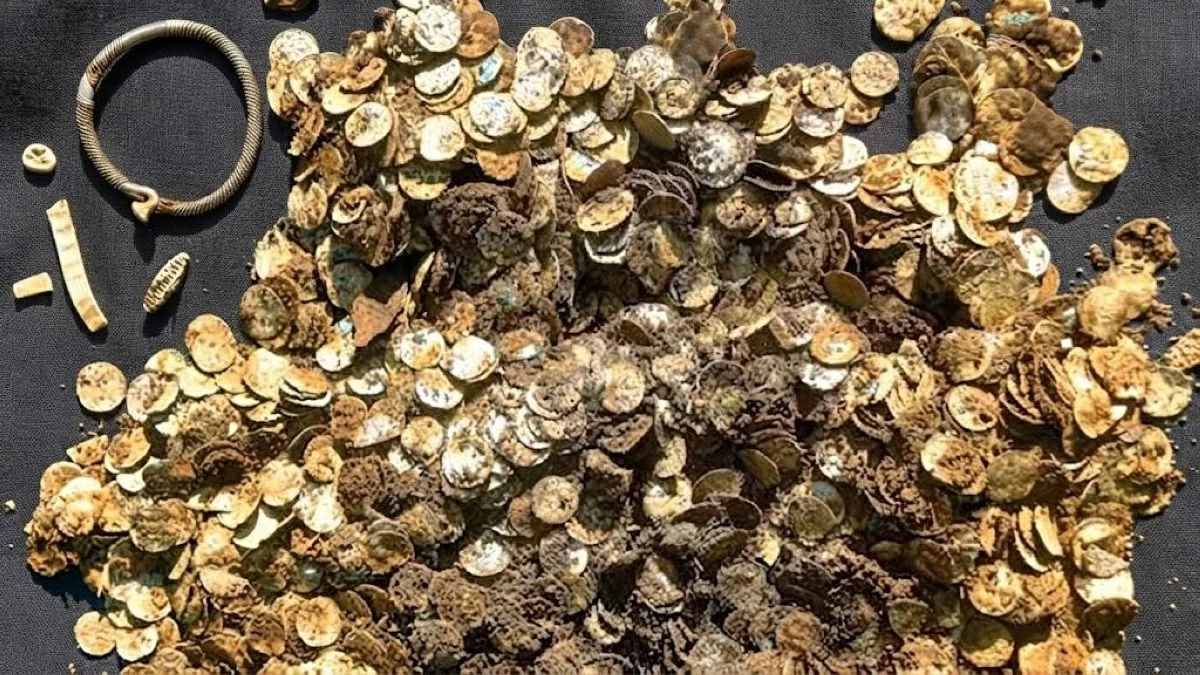
The search commenced earlier this month when the metal detector picked up consecutive signals, prompting Kalie Lapinnin to dig deeper. To his astonishment, he unearthed an extensive treasure trove of silver. Archaeologists from the Lahti Museums promptly responded, commencing excavation the following day. What they found was astonishing: thousands of silver coins, pieces of raw silver, a bracelet, and a bead, together weighing approximately 4.5 kilograms. Experts believe these artifacts date back to the years 1000 to 1050 AD.
Details of the Silver Treasure
The significance of this treasure lies not only in its size but also in its unique method of concealment. The silver was hidden in two separate locations roughly 12 meters apart, stored within birch bark containers at a depth of 45 centimeters among the rocks. Experts have dubbed it a “double treasure,” a rare find in the region. Initial examinations of the coins reveal a remarkable diversity, showcasing extensive ancient trade networks. The coins originated from various countries, including Sweden, Britain, and Germany, as well as historical dirhams from the Middle East.
This discovery has surpassed the previous record for the largest coin hoard in Finland, which had stood since 1895, consisting of approximately 1,700 coins. The Sysmä treasure boasts more than 4,000 coins, posing a fascinating question: who buried this wealth and for what purpose? There is speculation that it belonged to a local merchant or wealthy individual who might have hidden it out of fear of conflicts.
Impact on Historical Understanding
The implications of this extraordinary find are significant, paving the way for a reevaluation of the region’s historical role as a vibrant trade center during the late Iron Age. Ongoing studies aim to decode the historical context surrounding the treasure, potentially rewriting narratives about the dynamics of trade and wealth in ancient Finland.
Archaeologists continue to analyze the coins and artifacts to reveal more about their origins and the socio-economic circumstances of the time. This ongoing research may shed light on historical trade connections across Europe and the Middle East, highlighting an interconnected world long before the modern era.
Conclusion and Next Steps
The Sysmä treasure is a significant archaeological find that opens new avenues for exploration and inquiry into Finland’s past. As researchers delve deeper into the history and significance of this treasure, further updates are expected to emerge. The archaeological community, as well as history enthusiasts, will undoubtedly be watching to see how this discovery reshapes our understanding of early trade practices and cultural exchanges. With excavation work continuing, the findings could provide invaluable insights into the economic landscape of the time.