








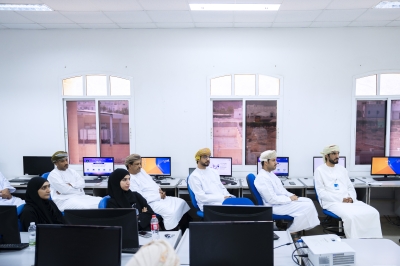

Wasool system training concludes at University of Technology and Applied Sciences
The University of Technology and Applied Sciences, through its Records Department and in cooperation with the National Documentation and Archives Authority, recently concluded a four-day training program to prepare trainers for the Wasool system for managing electronic correspondence and records. The program is part of the university’s preparations to implement the Wasool system and strengthen digital document workflows, officials said.
Who attended and what the initiative sought to achieve
The program brought together university staff members responsible for records, correspondence and information management. The primary objective was to develop a cadre of internal trainers who can cascade knowledge across faculties and administrative units. Therefore, the training focused on equipping participants with the skills to teach end users and support a phased rollout of the Wasool system.
Program content and practical modules
The four-day curriculum combined theoretical briefings with hands-on workshops. Participants learned to create messages and internal memos, manage tasks and delegations, apply electronic signatures, and run searches, reports and dashboards. Additionally, the agenda covered end-to-end tracking of correspondence and related procedural follow-up to ensure accountability and timely action.
Furthermore, modules addressed electronic document management fundamentals. Trainers examined retention schedules, classification schemes, file creation and document lifecycle processes. The sessions included procedures for access, use and loaning of records, and handling both electronic and paper archives. The training also reviewed confidentiality classifications and final disposition rules.
Administrative controls and system manager features
Officials highlighted the system’s administrative layer, which enables central management of users and groups, access permissions, and delegated authorities. Trainers received instruction on assigning roles, setting and auditing access rights, and generating compliance and operational reports. They also practiced customizing dashboards and user interfaces to align with unit-specific workflows.
These capabilities aim to support service continuity and information governance. Meanwhile, understanding administrative functions helps trainers troubleshoot common issues and advise units on governance policies that complement technical controls.
Benefits for electronic document management and institutional workflow
Adopting an integrated electronic document management approach can reduce manual paperwork, speed approvals and improve record retrieval. According to program organizers, the training is intended to raise institutional readiness and improve consistency in how documents and correspondence are handled across the university. In addition, the initiative supports broader efforts to digitize administrative processes.
Training of trainers offers scalable capacity building. By preparing university trainers, the institution expects to shorten the learning curve for end users and foster internal expertise. This approach aligns with best practices for enterprise systems deployment, where local trainers bridge the gap between vendor support and daily operational needs.
Context: why higher education is moving to digital records
Universities increasingly adopt electronic document management systems to manage growing volumes of records and to meet transparency and preservation obligations. Electronic platforms improve auditability, reduce physical storage costs and enable remote access for distributed teams. Therefore, the Wasool system pilot at the university reflects a sector-wide shift toward secure, searchable and policy-driven recordkeeping.
Implementation considerations and risk management
Effective deployment requires attention to governance, data classification and user training. The training program emphasized these points, noting the need to calibrate access controls and retention policies to legal and institutional requirements. Furthermore, officials suggested periodic refresher training and a support structure to address user queries during the initial rollout.
Data migration and interoperability were identified as areas to monitor. Meanwhile, establishing clear escalation paths for technical and records management issues can reduce delays and maintain service levels during transition.
Next steps and expected rollout
According to the university, the next phase will involve trainer-led sessions for departmental staff and pilot deployments in selected units. The timeline shared by organizers indicates staged rollouts to allow for feedback, configuration adjustments and performance monitoring. Therefore, stakeholders should expect progressive implementation over the coming months as units complete user training and system onboarding.
What to watch for
Observers should look for how quickly departments adopt standardized workflows and whether the system improves response times for correspondence and records retrieval. Furthermore, ongoing metrics such as training completion rates, helpdesk tickets and compliance with retention schedules will indicate readiness. Officials recommended tracking these indicators to guide further investment and scaling decisions.
Conclusion and outlook
The four-day training aims to position the University of Technology and Applied Sciences to implement the Wasool system effectively and to strengthen its electronic document management capabilities. By building internal trainer capacity and addressing administrative controls, the institution seeks a smoother transition to integrated digital workflows. Readers should watch for trainer-led departmental sessions and pilot outcomes in the months ahead as the university proceeds with staged system adoption.