






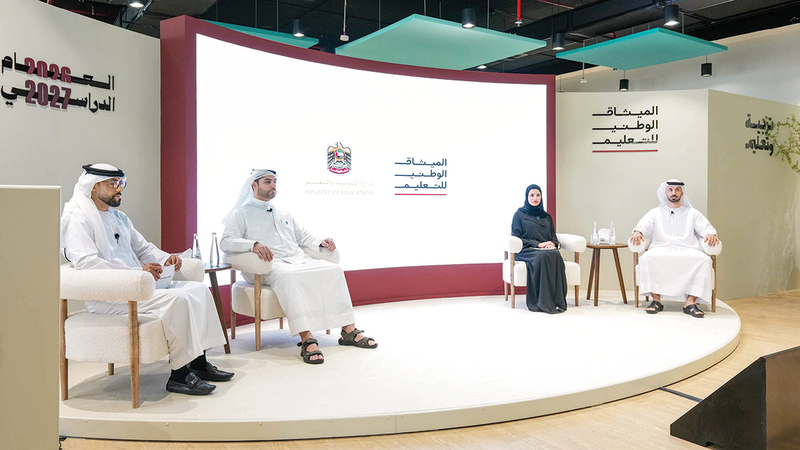

UAE education readiness 2026: Ministry confirms full operational preparedness
The Ministry of Education announced UAE education readiness 2026 ahead of the 2026–2027 academic year, saying all academic, administrative, operational and technical arrangements are complete. Officials outlined plans to welcome more than 1,277,000 students across over 1,180 public and private schools, and to embed the National Education Charter values into curricula and school life, the ministry stated.
Who, what and where: key details of the 2026–2027 start
The briefing took place at the Zayed Educational Complex in Al Warqaa and was attended by Minister Sarah bint Yousuf Al Amiri and senior ministry officials. According to the ministry, preparations include opening 11 new schools and one educational complex, launching new kindergartens, distributing eight million textbooks and deploying 5,810 school buses. The ministry emphasized that UAE education readiness 2026 is a coordinated effort across all sectors of the ministry.
Operational measures and statistics for the 2026–2027 school year
The ministry provided specific operational data to illustrate readiness. Officials reported that about 26,700 new students will join public schools this year, and that staffing, facilities maintenance, health and safety protocols, and transport logistics have been reviewed and updated. Furthermore, the ministry said policies for assessment and school operations were revised to ensure a smooth reopening and consistent learning experience.
Therefore, school leaders and teachers have been briefed on classroom deployment and timetables, while support teams completed technical checks on facilities and learning platforms. The ministry added that UAE education readiness 2026 extends beyond opening day: it includes continuity plans for teaching and learning through the school year.
Activating the National Education Charter across six tracks
The ministry outlined a national drive to activate the National Education Charter by embedding its principles across six main tracks. These tracks prioritize curriculum and learning by mapping the charter values to learning outcomes and integrating them into lessons, the ministry said. Additionally, schools will promote these values through co-curricular activities, school culture, and family engagement.
According to officials, teachers will be equipped to model and reinforce charter values in everyday practice, while classroom and extracurricular programs will be used to reinforce behavior aligned with the charter. The ministry also announced a nationwide campaign titled “With the Charter We Reach Horizons” to turn charter principles into daily culture and practice.
Professional development and curriculum alignment
Teacher professional development is a central pillar of the readiness plan, with targeted programs designed to support curriculum changes and strengthen pedagogy. The ministry said training sessions will focus on integrating values into lesson design, assessment strategies, and student-centered learning approaches. Related secondary keywords include “teacher professional development” and “curriculum reform.”
Furthermore, the ministry indicated that evaluation frameworks are being enhanced to measure both academic outcomes and the impact of values-based initiatives. These changes aim to ensure that learning outcomes reflect knowledge, skills and the charter values the education system seeks to cultivate.
Implications for students, families and school communities
For students and families, the emphasis on the National Education Charter means a stronger role for parents and communities in reinforcing values at home and school. The ministry has called for collaboration between families and schools to ensure behavior expectations and learning priorities are aligned. Meanwhile, schools will run activities across the year to maintain visibility and reinforcement of charter principles.
Additionally, the scale of operational readiness — from textbooks and buses to new facilities — is intended to reduce friction at the start of term and allow teachers to focus immediately on instruction. The ministry noted that these measures are part of a broader strategy to improve the quality of educational outcomes nationally.
Monitoring, evaluation and next steps
The ministry indicated it will monitor implementation through periodic reviews and data collection on attendance, learning progress and school climate. Officials suggested that evaluation results will inform any mid-year adjustments and future policy development. This monitoring is presented as part of a longer-term reform process to sustain improvements in the education system.
Overall, UAE education readiness 2026 is framed as the initial phase of continuous reform: the ministry plans to report updates on implementation and student outcomes, and stakeholders are advised to watch for the ministry’s periodic progress reports and school-level communications in the early weeks of the term.
Conclusion: what to watch next
In the weeks after school opening, observers should watch for early indicators of implementation success, including textbook distribution rates, bus operations, initial attendance figures and early assessments of classroom integration of charter values. The next expected milestones are the launch of the back-to-school campaign and the first monitoring roundup from the ministry, which officials said will clarify short-term impacts and any necessary adjustments to support teachers and students.