








Qatari Premier Meets Iranian Leaders in Tehran to Discuss Strait of Hormuz Corridor
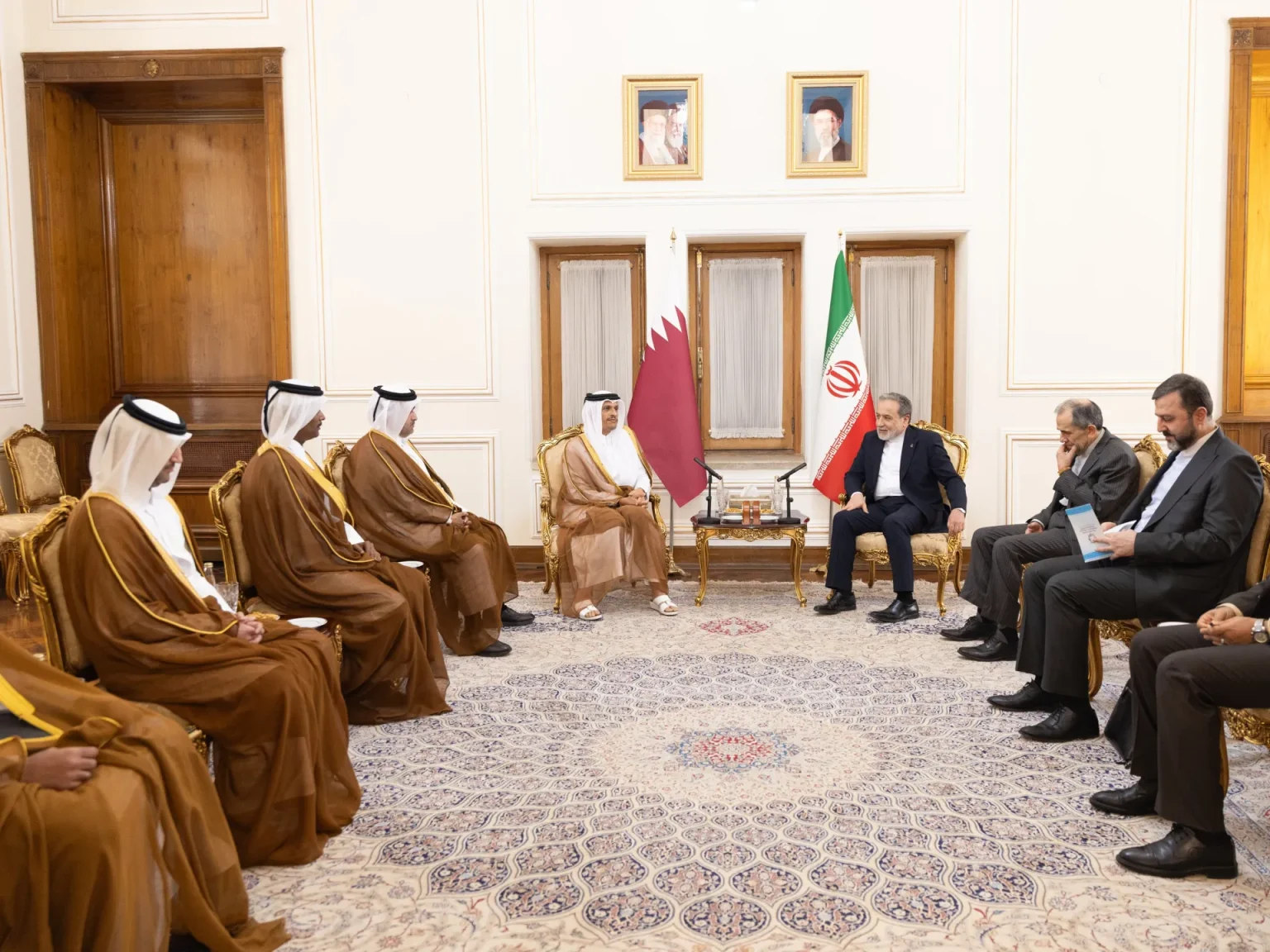
Qatar’s Prime Minister and Foreign Minister Sheikh Mohammed bin Abdulrahman Al Thani visited Tehran on 27 August 2026 to discuss de-escalation and proposals for a temporary maritime corridor through the Strait of Hormuz, according to Qatar’s foreign ministry. The meetings, held with Iran’s president, parliament speaker, foreign minister and national security secretary, focused on reducing regional tensions and safeguarding freedom of navigation.
The discussions came amid renewed efforts by Gulf states and international partners to restore safe commercial passage after months of disrupted shipping. Officials said the talks included technical and diplomatic elements aimed at clearing mines and ensuring maritime security in key shipping lanes.
Diplomacy and Dialogue as Priority
Sheikh Mohammed held separate sessions with President Masoud Pezeshkian, Parliament Speaker Mohammad Bagher Ghalibaf, Foreign Minister Abbas Araghchi and Supreme National Security Council Secretary Mohsen Rezaee, Qatar’s ministry said. During the meetings, the prime minister emphasized the need to continue de-escalation efforts and to create conditions conducive to renewed dialogue across the region.
According to official statements, Qatar stressed that diplomacy remains the best path to resolve disputes and prevent further disruption to regional security. Furthermore, the Qatari delegation highlighted the importance of respect for neighboring states’ sovereignty and adherence to international law governing maritime passage.
Talks on a Temporary Maritime Corridor in the Strait of Hormuz
One central topic was a proposed interim maritime corridor through the Strait of Hormuz that would allow ships to transit under agreed safeguards. Qatar and Iran discussed elements of a phased framework that reportedly includes joint mine-clearance efforts and coordination with coastal states.
Officials said the corridor idea follows recent diplomatic progress between Iran and Oman on a framework for temporary safe passage. Meanwhile, Qatari leaders reiterated the need to involve other littoral states in consultative talks, since the Strait of Hormuz is a strategic chokepoint for global energy and trade flows.
Context: Shipping Disruptions and Regional Tensions
Shipping through the Strait of Hormuz was severely affected earlier in 2026 after a period of hostilities between regional and international actors led to restrictions and incidents in the waterway. The disruptions caused wider supply chain consequences for global energy markets and commercial trade, according to public reports and industry assessments.
In June 2026, the United States and Iran signed a memorandum of understanding on freedom of navigation that aimed to reduce the risk of incidents, but implementation stalled amid subsequent tensions. Regional and international efforts have since focused on practical measures, including mine clearance and secure corridor arrangements, to restore reliable passage.
Technical Plans and Mine Clearance Proposals
Qatar and Iran discussed a concrete plan to undertake a joint project to clear mines and explosive remnants from shipping channels, the Qatari statement said. Such technical operations would likely require multilateral coordination, specialized equipment, and verification mechanisms to ensure safety for commercial vessels.
Maritime security experts note that mine clearance is complex and time-consuming. Therefore, establishing a temporary maritime corridor combined with phased clearance operations could offer an interim solution while broader diplomatic processes proceed, analysts said.
Implications for Regional Security and Trade
Reopening secure passage through the Strait of Hormuz would have immediate implications for regional stability and global energy supplies. Furthermore, a transparent, multilateral mechanism for safe transit could reduce the risk of unilateral actions that escalate tensions.
Qatar’s engagement in Tehran reflects its role as an intermediary in regional diplomacy. Observers say the Gulf state’s shuttle diplomacy aims to bridge diverging positions and encourage a pragmatic, security-focused approach to restoring normal maritime traffic.
Secondary Keywords: Freedom of Navigation and Maritime Corridor Coordination
Discussions emphasized freedom of navigation as a central principle and sought practical measures to uphold commercial access. In addition to the corridor proposal, participants considered confidence-building steps, information-sharing mechanisms, and engagement with international naval and commercial stakeholders.
Regional officials and shipping industry representatives will be closely watching whether follow-up meetings include Gulf littoral states, technical teams for mine clearance, and timelines for phased implementation of any corridor. Coordination among these actors is essential for credibility and effectiveness.
Multilateral Steps and Verification
Verification and transparency were recurring themes in the Tehran talks, according to statements. Observers say independent verification, possibly through international agencies or third-party observers, could bolster trust and help ensure compliance with agreed safety measures.
Moreover, combining diplomatic talks with operational plans for mine clearance could shorten the timeframe for restoring reliable navigation if security guarantees and technical capacity are aligned.
What to Watch Next
Qatar indicated that follow-up consultations were discussed and that further regional talks could take place in the coming weeks, though no formal timeline was announced. Stakeholders should watch for joint meetings that include Oman and other Gulf states, technical agreements on mine-clearance operations, and any formal arrangements to launch a temporary maritime corridor in the Strait of Hormuz.
Ultimately, progress will depend on sustained diplomatic engagement, practical security preparations, and multilateral buy-in. If implemented, the corridor and clearance measures could provide a pragmatic pathway to reduce risks for commercial shipping while broader political issues continue to be addressed through dialogue.