








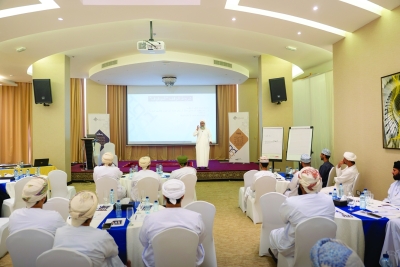

Endowment Governance Training Launches in Salalah
The Imam Jaber bin Zayd Endowment Foundation and the Sheikh Mustahil bin Ahmed Al-Maashani Endowment Foundation jointly organized an endowment governance training program titled “Towards Endowment Efficiency” at Bilad Point Resort in Salalah. The endowment governance training attracted employees and stakeholders from the endowment sector to strengthen institutional capabilities and Sharia compliance in endowment management.
The two-day program aimed to improve practical skills for endowment management and to promote principles of transparency and accountability, officials said. The event took place with participation from ministry staff, endowment managers, board members and interested scholars and practitioners in waqf governance.
Endowment Governance Training: Program Overview
The training program provided a concentrated agenda focused on aligning Sharia rulings with modern governance standards. According to the foundation, the initiative sought to bridge legal, financial and administrative aspects of endowment work while maintaining the religious integrity of waqf assets.
One of the stated goals was to enhance the capacity of staff who manage or oversee endowments so they can apply governance principles consistently. Furthermore, the organizers emphasized that the program supports long-term sustainability and developmental impact for endowments, including prudent investment in Sharia-compliant financial instruments.
Curriculum and Key Topics Covered
The curriculum was divided into two main modules: Sharia rulings on endowments and governance practices for institutional growth. The Sharia module examined endowment rules, conditions, classifications and the oversight role required to ensure lawful management of endowed assets, presented by Sheikh Dr. Aflah bin Ahmed Al-Khalili, the foundation’s vice chairman.
Meanwhile, the governance module explored how transparent policies, accountability mechanisms and institutional structures support better decision-making and resource stewardship. Saif bin Salem Al-Busaidi, the foundation’s chief executive, reviewed governance frameworks, committee roles, and policy development that can raise operational efficiency and unlock compliant investment opportunities.
How the Training Addresses Sector Challenges
The program targeted persistent challenges in the endowment sector, including limited application of governance standards and gaps between Sharia oversight and administrative practice. Organizers said that by integrating regulatory and religious safeguards, endowment institutions can better preserve assets and increase development impact.
Additionally, trainers focused on enhancing skills for practical tasks such as asset evaluation, risk management and reporting. Therefore, the program aimed not only to clarify legal obligations but also to equip staff with tools to improve transparency, reduce operational risk and strengthen stakeholder trust.
Linking Sharia Compliance and Institutional Reform
Speakers stressed the necessity of synchronizing Sharia compliance with corporate governance to ensure both legitimacy and effectiveness. The discussion underscored that waqf governance is most resilient when religious oversight, formal policies and professional management work in concert, officials said.
Participants, Target Audience and Expected Outcomes
The event targeted employees of the Ministry of Endowments and Religious Affairs, endowment agents, board members of endowment institutions, executive managers, donors and specialists in waqf jurisprudence and administration. The mix of participants was intended to foster a common understanding across decision-makers and operational staff.
Organizers expect that participants will return to their institutions with clearer procedures for oversight, improved capacity for Sharia-compliant investment evaluation and heightened skills in financial and administrative reporting. Furthermore, the foundation indicated this training is part of a broader plan to standardize governance practices across regional endowment bodies.
Implications for the Endowment Sector and Next Steps
Experts and officials said the training could catalyze wider reforms by demonstrating practical models for governance and oversight. In the medium term, stronger governance may lead to increased confidence among donors and beneficiaries and potentially expand funds available for social and development projects funded by endowments.
Moving forward, the foundation plans to monitor the implementation of recommended practices and to consider follow-up workshops and specialized courses, the organizers noted. Stakeholders should watch for announcements on capacity-building schedules and collaborative initiatives intended to mainstream waqf governance standards across institutions.
Conclusion and What to Watch Next
The “Towards Endowment Efficiency” program illustrated a coordinated effort to modernize endowment management without compromising Sharia principles. Officials said the next expected steps include targeted training sessions, policy consultations and the gradual rollout of governance frameworks to participating institutions.
Readers should watch for subsequent training dates, published governance guidelines and progress reports from the Imam Jaber bin Zayd Endowment Foundation and partner organizations as they work to institutionalize improved endowment governance and sustainable endowment management practices.