









Bahrain chemical purchase service modernized to speed transactions
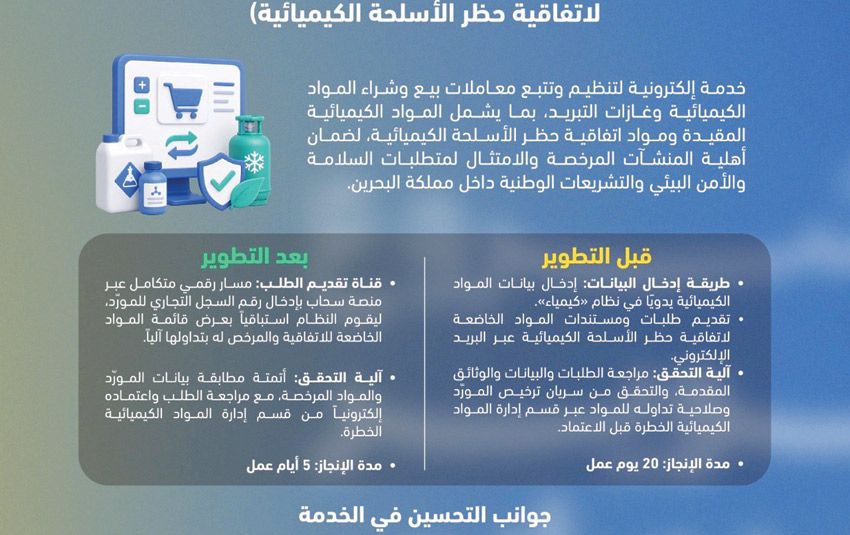
The Supreme Council for Environment in the Kingdom of Bahrain has upgraded a key digital channel to manage requests to buy chemicals and refrigerant gases from the local market. The Bahrain chemical purchase service now completes processing in five working days instead of 20, according to official statements, improving oversight of chemical trade and supporting environmental compliance.
Bahrain chemical purchase service: what the update includes
The enhanced service allows facilities and suppliers to submit electronic requests to buy and sell chemical substances, including controlled chemicals and refrigerants, for use within Bahrain. Amna Hamad Al-Rumaihi, chief executive of the Supreme Council for Environment, said the system links purchase requests to registered supplier profiles and catalogued materials to verify licensing and quantities automatically.
Therefore, transactions are documented electronically and made available for inspection and audit, improving data quality and traceability. Additionally, officials noted that the update reduces paperwork, shortens navigation paths in the portal, and improves the user interface to make the digital service easier for businesses and regulators to use.
Faster approvals through automation and streamlined procedures
Automation of verification steps and consolidation of required documents are central to the reform, allowing the process to shrink from 20 working days to five. Consequently, the speed of approvals improves supply chain responsiveness for industries that rely on chemicals and refrigerants, while still enforcing checks on licensed suppliers and compliant quantities.
Furthermore, the streamlined workflow is expected to reduce administrative overhead for both applicants and regulatory staff. According to the council, electronic linking of requests with supplier records and registered chemical inventories will support more reliable inspections and more efficient enforcement of environmental rules.
Regulatory impact and environmental compliance
Officials say the digital update strengthens regulatory control over chemical trade by ensuring purchases come from licensed entities and by documenting movements for enforcement purposes. This modernization supports environmental compliance and safety standards by making records searchable and available to inspectors and by reducing the risk of unregulated transactions entering the market.
In addition, improved data quality and the creation of a single electronic transaction trail can help regulators detect anomalies and target inspections more effectively. Meanwhile, businesses gain clearer guidance on permitted materials and quantities, which can lower compliance costs and reduce operational risk.
Context: part of a broader government service reengineering program
The chemical purchase service enhancement is part of a larger government initiative to reengineer and digitize public services. Officials reported that more than 1,300 government services have been documented and translated, and around 800 of those services underwent development and reengineering across sectors.
Moreover, this program draws on feedback from the National System for Proposals and Complaints (Tawasul), investor input, and mystery shopper reports to prioritize changes. The effort also includes issuing guidance manuals and service level agreements to lift procedural efficiency and beneficiary experience across the public sector.
Operational benefits for suppliers, buyers and inspectors
For suppliers and buyers, the new digital channel reduces processing time, clarifies documentation requirements, and shortens the steps needed to complete a trade. Consequently, procurement planning becomes more predictable and administrative burdens are lowered.
For inspectors and regulators, centralized electronic records improve access to transaction histories and supplier credentials, thereby supporting targeted inspections and faster compliance resolution. Therefore, the system aims to strike a balance between facilitating legitimate trade and maintaining safeguards for public health and the environment.
Related digital service improvements and next steps
As part of ongoing digital transformation, the council and other agencies will likely monitor performance metrics such as processing times, user satisfaction, and compliance rates. Officials indicated that iterative refinements to the portal and backend integrations are possible based on operational feedback and data trends.
Observers should watch for further announcements about integration with customs, industry associations, or regional tracking systems that could extend traceability across borders. Additionally, training and outreach to small and medium enterprises will be important to maximize adoption of the digital service.
Conclusion and what to watch next
The Bahrain chemical purchase service update represents a measurable step toward faster, more transparent chemical trade within the kingdom while reinforcing environmental controls. In the short term, stakeholders should expect improved turnaround times and clearer documentation requirements.
Looking ahead, readers should watch for data on processing volumes and compliance outcomes, as well as any additional digital integrations or policy adjustments that extend the system’s scope. The next expected milestones are operational evaluations and targeted enhancements informed by user feedback and enforcement needs.