






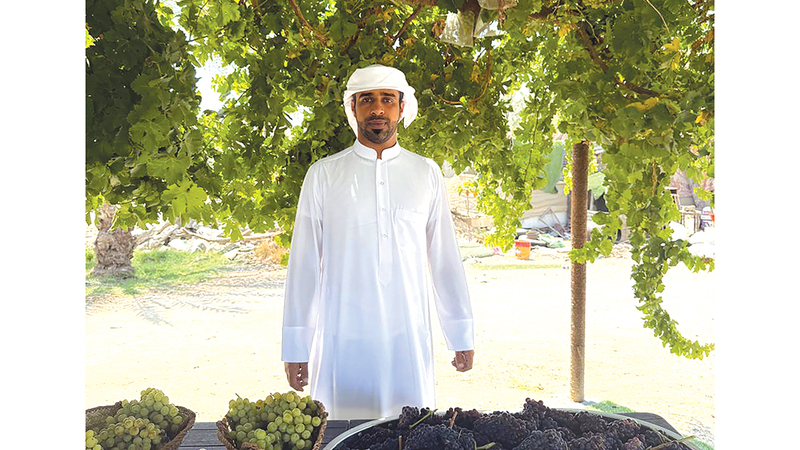

Local grape seedlings drive revival of traditional vines in Ras Al Khaimah
Ras Al Khaimah farmer Marwan Saif Rashid Al Mazrouei has transformed old vineyard stock in the Iesma mountain area into a high-output source of local grape seedlings, boosting annual nursery production from roughly 500 to more than 10,000 plants. He told Emirates Today the expansion responds to growing interest from farms and homeowners across the emirate and the wider UAE.
The nursery’s rapid growth comes as consumers and growers seek resilient local grape varieties adapted to UAE conditions. Demand continues to outstrip supply, officials and growers said, prompting renewed attention to on-farm propagation and heritage vine preservation.
Local Grape Seedlings: methods and seasonal cycle
Propagation at Al Mazrouei’s nursery starts from mature mother vines, some more than 25 years old, grown on his mountain farm. Grower experience determines timing for pruning, fertilisation and pest control; he said intensive pruning takes place in February before buds and fruit develop in spring.
Seedling production follows established vine propagation techniques, including taking cuttings from healthy wood, root establishment in controlled beds and ongoing monitoring through spring and early summer. According to the grower, harvests this year ran through May and June, with higher temperatures shortening ripening windows while milder conditions extended them.
Al Mazrouei distinguishes between red and green local grape varieties in nursery practice. He noted that red seedlings tend to establish more quickly after planting but yield smaller berries, while green varieties produce larger fruit but require a longer establishment period. Meanwhile, a limited number of international grape varieties are being trialled, but their production remains small because newer trees have not yet reached full productivity.
Preserving local grape varieties and farm heritage
The nursery’s focus is not primarily on commercial fruit sales but on multiplying and distributing local grape varieties that have been cultivated in the region for generations. Maintaining these varieties is viewed as part of conserving agricultural heritage in Ras Al Khaimah, where mountain farming traditions persist despite urban and climatic pressures.
By distributing different sizes of seedlings and timing batches for the September–October planting season, the nursery supports backyard gardeners and smallholders looking to expand vine plantings. Growers said availability of reliable local grape seedlings encourages more farmers to replant older terraces and adopt traditional cultivars suited to local soils and microclimates.
Nursery scale, yield and variety characteristics
The farm holds about 40 mature grapevines that typically produce around 30 kilograms each per season, though annual output varies with weather, soil quality and maintenance. The nursery’s output ramped up gradually from a baseline of roughly 500 seedlings per year to current seasons exceeding 10,000, according to the owner. However, producers and customers report that the supply still falls short of demand.
Practitioners emphasise that the success of propagation depends on following a seasonal regimen: pruning at the right time, balanced fertilisation, and attentive pest management throughout the growth cycle. These practices are central to vine propagation efforts across the emirate and underpin the quality of planting material supplied to growers.
Impact on Ras Al Khaimah agriculture and local markets
The surge in demand for local grape seedlings has implications for Ras Al Khaimah agriculture, as farmers look to reintroduce resilient varieties into cultivated lands and domestic gardens. Local authorities and agricultural extension services have previously encouraged propagation of crops suited to Gulf climates, and grassroots nurseries like Al Mazrouei’s play an important role in that ecosystem.
Expanded access to locally adapted planting material can reduce dependency on imported nursery stock and support small-scale agricultural resilience. Furthermore, preserving local grape varieties helps maintain genetic diversity that may be better suited to the emirate’s temperature swings and soil conditions than some international cultivars.
Producers report that renewed interest in home gardening and smallholder viticulture across the UAE has contributed to steady orders for nursery stock. The grower plans to release new batches at the start of the traditional planting season, which industry sources say is the key period to watch for availability and pricing trends.
What growers and observers should watch next
Farmers and home gardeners interested in local grape seedlings should monitor nursery announcements for the September–October planting window, when new batches typically become available. Observers should also watch whether additional nurseries scale up production to meet persistent demand and whether local extension programmes increase support for vine propagation and cultivar conservation.
Longer term, the balance between preserving traditional grape cultivars and introducing international varieties will shape the region’s viticultural profile. For now, growers like Al Mazrouei are focusing on expanding production of locally proven vines and advising customers on planting and care to ensure healthy establishment and future harvests.