






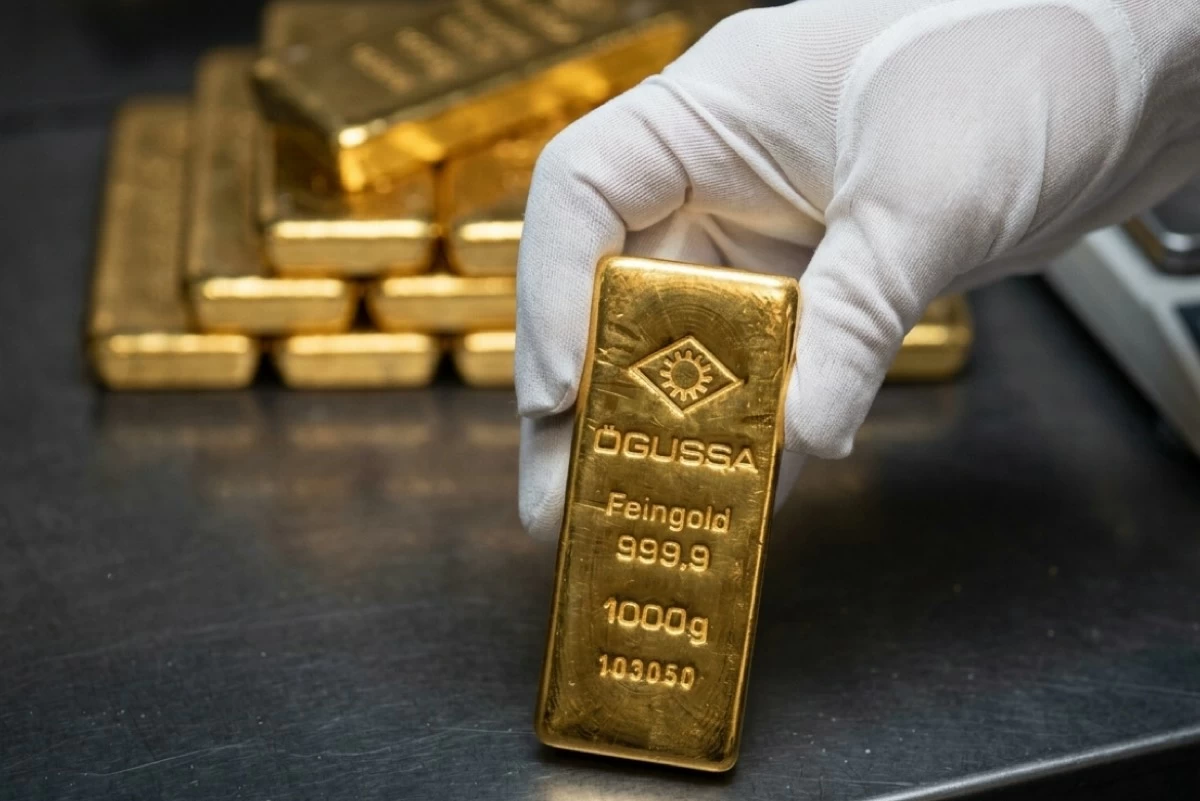

Gold Prices Advance as Investors Seek Safety
In global trading, gold prices rose 0.4% in spot trade to $4,080.38 per ounce, while U.S. gold futures for August delivery climbed 1.1% to $4,078, according to market data. The move reflected renewed safe-haven demand as investors weighed interest-rate signals and currency shifts across major markets. Market participants said the gains came amid a cautious backdrop ahead of upcoming economic releases.
Recent Market Moves and Immediate Context
Spot gold was quoted at $4,080.38 per ounce after the session uptick, while August U.S. futures traded near $4,078, marking a one percent-plus rise in derivative markets. The rise in gold prices occurred alongside a firmer performance in other precious metals: silver rose to $58.20 per ounce, platinum traded at $1,616.84, and palladium climbed to $1,270.50, according to trading screens.
Analysts noted that the latest price action followed shifts in currency markets and evolving expectations around central bank policy. Furthermore, traders pointed to repositioning ahead of scheduled economic data and comments from policymakers, which often influence both spot gold and gold futures volumes.
Market Drivers: Dollar, Rates and Safe-Haven Demand
One primary driver was the U.S. dollar’s recent fluctuation, which tends to influence bullion demand. When the dollar softens, gold becomes cheaper for holders of other currencies and often attracts more buying, analysts said. Therefore, moves in foreign-exchange markets were closely watched as a key factor behind the rise in gold prices.
Interest-rate expectations also played a role. Officials’ statements and economic indicators that suggest slower tightening or an eventual easing cycle can increase the appeal of non-yielding assets like gold. Additionally, geopolitical uncertainty and risk-off episodes usually bolster safe-haven inflows into bullion, which traders cited as supporting the recent gains.
Precious Metals Performance: Silver, Platinum and Palladium
Alongside gold, silver climbed about 1% in spot trade to $58.20 per ounce, reflecting its traditional correlation with gold as well as industrial demand factors. Spot silver often amplifies gold’s moves due to its lower price point and mixed investment and industrial uses, market participants said.
Platinum recorded a modest increase to $1,616.84 per ounce, up around 0.3%. Meanwhile, palladium showed the largest percentage gain among the group, rising about 1.9% to $1,270.50 per ounce. Traders attributed palladium’s strength in part to supply considerations and continued auto-sector demand for the metal’s catalytic properties, although participants cautioned that industrial forecasts remain mixed.
Gold Futures and Trading Dynamics
Gold futures activity reinforced the spot market move, with August delivery contracts up roughly 1.1%. Futures trading often reflects leveraged positioning and hedging activity that can exaggerate intraday moves relative to spot prices. Consequently, volatility in U.S. futures may lead to amplified directional moves in spot markets during high-volume sessions.
Exchange-traded fund flows and institutional buying were also cited as near-term contributors. Investment inflows into bullion-backed ETFs tend to support prices when investors favor portfolio hedging, and official sector purchases by central banks have provided structural demand over recent years, according to market commentary.
Technical and Seasonal Considerations
From a technical perspective, traders said recent price levels are being monitored for support and resistance that could shape short-term trajectories. Furthermore, seasonal patterns can influence physical demand in some regions, affecting spot liquidity and premium structures in coins and bars. Therefore, both technical traders and physical-market participants remain attentive to evolving buying and selling interest.
Volatility in related asset classes, including bond yields and equity markets, also mattered. Lower bond yields can reduce the opportunity cost of holding gold, while equity market weakness often increases safe-haven allocations to precious metals. As a result, the interplay between yields, stocks, and the dollar continued to guide intraday and multi-session moves.
Implications for Investors and Industries
For investors, the recent uptick in gold prices underscored bullion’s role as a diversification and inflation-hedge instrument during uncertain policy periods. Portfolio managers said gold can serve as a counterbalance to equity risk and currency volatility, although they cautioned that timing and position sizing remain critical.
Industrial users of silver, platinum, and palladium noted the price changes could affect input costs and procurement strategies. Auto manufacturers and catalytic-converter suppliers, in particular, monitor palladium and platinum closely given their use in emissions controls, and procurement teams may adjust forward-buying plans in response to price volatility.
Outlook: What to Watch Next
Looking ahead, market participants will watch key economic releases, central bank commentary, and U.S. inflation data for cues on the policy outlook and potential impact on gold prices. Additionally, movements in the U.S. dollar and Treasury yields are expected to remain primary market drivers.
Investors should also track ETF flows and official-sector buying for signs of sustained demand. In the coming days and weeks, volatility around scheduled macroeconomic announcements will likely dictate short-term momentum, while longer-term trends will hinge on policy direction and physical-market dynamics.
Conclusion and Near-Term Expectations
The recent rise in gold prices to about $4,080 per ounce, along with gains in silver, platinum, and palladium, reflects a combination of safe-haven demand, currency moves, and evolving rate expectations. Therefore, traders and investors should watch upcoming economic data and central-bank signals for further guidance. Market participants said the next major shifts are likely to occur around key reports and policy remarks scheduled over the near term.