






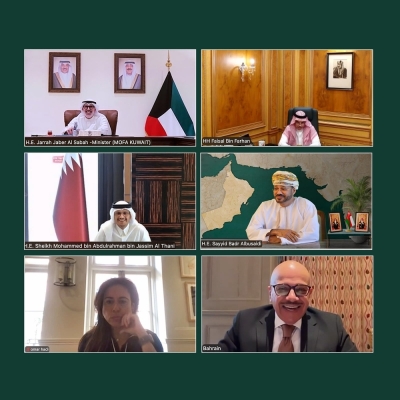

GCC foreign ministers meeting held via video conference
Oman’s foreign minister, Badr bin Hamad Al Busaidi, convened a GCC foreign ministers meeting by video link today to consult with his counterparts on recent regional developments and ongoing negotiations. The session, according to an Omani ministry statement, focused on measures to reduce tensions and advance diplomatic understandings that support regional security and stability.
Ministers exchanged assessments of the current phase of talks and outlined cooperative steps to protect maritime routes and ensure the uninterrupted flow of trade and supplies. The meeting reaffirmed commitment to international law and to the sovereign rights of littoral states in the Gulf.
GCC foreign ministers meeting focuses on maritime security and navigation
Participants paid particular attention to threats to the Strait of Hormuz and to protecting freedom of navigation, officials said. Ministers discussed concrete ways to safeguard rights of passage and the safe transit of commercial vessels through the strait, stressing the need to avoid actions that could disrupt shipping lanes or escalate tensions.
According to the ministry statement, the agenda included coordination on incident response, information sharing, and the legal frameworks that govern maritime transit. Furthermore, ministers emphasized that measures should be consistent with international maritime law while respecting the sovereign rights of states bordering the Gulf.
Regional coordination and diplomatic efforts
Officials noted that enhanced coordination among Gulf Cooperation Council members is central to de-escalation and to creating conditions conducive to negotiation. The meeting underscored the role of political and diplomatic channels as the preferred means for resolving disputes, with ministers urging patience and restraint.
Oman foreign minister Al Busaidi reportedly urged continued consultation within the GCC to present unified positions in multilateral forums and in bilateral dialogues with external parties. Meanwhile, ministers agreed that confidence-building measures and transparent communication could help prevent misunderstandings that lead to incidents at sea.
Legal frameworks and principles guiding actions
Delegates referenced established legal norms, including rules governing innocent passage and transit passage, as guiding principles for maritime conduct in the region. The ministers stressed adherence to the United Nations Convention on the Law of the Sea and other relevant instruments as the basis for protecting navigation rights and resolving disputes.
Furthermore, the meeting reiterated that any actions to secure maritime routes should preserve the sovereign rights of Gulf states while enabling the safe movement of commercial shipping. Officials called for mechanisms to monitor compliance and to deconflict naval operations in times of heightened tension.
Implications for trade, energy and global shipping
Ministers acknowledged that stability in the Strait of Hormuz is critical to global energy markets and to commercial supply chains that transit the Gulf. Disruptions in the strait could have ripple effects on freight costs and regional economies, therefore the GCC foreign ministers meeting sought to reduce such risks through coordinated deterrence and diplomatic outreach.
Trade-dependent industries and international carriers, analysts say, will closely watch whether consultations translate into operational safeguards and clearer protocols for merchant vessels. In addition, the meeting signaled to international stakeholders that Gulf states prioritize predictable shipping conditions and the freedom of navigation that underpins global trade.
What the meeting means for diplomacy and next steps
The session produced a collective call for continued engagement and for privileging political and diplomatic remedies over military measures, the ministry statement indicated. Ministers agreed to intensify consultations within the GCC and to remain in contact with international partners to align de-escalatory efforts.
Officials suggested that follow-up meetings and working-level exchanges are likely as negotiations progress and as developments warrant. Observers should monitor official communiqués, coordinated maritime advisories, and any joint confidence-building initiatives that may be announced in the coming weeks.
Outlook: monitoring developments and measuring impact
While the meeting did not announce specific operational plans, it narrowed attention on diplomatic avenues and on reinforcing the legal frameworks that secure maritime transit. Therefore, the immediate measure of success will be whether dialogue reduces incidents at sea and eases pressures on shipping and trade.
Readers should watch for subsequent GCC statements, reports of enhanced maritime coordination, and any multilateral engagements that involve regional and international stakeholders. According to the ministry, continued consultation remains the chosen path to foster trust, promote stability, and protect the interests of all states bordering the Gulf.