





Dhofar Festival selection process for Al Dakhiliyah exhibitors
The Directorate General of Agricultural and Water Resources in Al Dakhiliyah Governorate has begun assessing a number of women’s production projects to select representatives for the Dhofar Festival. The evaluation, held this week, aimed to identify rural enterprises capable of showcasing Omani products, expanding local product marketing and opening new commercial outlets for rural businesswomen.
Who visited and where the evaluations took place
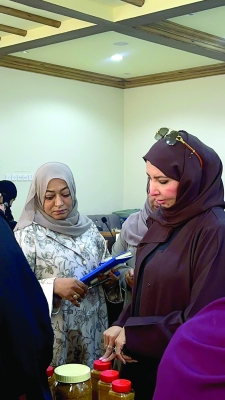
The field assessment was led by Hamida Al-Shukairi, Director of the Rural Development Department at the Ministry of Agriculture, Fisheries and Water Resources, accompanied by Aisha Al-Hanaei, Head of Planning and Studies. Officials from the directorate attended the visit in several wilayats of Al Dakhiliyah, including Nizwa and Wadi Qurayyat, to review entries from local entrepreneurs.
Evaluation criteria and types of projects considered
Officials said the submissions were reviewed according to predefined criteria emphasizing product quality, innovation and distinctiveness. The assessors examined a range of home-based and small-scale projects — from preserved and processed foods to traditional handicrafts and value-added agricultural goods — focusing on those with competitive potential for exhibition environments.
Furthermore, evaluators considered packaging, labeling, and compliance with safety and market standards, alongside the entrepreneurs’ capacity to scale production. In addition, the ability to tell a clear origin story for products and to demonstrate links to local raw materials factored into the scoring.
Support goals: empowering women’s rural projects
The assessment forms part of broader ministry programs to support and enable women’s rural projects, ministry statements indicate. The stated objective is to assist rural women in turning household and small-scale production into sustainable income sources, thereby contributing to economic diversification at the local level.
Therefore, the initiative links evaluation with follow-up services such as technical training, business development advice and assistance in meeting market requirements. These measures are intended to increase the competitiveness of entrants and to open channels for long-term local product marketing beyond the festival itself.
Expected benefits for exhibitors and the local economy
According to officials, participation in the Dhofar Festival offers exposure to larger consumer audiences and trade visitors, which can translate into direct sales and new distribution contacts. Additionally, participation may attract interest from buyers and partners seeking locally sourced products and traditional crafts.
Moreover, the ministry emphasized that showcasing high-quality items from Al Dakhiliyah can strengthen regional branding and encourage other rural entrepreneurs to invest in product improvement. The ripple effect is expected to include job creation in processing, packaging and associated services.
How the selection process will be finalized
The evaluation team is consolidating scores and recommendations, and selection decisions will be communicated to applicants ahead of the festival. Officials noted that shortlisted projects will receive guidance to prepare for exhibition standards, logistics and promotional materials.
Meanwhile, technical staff from the Directorate and the Ministry will coordinate with selected exhibitors on stall design, product presentation and inventory planning. This preparatory phase is intended to ensure that exhibitors arrive at the festival ready to engage buyers and media effectively.
Secondary initiatives linked to festival participation
In addition to direct selection, the Ministry of Agriculture, Fisheries and Water Resources plans to link promising participants with training programs and small-grant opportunities where available. The approach aims to create sustainable support, rather than one-off exposure, for women-led initiatives in rural areas.
Furthermore, the directorate intends to gather feedback from festival participation to refine future selection criteria and to identify product categories that show market traction. This data-driven approach is designed to improve the impact of future promotional efforts and local product marketing strategies.
Regional collaboration and longer-term outlook
Officials highlighted coordination between governorate directorates and ministry units as key to expanding market access for rural producers. Collaborative outreach to other governorates also seeks to present a diverse national offering at events like the Dhofar Festival, strengthening inter-regional trade ties.
Therefore, the selection and support measures are expected to feed into a longer-term plan to promote food processing, handicrafts and agricultural value chains across governorates, aligning with national goals for diversified livelihoods and local economic activation.
What to watch next
Readers should expect formal announcement of selected exhibitors in the coming weeks as organizers finalize arrangements for the Dhofar Festival. Observers may also watch for follow-up programs from the Ministry of Agriculture, Fisheries and Water Resources that target training and market linkages for participating women-led projects.
In conclusion, the directorate’s evaluations aim not only to choose capable representatives for the festival but also to strengthen pathways for rural women to scale businesses and access new markets. The next steps will reveal how effectively exhibition exposure translates into longer-term commercial opportunities for these projects.