






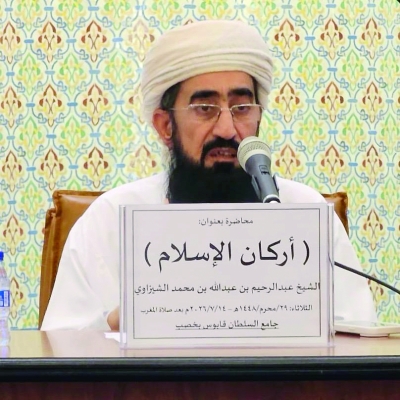

Pillars of Islam Discussed at Sultan Qaboos Mosque in Khasab
Recent religious instruction on the Pillars of Islam was delivered at Sultan Qaboos Mosque in Khasab, focusing on the central religious duties that guide Muslim belief and conduct. The lecture, given recently by Abdulrahim bin Abdullah Al Shezawi, addressed the five foundational obligations and their practical implications for individual morality and public life. The main keyword “Pillars of Islam” was used to frame the discussion around faith, practice and community impact.
Who Presented the Lecture and Where It Took Place
The lecture took place at Sultan Qaboos Mosque in the Wilayat of Khasab, located in the Musandam Governorate of Oman. According to mosque officials, Abdulrahim bin Abdullah Al Shezawi led the session, which attracted local worshippers and community members. The event was organized as part of ongoing religious education programs intended to deepen understanding of core Islamic teachings and promote civic responsibility.
Understanding the Five Pillars and Their Role
The speaker explained that the Five Pillars function as a framework for both belief and action, beginning with the testimony of faith and extending to ritual prayer, almsgiving, fasting, and pilgrimage. He cited a traditional hadith, translated as “Islam is built on five,” to underline that these duties are foundational. Furthermore, he emphasized that each pillar carries spiritual, ethical and social dimensions that shape daily life and long-term character development.
How Each Pillar Influences Personal Behavior
The lecture detailed how the Five Pillars contribute to personal discipline and moral formation. Prayer was presented as a disciplined practice that strengthens a believer’s relationship with God and encourages regular reflection. Fasting during Ramadan was discussed as a means of cultivating patience, empathy for the less fortunate and self-restraint. The speaker noted that these practices reinforce virtues that are relevant to individual conduct and family life.
Social Effects: Zakat, Charity and Community Cohesion
Al Shezawi highlighted zakat and other forms of charity as mechanisms for social redistribution and solidarity. He argued that institutionalized giving can reduce economic disparities and support social services when practiced consistently. Additionally, communal rites such as congregational prayer and the Ramadan fast were described as promoting community cohesion by aligning individual routines with collective values.
Pillars of Islam in Local Religious Education
Officials at the mosque said the lecture is part of a broader educational effort to ensure that daily worship and civic life are informed by clear religious understanding. The program aims to translate classical teachings into contemporary contexts, addressing topics such as ethical business conduct, family responsibilities and civic participation. Therefore, organizers intend to continue similar sessions to reinforce the practical relevance of Islamic practices.
Reinforcing Faith Through Teaching and Practice
The presenter stressed that accurate comprehension of the Pillars of Islam requires both knowledge and lived experience. He described how repetition of ritual acts, when paired with reflective learning, can produce lasting moral habits. Meanwhile, mosque leaders encouraged attendees to practice the pillars not only ritually but as ethical commitments that influence interpersonal relations and public behavior.
Community Response and Future Programming
Feedback from attendees, according to mosque representatives, indicated appreciation for the lecture’s focus on actionable guidance rather than abstract theology. Participants reportedly valued the practical examples connecting ritual duties to everyday challenges such as financial fairness and social responsibility. Looking ahead, the mosque plans to schedule follow-up sessions and community workshops to address questions and expand on topics raised during the lecture.
Context and Broader Significance
The explanation of the Five Pillars at a prominent mosque in Khasab reflects ongoing efforts across the region to balance traditional religious instruction with contemporary social needs. Religious leaders often emphasize how ritual observance underpins ethical behavior and civic engagement. Therefore, discussions like this aim to sustain religious identity while fostering social solidarity and mutual support within diverse communities.
Related Themes to Watch
Observers should watch for further programming that links core religious duties to public welfare, including initiatives around zakat distribution, community service during Ramadan and educational outreach. These efforts can provide measurable benefits in areas such as poverty alleviation and strengthened neighborhood ties, according to community organizers and mosque officials.
Conclusion and What Comes Next
In conclusion, the recent lecture at Sultan Qaboos Mosque reinforced the centrality of the Pillars of Islam to both private faith and collective life. Organizers said follow-up events and workshops are expected in the coming months to deepen engagement and address practical questions. Readers should look for announcements from the mosque regarding future sessions and community initiatives that further explore the relationship between religious practice and social well-being.