






Iranian attacks reported across Kuwait, Bahrain and Jordan
Kuwait, Bahrain and Jordan reported coming under Iranian attacks early Monday, according to national military statements, marking a sharp escalation after Iran’s Islamic Revolutionary Guard Corps announced a punitive response targeting U.S. facilities in the region. The incidents prompted air-raid sirens, active intercepts by Gulf air defenses and at least one reported injury in Kuwait, officials said.
Details of the strikes and immediate effects
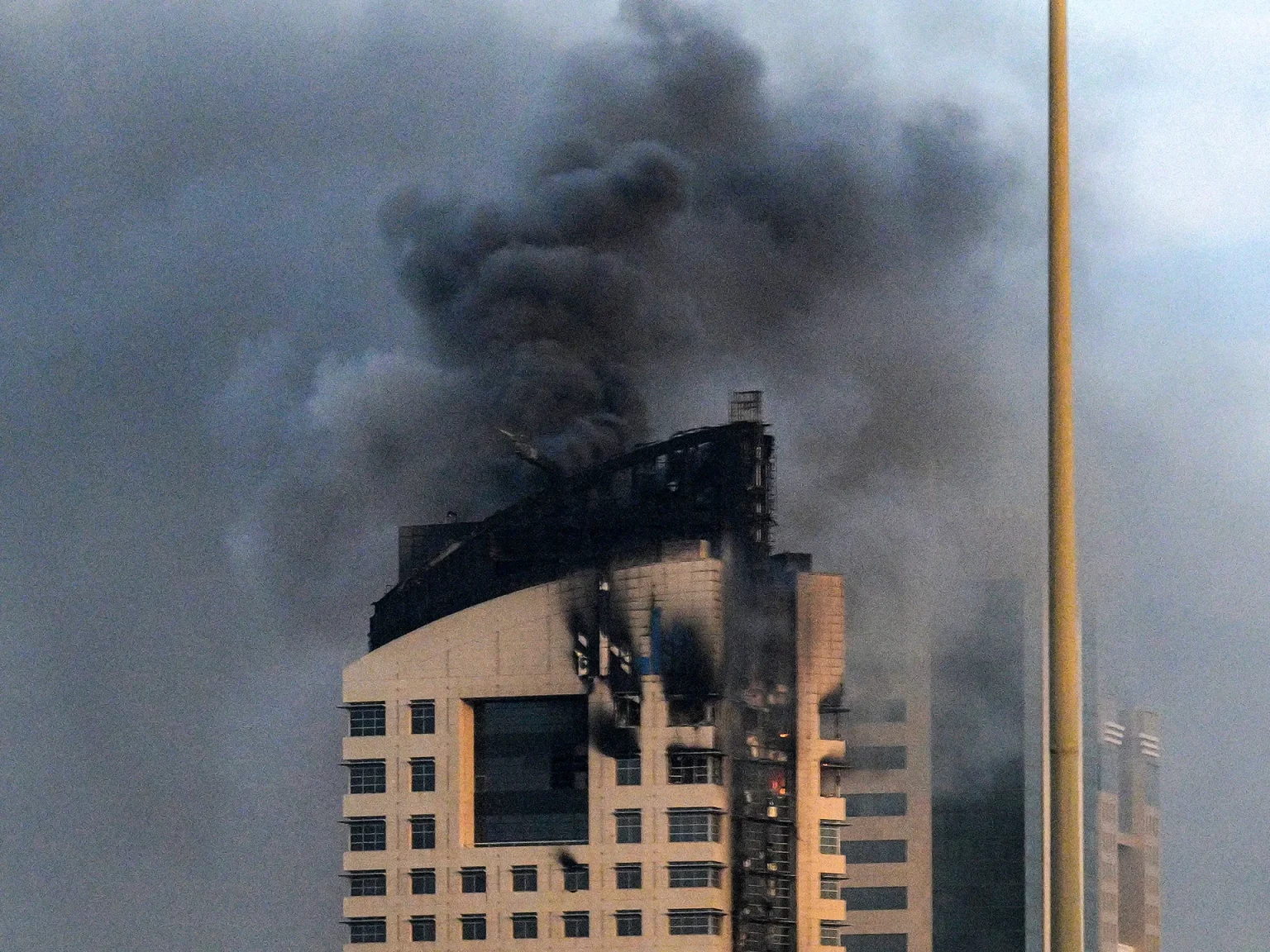
The Kuwait General Staff said its air defenses engaged hostile ballistic missiles and several drones inside Kuwaiti airspace, destroying three ballistic missiles, one cruise missile and ten unmanned aerial vehicles, according to a military spokesperson. Shrapnel caused limited damage at multiple sites and one person received medical treatment and is in stable condition, the statement added.
Meanwhile, the Bahrain Defence Force reported that its air defenses intercepted and destroyed a number of airborne threats over Bahrain, and authorities in Manama sounded public alert sirens to urge people to seek shelter, the interior ministry said. Jordanian forces said they shot down eight missiles launched toward the kingdom after air-raid alerts sounded across population centers.
Main causes and the linkage to U.S.-Iran escalation
Iran’s Revolutionary Guard announced it had targeted what it described as infrastructure and key facilities at bases in Kuwait and Bahrain and said the operation formed a first phase of a punitive response to U.S. actions. The IRGC statement said missiles and drones were used against sites it identified as associated with American forces, though independent verification of specific targets remains limited.
U.S. Central Command (CENTCOM) said earlier that U.S. forces conducted strikes on roughly 90 Iranian military targets along Iran’s southern coast in retaliation for what Washington described as Iranian aggression against commercial shipping in the Strait of Hormuz. Therefore, analysts say the latest incidents are part of an intensifying US-Iran escalation that risks wider regional spillover.
Regional air defenses and military readiness
Gulf air defenses played a central role in the unfolding events, intercepting incoming missiles and drones over multiple countries. In Kuwait, officials explicitly warned that booming sounds heard by residents were the result of interception activity rather than direct strikes, underscoring the role of integrated air defense systems in protecting population centers.
Qatar’s interior ministry raised its threat level and urged residents to remain indoors and away from windows, illustrating how civilian authorities in the Gulf moved quickly to enforce safety measures. Furthermore, military spokespeople in the affected states stressed readiness to respond to further threats and emphasized coordination with allied forces when appropriate.
International reactions and diplomatic consequences
Governments in the Gulf condemned the strikes, with Kuwait labeling Iranian attacks as a serious escalation that threatens regional peace and sovereignty. Bahrain’s government described the actions as treacherous aerial assaults and reiterated calls for international support to deter further aggression.
Beyond immediate condemnations, foreign ministries and international organizations are expected to weigh responses. Western capitals have previously warned they would hold Iran accountable for attacks on shipping and coalition forces, and the current exchanges are likely to deepen diplomatic pressure on Tehran while prompting emergency consultations among allied states in the region.
Weapons used and tactical patterns
Officials and statements indicate the incidents involved a mix of ballistic missiles, cruise or guided missiles, and a significant number of unmanned aerial vehicles. The use of missiles and drones has become a hallmark of recent confrontations in the region, allowing state and non-state actors to project force while complicating defense calculations for targeted countries.
Analysts note that the IRGC’s combination of long-range missiles and swarm drone tactics aims to overwhelm interceptors and degrade early-warning systems. Meanwhile, defenders rely on layered systems, including Patriot batteries and short-range interceptors, to protect critical infrastructure and populated areas.
Humanitarian and economic implications
Although authorities reported limited injuries and damage in the latest incidents, the broader humanitarian and economic risks could escalate if hostilities continue. Commercial shipping has faced disruptions in the region since earlier confrontations in the Strait of Hormuz, with insurers and shipping firms closely tracking military activity that could endanger crew safety and global energy flows.
Furthermore, prolonged instability would likely affect air travel corridors, regional trade, and investor sentiment, adding pressure on governments to seek de-escalation even as they bolster defensive measures.
What to watch next
Observers should monitor official statements from Kuwait, Bahrain, Jordan, Qatar, Tehran and U.S. Central Command for confirmations of damage, casualty updates and claims of responsibility. Diplomatic channels will be important to track; foreign ministries may convene emergency meetings and international organizations could call for restraint.
Additionally, watch for follow-on military movements, including any redeployment of forces or fresh strikes, and for signals from major powers on potential mediation or punitive measures. The situation remains fluid, and regional leaders have said they are prepared to take necessary steps to protect sovereignty and civilians.
Conclusion and outlook
The reported Iranian attacks mark a notable escalation in a cycle of strikes and counterstrikes that began with incidents involving commercial vessels and expanded into direct strikes on military targets. While immediate casualties appear limited, the confrontation raises the risk of a broader, sustained conflict in the Gulf unless diplomatic de-escalation is pursued.
Going forward, audiences should watch for diplomatic initiatives, potential ceasefire proposals, and any further military reprisals over the next days to weeks as regional and international actors weigh options to contain the crisis.