






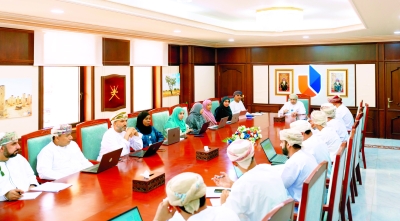

Academic Council meeting at University of Technology and Applied Sciences prepares for new academic year
The Academic Council meeting at the University of Technology and Applied Sciences (UTAS) convened its sixth session to set preparations for the upcoming academic year. Chaired by Dr. Saeed bin Hamad Al-Rubaie, President of the University and Chair of the Academic Council, the meeting took place at the university presidency building in Muscat and addressed academic, administrative and governance matters.
University officials said the council reviewed student outcomes and operational readiness, approved program documents, and considered appointments to strengthen academic supervision. The session aimed to ensure a smooth start to the academic year and to align institutional measures with national development priorities.
Graduate outcomes and quality assurance review
The council examined statistical indicators for spring graduates across UTAS campuses, including the College of Education in Rustaq, as part of ongoing quality assurance. According to the university statement, the review focused on graduate numbers, distribution across disciplines, and alignment with labor market needs.
Members discussed student-related issues and made decisions under existing academic regulations to protect student interests and promote academic integrity. Furthermore, the council reviewed mechanisms to monitor graduate employability and program relevance, noting the importance of data-driven follow-up and external benchmarking.
Approval of master’s programs in education
The Academic Council meeting approved two master’s programs in education prepared by the College of Education in Rustaq after the completion of preparatory and review stages. University officials said the programs underwent needs assessment, benchmarking with local and international institutions, academic revisions and external moderation to ensure compliance with quality standards and the national qualifications framework.
Approval of the master’s programs in education responds to demand for advanced pedagogical skills and leadership in the education sector. Additionally, the council highlighted that these programs are intended to strengthen the pipeline of qualified national educators and to support professional development initiatives across the region.
Foundational preparatory program updated for incoming students
The council endorsed the revised document for the foundational preparatory program prepared by the Preparatory Studies Center, reflecting updates received from UTAS branches. The update aims to enhance academic and language competencies for new students and to harmonize learning outcomes across campuses.
Officials emphasized that the foundational preparatory program will be monitored through targeted metrics to assess its effectiveness in improving student readiness. Therefore, continuous feedback loops from faculty and campus centers will inform incremental adjustments before and during the academic year.
Governance measures, supervisory appointments and meeting schedule
Council members discussed several nominations for supervisory positions within UTAS branches and ratified meeting dates for academic bodies for the coming year. These governance measures intend to reinforce institutional oversight and ensure regular coordination between academic and administrative units.
Appointments were considered against criteria of experience and alignment with the university’s strategic goals, according to officials. Meanwhile, the approved schedule of council and committee meetings is expected to improve the cadence of decision-making and accountability.
Adoption of digital meeting system Agenda to support institutional efficiency
As part of its digital transformation agenda, the council reviewed and endorsed the use of the Agenda digital meeting system, a platform equipped with artificial intelligence tools to manage council and committee workflows. The system supports agenda setting, minute-taking, decision tracking and data analytics, university sources said.
Implementation of the digital meeting system Agenda is intended to enhance institutional performance and transparency, reduce administrative overhead and accelerate follow-up on council resolutions. Furthermore, officials noted that the platform aligns with the broader national Vision 2040 objectives for digital government and institutional modernization.
Implications for students, faculty and national priorities
The decisions taken during the Academic Council meeting carry implications for students, faculty and wider education planning. Approvals for the master’s programs in education and the revised foundational preparatory program are expected to influence curriculum delivery, faculty development needs and student support services.
Moreover, the council’s emphasis on governance, quality assurance and digital tools supports institutional readiness to meet evolving workforce demands. Stakeholders said the measures reflect UTAS’s intent to contribute to national human capital goals while remaining responsive to employer expectations.
Next steps and what to watch for
Moving forward, UTAS will proceed with program accreditation processes, launch implementation plans for the approved master’s programs in education, and roll out the updated foundational preparatory program ahead of student intake. The university will also begin phased deployment of the Agenda digital meeting system, starting with key councils and committees.
Observers should watch for formal accreditation milestones, publication of program curricula, and announcements about faculty recruitment and training. The next Academic Council meeting is expected to include progress reports on these items and further measures to support student success and institutional quality.