






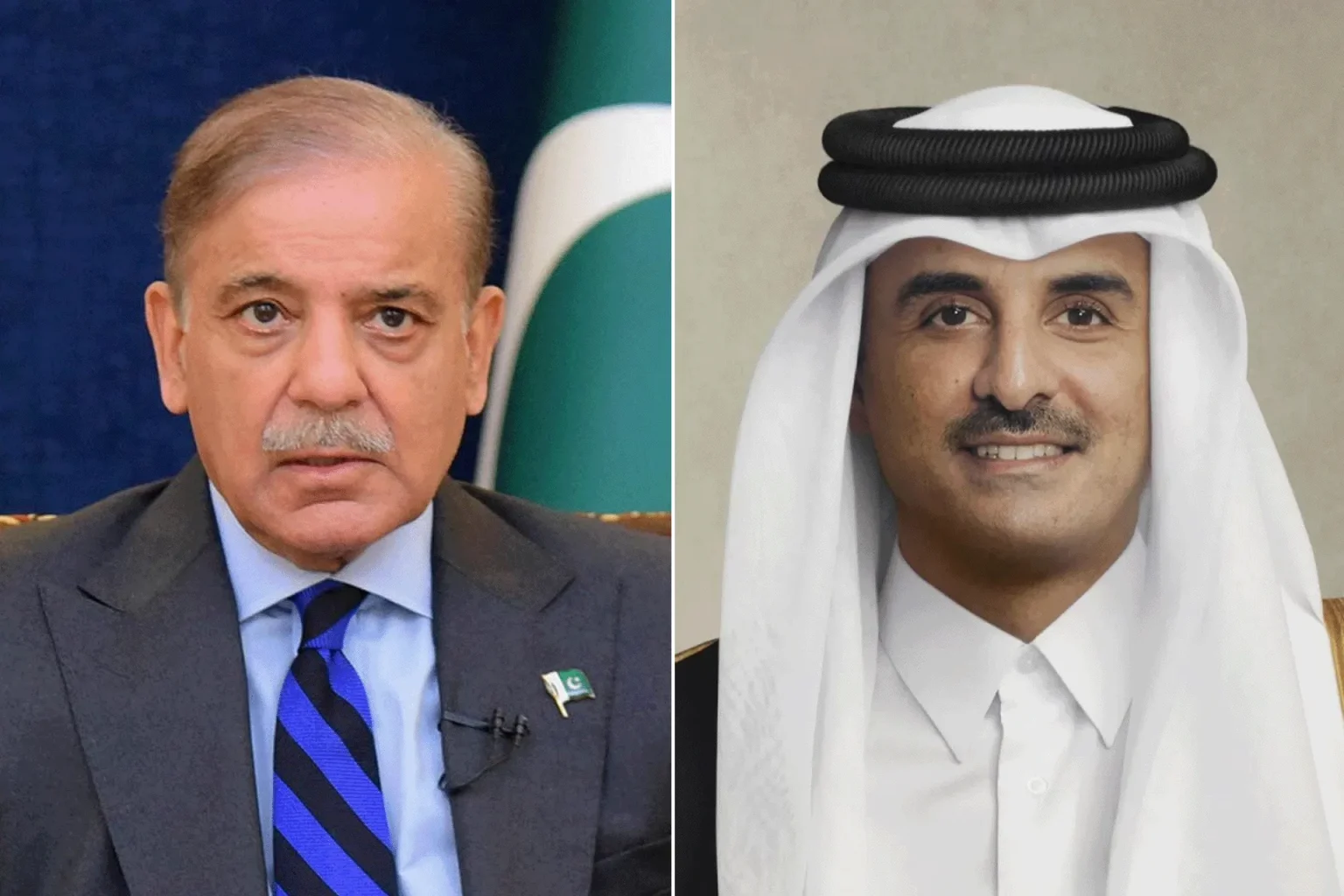

Qatar Pakistan phone call confirms coordination over US-Iran memorandum and Ras Laffan tragedy
Qatar’s Emir Sheikh Tamim bin Hamad Al Thani held a phone call on Wednesday with Pakistan Prime Minister Shehbaz Sharif to discuss the recently announced memorandum of understanding between the United States and Iran and the aftermath of the Ras Laffan industrial accident. The Qatar Pakistan phone call, confirmed by the Amiri Diwan, also covered bilateral ties and Qatar’s emergency response after the blast.
According to official statements, Qatar’s Interior Ministry reported 13 fatalities and 66 injuries among multiple nationalities in the Ras Laffan incident, and the leaders exchanged condolences and coordination on medical assistance and consular matters.
Qatar Pakistan phone call: what officials said
The Amiri Diwan said the call reviewed bilateral relations and recent regional developments, with particular attention to the US-Iran memorandum. Qatar and Pakistan, which reportedly played mediation roles, discussed the implications of the agreement and how it might affect Gulf and South Asian dynamics, officials said.
Prime Minister Shehbaz Sharif thanked Qatar for its support following the Ras Laffan industrial accident, according to the Pakistan office, and acknowledged Doha’s provision of medical care to injured Pakistani nationals. Meanwhile, Emir Sheikh Tamim extended condolences to the families of victims and emphasized coordination on consular and humanitarian matters.
Regional context: the US-Iran memorandum and mediation roles
Qatar and Pakistan have both been credited by regional analysts with facilitating contact that contributed to the memorandum between Washington and Tehran. The leaders used the Qatar Pakistan phone call to assess the memorandum’s progress and possible next steps, according to diplomatic sources.
The US-Iran memorandum, described in official briefings as a framework for de-escalation and reciprocal steps, has generated careful international attention. Qatar has positioned itself as a diplomatic intermediary in past crises, while Pakistan’s involvement reflects Islamabad’s interest in regional stability and protecting overseas nationals.
Why the memorandum matters
Observers say the memorandum could reduce immediate tensions in the Gulf and create diplomatic space for addressing broader security and economic issues. However, analysts caution that implementation will require verification measures, confidence-building steps, and third-party facilitation, areas where Qatar and Pakistan could play ongoing roles.
Ras Laffan industrial accident: response and assistance
The Qatar Pakistan phone call also focused on the industrial accident in Ras Laffan, a major energy and industrial hub in northern Qatar. Qatar’s Interior Ministry attributed the blast to a technical malfunction and said emergency services and specialized teams responded to the scene, according to official statements.
Prime Minister Shehbaz conveyed gratitude for the medical care and evacuation support Qatar provided to Pakistani nationals affected by the incident. Qatar’s health authorities and relevant agencies reportedly coordinated treatment, repatriation arrangements where needed, and liaison with foreign missions.
Humanitarian and consular coordination
Both governments reiterated solidarity with victims’ families and emphasized the need for transparent investigation into the cause of the accident. Qatar and Pakistan agreed to maintain direct lines of communication to support victims and facilitate family notifications, medical follow-up, and legal or administrative assistance.
Implications for bilateral and regional cooperation
The leaders’ exchange via the Qatar Pakistan phone call underscores a pragmatic partnership focused on crisis management and regional diplomacy. Officials framed the dialogue as part of a broader effort to deepen ties in areas including security cooperation, labor and consular protection, and economic exchange.
Furthermore, the simultaneous emphasis on the US-Iran memorandum and the Ras Laffan response reflects overlapping priorities: defusing geopolitical tensions while strengthening mechanisms to protect citizens and infrastructure from accidents and security incidents.
Trade and labor considerations
Pakistan hosts a large expatriate population in the Gulf, and Qatar remains a significant destination for Pakistani workers. Authorities on both sides signaled they would intensify coordination on labor welfare, workplace safety, and emergency protocols following the Ras Laffan event, steps that could include inspections and bilateral safety agreements.
What to watch next
Officials said follow-up will include inter-ministerial coordination and direct liaison between emergency teams and consular officials. Observers should watch for official communiqués detailing the investigation into the Ras Laffan industrial accident and any joint statements about implementing aspects of the US-Iran memorandum.
Diplomatic sources indicate Qatar and Pakistan may convene technical and security-level talks in the coming days to align on consular support and to examine how the memorandum between the United States and Iran will be monitored and implemented in practice.
Conclusion and outlook
The Qatar Pakistan phone call illustrated a dual diplomatic focus: advancing regional de-escalation through the US-Iran memorandum and addressing the immediate humanitarian fallout from the Ras Laffan industrial accident. Both capitals pledged continued cooperation, with immediate steps expected to prioritize victim support and an impartial investigation.
Looking ahead, readers should monitor official releases from Qatar’s Amiri Diwan, Qatar’s Ministry of Interior, and Pakistan’s government for updates on casualty assistance, investigative findings, and concrete follow-up on the US-Iran memorandum. The next weeks will be telling for whether mediation leads to durable diplomatic gains and whether enhanced safety measures are adopted to prevent future industrial tragedies.