






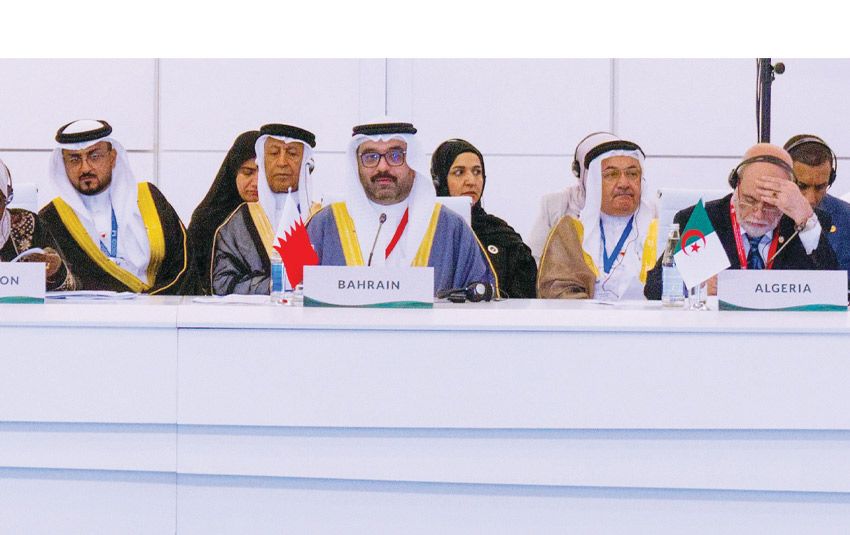

Baku Declaration Sets Priorities at 20th OIC Parliamentary Conference
The Baku Declaration, issued at the close of the 20th session of the Conference of the Union of Parliaments of Member States of the Organization of Islamic Cooperation, reaffirmed core commitments to the United Nations Charter and international law. Delegates gathered under the theme of strengthening sustainable and inclusive economic development through parliamentary cooperation, officials said, and adopted measures aimed at promoting regional connectivity and protecting maritime trade routes.
Who Attended and Where the Agreement Was Reached
The declaration was finalized in Baku during the session attended by a parliamentary delegation led by MP Ahmad Sabah Al-Salloum. The Kuwaiti-led delegation included members Mohammed Mousa Mohammed, Sheikh Ahmad bin Mohammed Al-Khalifa, Jalila Alawi Al-Sayed, Jameel Mulla Hassan, Abdulwahid Abdulaziz Qaratah, Dr. Ali Ahmed Al-Haddad, Mohammed Hussein Janahi, engineer Mohammed Ibrahim Al-Sisi Al-Buainain, and Karima Mohammed Al-Abbasi, the secretary general of the Shura Council, according to the delegation’s statement.
Those participants emphasized the role of parliaments in translating multilateral commitments into national legislation and oversight. Meanwhile, organizers described the session as part of a continuing effort to enhance parliamentary cooperation among OIC member states.
Key Commitments: International Law and Peaceful Dispute Resolution
The Baku Declaration underscored adherence to international law and the peaceful settlement of disputes, stressing that these principles are fundamental to regional stability. In particular, the declaration called for member parliaments to respect treaties and conventions that govern international waterways, officials said, highlighting their essential role in ensuring secure navigation and uninterrupted trade flows.
Parliamentary cooperation was framed as a mechanism to support these legal obligations, with calls for legislative harmonization and oversight to prevent violations and resolve disputes through diplomacy and adjudication. Therefore, delegations urged national legislatures to coordinate actions that uphold maritime security and the rules-based order.
Economic Development, Connectivity and Maritime Security
The conference placed a strong emphasis on economic development, urging investments in sustainable infrastructure and in safe transport corridors that promote regional integration. The Baku Declaration advocates developing secure transport and transit routes to facilitate commerce and deepen economic interdependence among member states, which in turn can support job creation and private-sector growth.
Additionally, the declaration highlighted the necessity of protecting maritime corridors as a strategic priority for the Organization of Islamic Cooperation. Protecting sea lanes was linked to wider objectives of trade security and economic resilience, and delegates recommended coordinated legislative measures and capacity-building to ensure uninterrupted commercial navigation.
Palestinian Issue Remains Central
The declaration reaffirmed the centrality of the Palestinian issue for the Islamic world and renewed support for the legitimate rights of the Palestinian people. It reiterated backing for Palestinian self-determination and the establishment of an independent sovereign state within the borders of June 4, 1967, with East Jerusalem as its capital, as a pathway to a two-state solution and regional stability, the statement indicated.
Delegates called on parliaments to sustain diplomatic and legislative support for peaceful solutions and to consider parliamentary diplomacy as a tool to advance the peace process. Furthermore, officials said that coordinated parliamentary engagement could help maintain international focus on resolving the conflict according to international law.
Counterterrorism, Climate and Economic Policy Priorities
The Baku Declaration delivered a categorical condemnation of terrorism and violent extremism in all forms and rejected any attempts to associate such phenomena with religion, ethnicity, or nationality. It urged member states to strengthen legal frameworks and parliamentary oversight to counter radicalization while protecting human rights and rule of law.
On the economic front, the declaration encouraged cooperation in energy security, renewable energy, energy efficiency and sustainable energy transitions, linking these priorities to measures for climate resilience. Delegates also highlighted the need to mobilize investment for sustainable infrastructure, bolster food security, support agriculture, and promote small and medium-sized enterprises and entrepreneurship as means to inclusive growth.
Implications for National Parliaments and Next Steps
Implementation of the Baku Declaration will depend on follow-up at national legislative levels and through inter-parliamentary mechanisms established by the Union of Parliaments. Parliamentary cooperation is expected to continue via working groups and bilateral exchanges designed to translate the declaration’s recommendations into laws, oversight activities, and regional projects, representatives said.
Observers should watch for forthcoming action plans proposed by member parliaments and for any timelines set at subsequent OIC meetings. In addition, progress reports and joint initiatives on maritime security, energy cooperation, and sustainable development are likely to be presented at future sessions.
Conclusion and What to Watch Next
The Baku Declaration sets out a broad agenda linking international law, parliamentary cooperation, and economic integration as pillars for stability and development among OIC member states. Moving forward, readers should monitor national legislative responses, the establishment of inter-parliamentary follow-up mechanisms, and announcements of concrete infrastructure and investment projects that will test the declaration’s commitments.
Ultimately, the effectiveness of the declaration will be judged by implementation at the national and regional levels and by the extent to which parliaments can convert diplomatic consensus into enforceable policies that enhance security, uphold international law, and deliver inclusive economic benefits.