




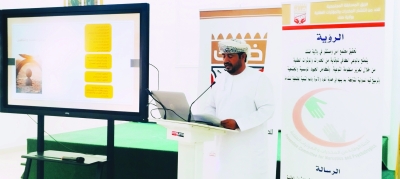

Officials in Dhank launched a one-day training session titled “Aware Family, Aware Society” today in the Dhank Municipality hall, focusing on drug prevention awareness. The event, organized by the community competition team to limit the spread of narcotics and psychotropic substances in Dhank, aims to build participants’ knowledge and practical skills in preventing substance misuse.
The opening session was attended by Sheikh Ibrahim bin Mohammed Al-Harthi, Deputy Wali of Dhank and chair of the community committee on narcotics prevention, alongside government and private sector representatives and medical staff from the Dhank Health Center. Organizers said the workshop sought to strengthen family responsibility and wider community awareness against drugs.
Drug prevention awareness training in Dhank
The workshop centered on the theme of drug prevention awareness and combined lectures, visual presentations, and volunteer briefings. According to organizers, the format was designed to engage parents, community leaders, and volunteers in practical prevention strategies, with emphasis on early intervention and education.
Speaker Saeed bin Ali Al-Kalbani delivered a detailed lecture covering the health, social and economic consequences of addiction, common factors that contribute to substance use, and prevention techniques families can adopt. Meanwhile, Ahmed bin Hamad Al-Saadi outlined the team’s objectives and volunteer roles in carrying out awareness programs.
Curriculum highlights and expert perspectives
The session addressed the spectrum of risks associated with narcotics and psychotropic substances and included a visual overview of the team’s recent outreach activities. Organizers noted the presentation highlighted local trends in misuse and emphasized evidence-based prevention measures.
Healthcare professionals from the Dhank Health Center participated to explain how addiction affects physical and mental health and to describe referral pathways for treatment and support. Additionally, the session outlined how family members and teachers can recognize early warning signs and respond appropriately.
Family role emphasized in drug prevention awareness
Speakers repeatedly stressed the central role of the family in reducing vulnerability to substance misuse. Saeed bin Ali Al-Kalbani emphasized communication, supervision, and the establishment of healthy routines as core family strategies that reduce risk, according to participants’ summaries of his remarks.
Therefore, the training included practical tips for parents on monitoring behavioral changes, setting clear expectations, and seeking medical or counseling help when necessary. Furthermore, the program encouraged families to work with schools and local institutions to create consistent prevention messages in the community.
Volunteer program and community awareness initiatives
Ahmed bin Hamad Al-Saadi presented the volunteer program’s structure and described ongoing community awareness initiatives designed to extend the reach of prevention messages. The team’s plans include school visits, public information campaigns, and partnerships with health providers to improve access to support services.
Organizers said volunteers receive guidance on safe outreach methods and are trained to refer at-risk individuals to health professionals. This approach aligns with the secondary goal of building sustainable community networks that can identify and respond to emerging substance use issues.
Coordination and support from local authorities
Sheikh Ibrahim bin Mohammed Al-Harthi presided over the program and reaffirmed local authorities’ support for prevention efforts. Officials in attendance described the workshop as part of a broader community strategy that combines public health, education, and law enforcement measures to limit the spread of narcotics.
In comments reported by event coordinators, the deputy Wali highlighted the importance of multi-sectoral cooperation and called for continued collaboration between municipal authorities, health services, schools, and community organizations to sustain momentum on prevention and awareness.
Implications for public health and next steps
The training underscores growing recognition that drug prevention awareness is a community responsibility requiring coordinated action. Health experts at the event noted that prevention programs that engage families and volunteers can reduce harm, improve early detection, and channel individuals toward treatment when needed.
Organizers indicated the community competition team will roll out additional awareness activities in the coming months, with a focus on schools and youth centers. Meanwhile, participants were encouraged to apply the workshop guidance locally and to report outcomes to the team for ongoing evaluation.
Conclusion and what to watch next
The “Aware Family, Aware Society” workshop represents an early step in a planned series of community-driven prevention measures in Dhank. Readers should watch for announcements about follow-up sessions, volunteer recruitment drives, and partnership initiatives with health providers over the next quarter.
For policymakers and community leaders, the workshop highlights the need to sustain funding for preventative education and to expand training that equips families and volunteers with practical tools. Continued reporting will be required to assess whether these local initiatives measurably reduce substance misuse and strengthen community resilience.