


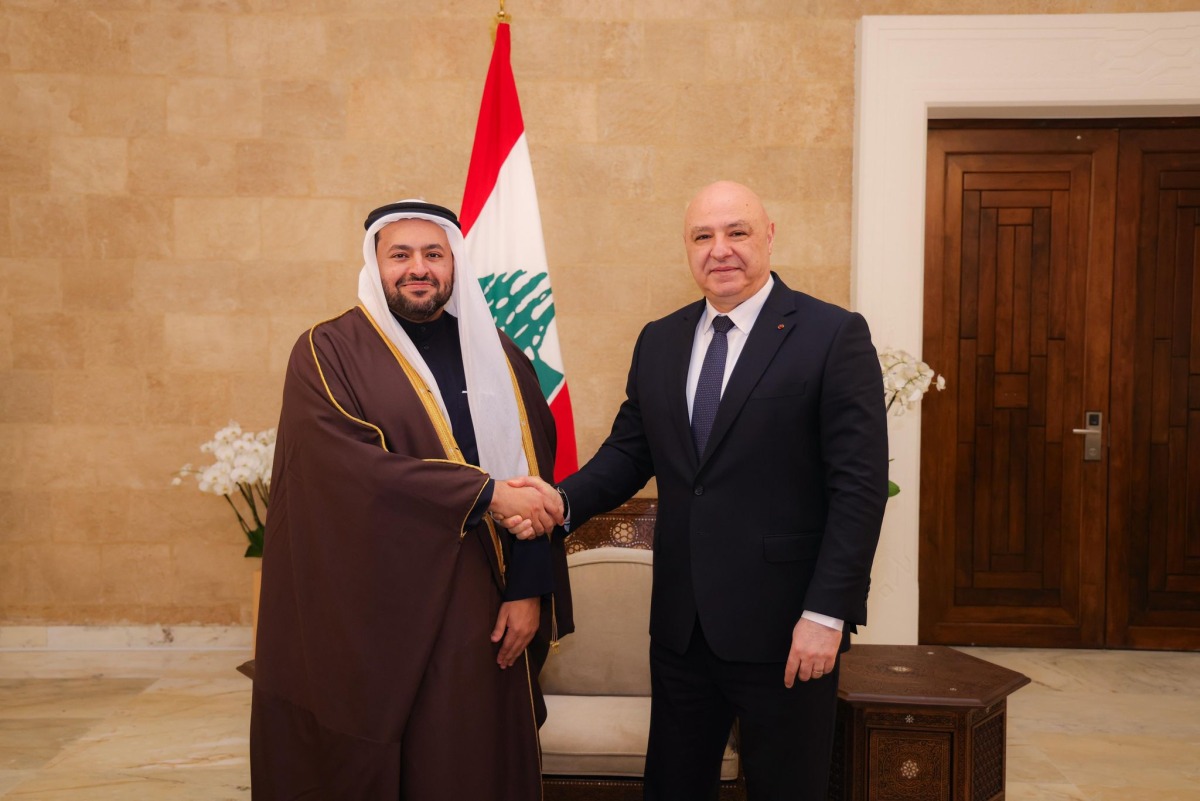

Qatar and Lebanon held high-level talks in Beirut this week, reaffirming Qatar’s commitment to supporting the stability and security of the Republic of Lebanon. Minister of State at the Ministry of Foreign Affairs, Dr. Mohammed bin Abdulaziz bin Saleh Al Khulaifi, met with President Joseph Aoun, Prime Minister Nawaf Salam, Parliament Speaker Nabih Berri, and the Commander of the Lebanese Armed Forces, General Rodolphe Haykal, to discuss bilateral relations and regional issues. These meetings underscore Qatar’s ongoing diplomatic efforts in the region.
The discussions, which took place on January 27, 2024, focused on strengthening cooperation between the two nations and addressing Lebanon’s pressing economic and security challenges. According to reports, a key area of collaboration remains the support of Lebanon’s military, which Qatar has consistently provided over recent years. This support is seen as vital for maintaining internal security and stability amid complex regional dynamics.
Strengthening Qatar-Lebanon Bilateral Relations
President Aoun expressed his gratitude for Qatar’s continued assistance, specifically acknowledging its backing of the Lebanese Army. This support has been crucial in enabling the armed forces to fulfill their duties in a challenging environment. The president and Minister Al Khulaifi also explored avenues for expanding cooperation in other sectors, though specific details weren’t immediately released.
Dr. Al Khulaifi reiterated Qatar’s unwavering solidarity with the Lebanese people. The ministry affirmed its dedication to assisting Lebanon in navigating its ongoing difficulties, emphasizing Qatar’s belief in a stable and prosperous Lebanon. This consistent message of support highlights Qatar’s long-term commitment to the country.
Focus on Economic and Security Reforms
Prime Minister Salam used his meeting with the Qatari minister to discuss the progress of ongoing reform projects within the Lebanese government. These reforms are viewed as essential for attracting international investment and addressing Lebanon’s severe economic crisis. The talks reportedly included exploring potential Qatari investment opportunities.
The discussion with Parliament Speaker Berri centered on the broader political landscape in Lebanon and the importance of a functioning government. Maintaining political stability is considered a prerequisite for successful economic recovery, making this a central theme in the diplomatic engagement. The meetings come at a critical juncture for Lebanon.
General Haykal, Commander of the Lebanese Armed Forces, also emphasized his appreciation for Qatar’s continued military aid. He underscored its significance in bolstering the army’s capabilities and preserving security in the face of persistent threats. Recent security concerns in the region, including spillover from the conflict in Gaza, likely featured prominently in these discussions. The topic of regional security was also touched upon.
The situation in Lebanon remains delicate, with the country grappling with a deep economic recession, political deadlock, and ongoing security concerns. The Lebanese pound has lost over 98% of its value since 2019, leading to widespread poverty and social unrest. These factors create a volatile context for both domestic and international actors. Qatar’s aid represents a critical lifeline.
While Qatar’s stance is consistently supportive, the future trajectory of Lebanese recovery hinges on numerous factors beyond its influence. These include the formation of a fully functional government, the implementation of meaningful economic reforms, and a broader stabilization of the regional environment.
Looking ahead, it is expected that Qatar will continue to monitor the situation in Lebanon closely and adjust its support accordingly. No specific new aid packages were announced at the time of this writing, but further discussions are anticipated in the coming weeks. The international community will be watching to see if these diplomatic efforts translate into tangible improvements in Lebanon’s political and economic situation.
Related coverage on Middle East Observer.