



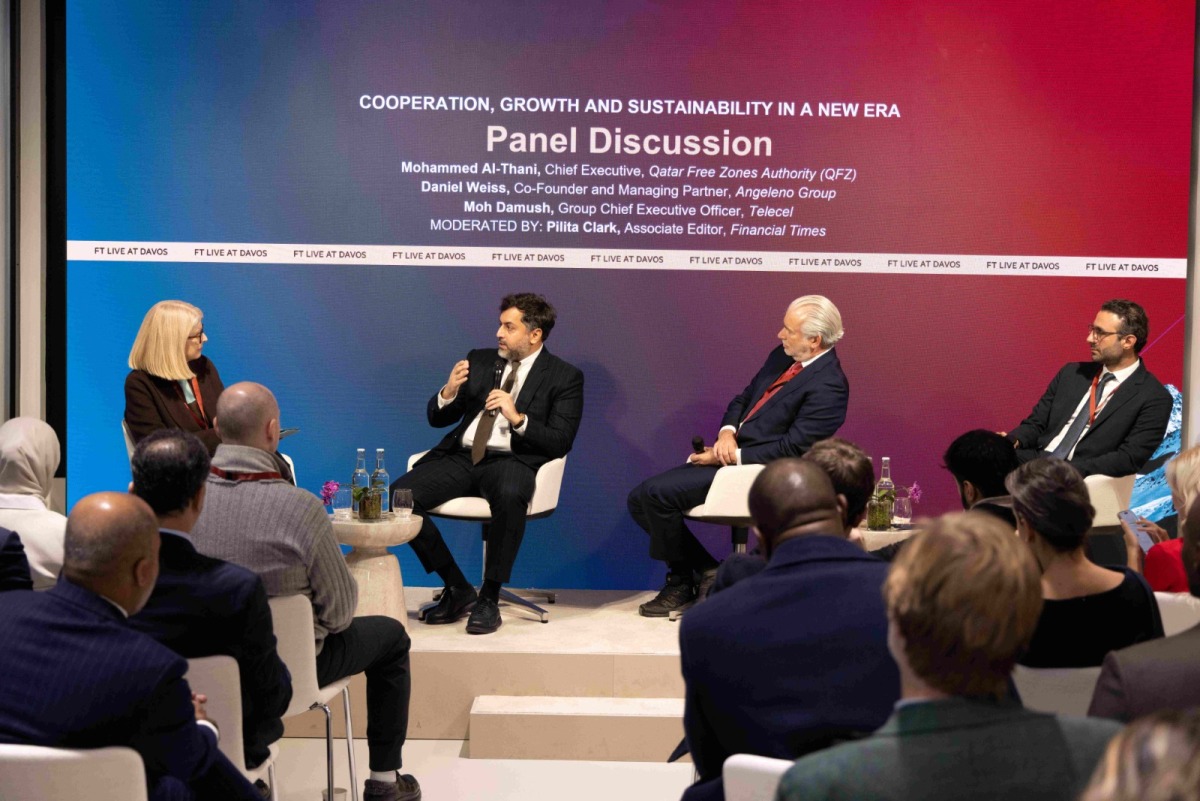

The Qatar Free Zones Authority (QFZ) actively participated in the World Economic Forum (WEF) Annual Meeting 2026, held in Davos, Switzerland, from January 19-23. Led by CEO HE Sheikh Mohammed bin Hamad bin Faisal Al-Thani, the Qatari delegation engaged in discussions focused on global economic cooperation, sustainable growth, and the role of free zones in fostering international trade. The event brought together world leaders, policymakers, and industry experts to address pressing global challenges.
QFZ’s presence at the WEF underscores Qatar’s commitment to diversifying its economy and attracting foreign investment. The country has been strategically developing its free zone infrastructure to become a key hub for international businesses, particularly in sectors like technology, logistics, and manufacturing. This year’s forum provided a platform to showcase these advancements and explore new partnerships.
Qatar Free Zones Authority Highlights Sustainable Trade at WEF 2026
A central theme of QFZ’s participation was the potential of free zones to drive sustainable trade and connectivity. HE Sheikh Mohammed participated in a panel discussion at the Invest Qatar Pavilion, titled “Cooperation, Growth and Sustainability in a New Era,” which explored how these zones can facilitate investment, enhance transparency, and meet evolving environmental and social standards. The discussion also considered lessons learned from recent global disruptions.
The panel emphasized the importance of resilient supply chains in a volatile global landscape. According to the WEF’s own reports, geopolitical instability and climate change are increasingly impacting trade routes and requiring businesses to adapt. QFZ’s strategy aligns with this need, offering streamlined processes and infrastructure designed to mitigate risk and ensure efficient operations.
Boosting Investment and Logistics
HE Sheikh Mohammed highlighted how Qatar’s free zones are specifically designed to support companies looking to expand into global markets. These benefits include expedited customs clearance, direct access to both air and sea freight networks, and seamless integration with international trade routes. This focus on logistics is a key component of Qatar’s National Vision 2030, which aims to transform the country into a regional and global leader.
Additionally, the QFZ is actively leveraging digital platforms to enhance transparency and streamline regulatory processes. This move towards digitalization is intended to attract a new generation of investors who prioritize efficiency and ease of doing business. The authority is also working to align its operations with international best practices in environmental, social, and governance (ESG) standards.
Qatar’s Broader Economic Strategy
QFZ’s participation was part of the larger “Invest Qatar Pavilion,” representing the State of Qatar’s official delegation. This coordinated effort demonstrates a unified national approach to attracting foreign direct investment and promoting economic diversification. Qatar has been actively seeking to reduce its reliance on hydrocarbons and develop a knowledge-based economy.
The WEF meeting comes at a time of significant global economic uncertainty. Inflation remains a concern in many countries, and geopolitical tensions continue to disrupt supply chains. However, Qatar’s stable political environment and strong financial position make it an attractive destination for investors seeking a safe and reliable base for their operations. The country’s strategic location also offers access to key markets in Asia, Europe, and Africa.
Looking ahead, QFZ is expected to continue its efforts to attract investment and develop its infrastructure. The authority will likely focus on strengthening partnerships with international organizations and promoting Qatar as a leading destination for sustainable and innovative businesses. Further details regarding specific investment targets and expansion plans are anticipated in the coming months, dependent on global economic conditions and ongoing geopolitical developments.
The success of these initiatives will be a key indicator of Qatar’s progress towards achieving its economic diversification goals. Monitoring the growth of investment within the free zones, as well as the development of new infrastructure projects, will be crucial in assessing the long-term impact of QFZ’s strategy. The ongoing evolution of international trade and supply chain management will also play a significant role in shaping the future of Qatar’s economic growth.
World Economic Forum
Qatar Free Zones Authority
Invest Qatar