






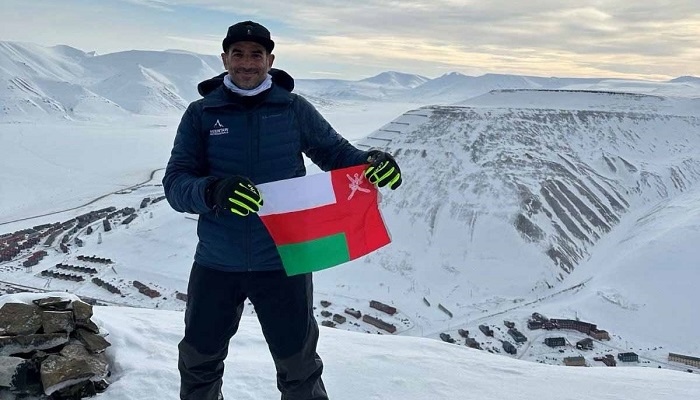

Driven by a lifelong passion for the outdoors, Omani adventurer Sulaiman bin Hamoud Al-Naabi has become a national icon, pushing the boundaries of high-altitude mountaineering and etching his name into the history books. His remarkable journey, marked by historic firsts for the Sultanate of Oman, showcases the power of dedication, meticulous planning, and unwavering commitment. Al-Naabi’s achievements, including becoming the first Omani to summit Mount Everest, inspire a generation and elevate Oman’s presence on the global stage.
The Spark: From Kilimanjaro to a Professional Pursuit
Al-Naabi’s adventure began somewhat unexpectedly in 2015 with an educational expedition to climb Mount Kilimanjaro. Initially lacking awareness of the prestigious Seven Summits challenge, a conversation with the expedition leader proved pivotal. This encounter ignited a passion that would transform a hobby into a full-fledged professional career. He realized that his love for nature, sports, and mountains could be channeled into a structured and impactful path.
The transition wasn’t immediate. Al-Naabi emphasized the importance of disciplined planning, accredited training, and a safety-first approach. He understood that representing Oman internationally demanded adherence to the highest standards, a commitment that required sustained effort and a gradual evolution towards professionalism. This involved a significant investment in both physical and mental preparedness.
The Seven Summits and Beyond: A Defining Challenge
The Seven Summits challenge – scaling the highest peak on each of the world’s seven continents – is renowned for its extreme demands. It tests not only physical endurance but also psychological resilience and logistical expertise. Completing this feat, coupled with reaching both the North and South Poles, constitutes the Grand Slam Explorer, an exceptionally rare and dangerous accomplishment.
Al-Naabi’s professional journey commenced on September 30, 2015, with his ascent of Mount Kilimanjaro in Africa. He quickly followed this with Aconcagua in South America on December 19, 2016, becoming the first Omani to conquer the second-highest mountain globally. Further successes included Mount Elbrus in Europe (July 23, 2018) and the official completion of the Seven Summits Program under a New Zealand-accredited framework on September 3, 2018. He continued to push his limits, summiting Mount Kosciuszko in Australia (February 16, 2019), Denali in Alaska (June 20, 2019), and Mont Blanc in France (August 25, 2019) as preparation for even greater challenges.
Everest, Lhotse, and the Polar Extremes
2022 proved to be a landmark year for Al-Naabi. He meticulously prepared for Everest with a climb of Lobuche Peak on May 1st, before fulfilling his lifelong ambition by summiting the world’s highest mountain on May 12th. Remarkably, less than 24 hours later, he also reached the summit of Lhotse, the world’s fourth-highest peak, demonstrating incredible stamina and adaptability.
His polar expeditions further cemented his legacy. On December 16, 2022, he conquered Mount Vinson in Antarctica, followed by a successful journey to the South Pole on December 24th. He continued his exploration in the Arctic, summiting a peak in the Svalbard archipelago on April 23, 2023. Finally, on February 28, 2025, he completed his historic journey with the ascent of Carstensz Pyramid in Oceania, becoming the first Omani to achieve both the Seven Summits and reach both the North and South Poles – a testament to his dedication to adventure sports.
Overcoming Obstacles and National Impact
Al-Naabi openly discussed the immense challenges he faced, both physical and mental. He endured extreme cold (-60°C), violent winds, avalanche risks, and the debilitating effects of oxygen deprivation. Prolonged isolation, the psychological strain of lengthy expeditions, and witnessing tragic accidents along the climbing routes were particularly difficult.
He also navigated professional and financial hurdles. Initially balancing his passion with his role as a physics teacher at the Ministry of Education, he later benefited from a transfer to the Ministry of Culture, Sports and Youth, which allowed him to pursue his goals professionally. He emphasized the ministry’s crucial support, extending beyond funding to reflect a broader commitment to empowering Omani youth and enhancing Oman’s international standing. Logistical complexities were overcome through faith, meticulous planning, teamwork, and sound decision-making.
A Legacy of Inspiration and Community Engagement
Al-Naabi’s journey has evolved into a sustainable contribution to Omani society. He actively participates in the National Youth Committee, leads the “Young Traveler” initiative to promote safe adventure culture and train young people, and contributes to the advancement of outdoor activities through the Omani Adventures Committee. He also delivers awareness lectures on safety in natural environments.
Receiving the Royal Commendation Medal holds profound personal and national significance for Al-Naabi. He views it not only as an honor but also as a responsibility – a motivation to translate his personal achievements into lasting value for Omani youth, strengthen Oman’s international presence, and connect individual success with broader national development. His story serves as a powerful reminder that with passion, perseverance, and a commitment to excellence, anything is possible.