






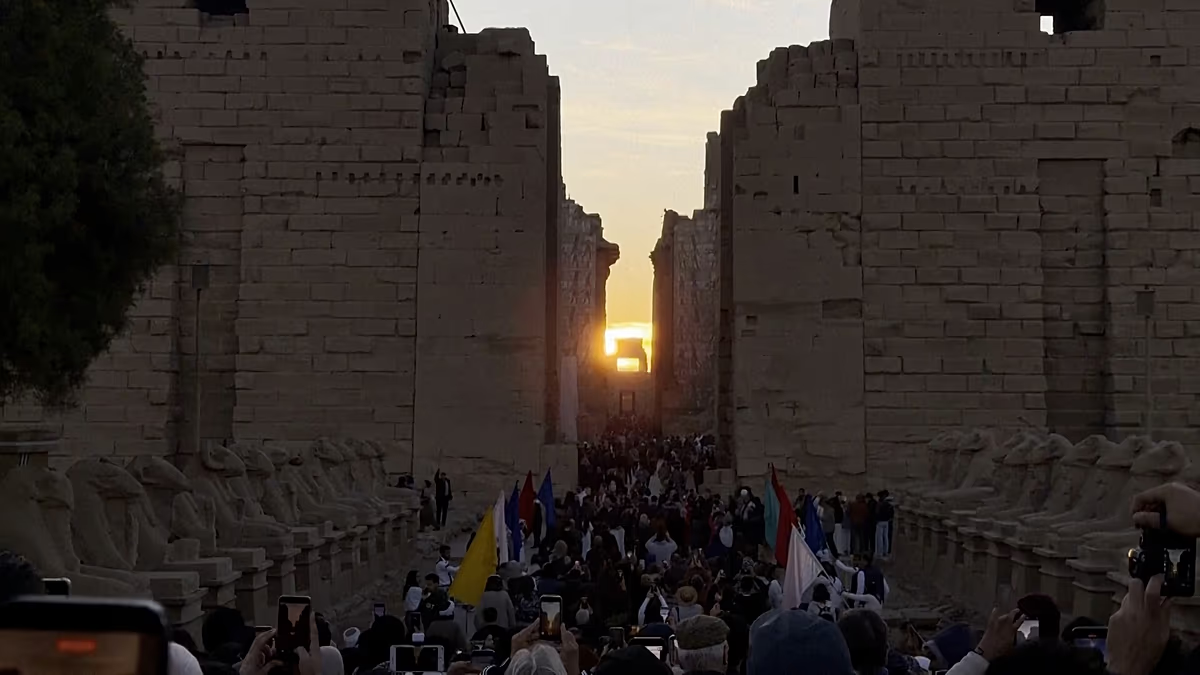

Hundreds gathered in Luxor, Egypt, on Sunday to witness a rare astronomical event: the winter solstice sunrise aligned perfectly with the ancient Temple of Amun-Re at Karnak. The phenomenon, which occurs as the sun reaches its furthest point south, illuminating the temple’s central axis, draws tourists and archaeologists alike to this historical Egyptian city. This precise alignment highlights the sophisticated understanding of astronomy possessed by the ancient Egyptians.
The sunrise occurred before dawn on December 22nd, marking the shortest day of the year in the Northern Hemisphere and the beginning of astronomical winter. As the first rays of light appeared, a hush fell over the crowd as golden beams streamed through the massive columns of the Karnak temple complex, a moment considered spiritually significant by many present. The event underscores Luxor’s continuing status as a major destination for historical tourism.
The Significance of the Luxor Solstice Alignment
The alignment isn’t simply a visual spectacle; it’s a testament to the deliberate architectural planning of the ancient Egyptians. Karnak, the largest religious structure ever built, wasn’t constructed randomly. According to experts, its orientation was deeply connected to celestial events and the religious beliefs of the time.
This particular alignment during the winter solstice is believed to have held special importance related to the rebirth of the sun god, Ra, and the renewal of life. The Ancient Egyptians saw the sun’s journey as a cycle of death and resurrection, and the solstice marked a turning point.
A Complex of Temples and Religious Beliefs
The Temple of Amun-Re is part of the larger Karnak Temple Complex, dedicated to the Theban Triad: Amun, Mut, and Khonsu. Construction began during the reign of Senusret I in the Middle Kingdom (around 2055-1650 BCE) and continued through the Ptolemaic period (305-30 BCE).
The complex features colossal columns, intricate carvings, and numerous chapels and obelisks. Additionally, the choice of Luxor as a site, located on the east bank of the Nile, was deliberate, symbolically connecting it with the sun’s daily rising.
The event drew considerable attention from local authorities and the Ministry of Tourism and Antiquities, who facilitated access and provided security for the large number of visitors. The Ministry stated they aim to promote cultural tourism and highlight Egypt’s rich heritage.
Meanwhile, archaeological research continues at Karnak and other sites in the Luxor area. Experts are constantly uncovering new details about the lives, beliefs, and technological achievements of the ancient Egyptians.
The winter solstice alignment at Karnak is not an everyday occurrence with such perfect visibility. Atmospheric conditions and slight shifts in the earth’s axis can affect the alignment over time. However, it consistently demonstrates the profound connection between ancient Egyptian religion and the natural world.
In contrast to modern constructions, the ancient structures weren’t built with the aid of modern technology. The Egyptians relied on their understanding of mathematics, astronomy, and engineering to create these enduring monuments, showcasing their innovative skills. The event benefits local businesses as the influx of tourists supports the Egyptian economy.
The successful observation of this year’s solstice alignment in Luxor promises to further boost the region’s profile as a globally significant UNESCO World Heritage site. Observers can expect similar events each year, though the precise conditions can vary. Future visitors planning to witness this spectacle are encouraged to check local event schedules for optimal viewing times and arrangements.