




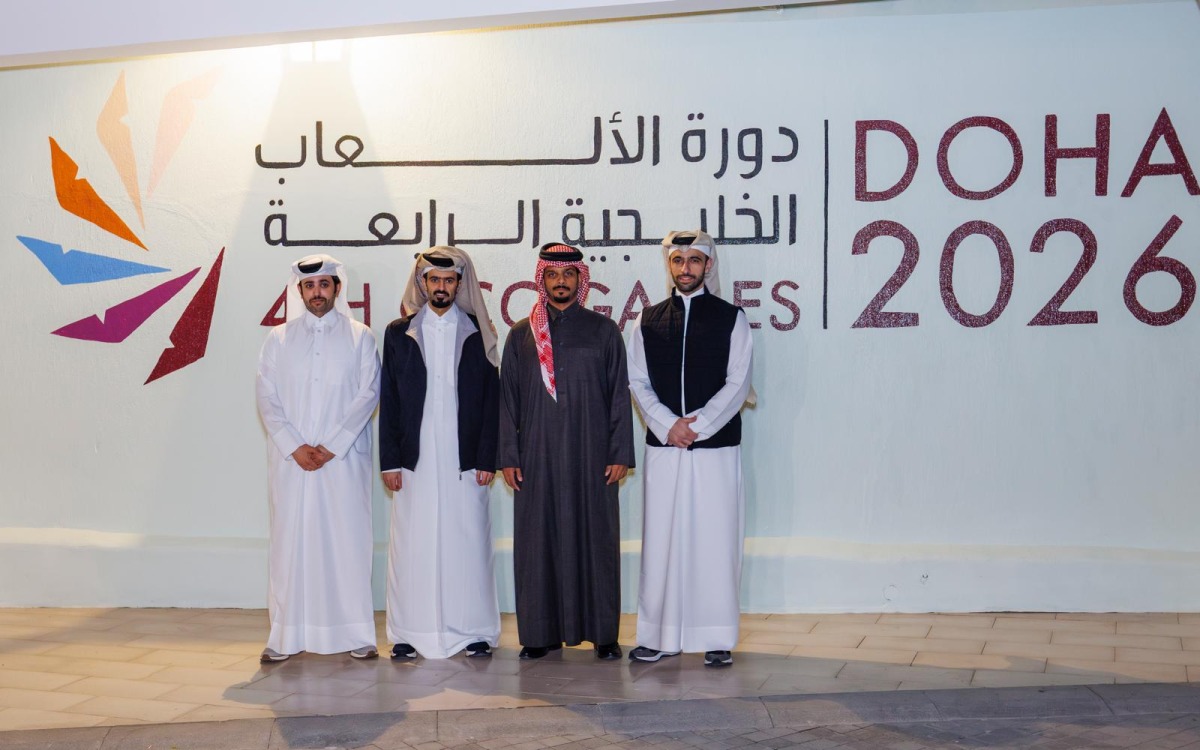

Doha, Qatar – The Organizing Committee for the GCC Games Doha 2026 officially revealed the event’s logo yesterday at a ceremony held at Old Doha Port. The unveiling marks a significant milestone in preparations for the Games, scheduled to take place from May 11 to 22, 2026, and showcases Qatar’s ongoing commitment to regional sporting events. This edition anticipates the participation of elite athletes from the Gulf Cooperation Council member states across 18 different sporting disciplines.
The logo was unveiled during an interactive event where attendees collaboratively completed a large-scale artistic mural, symbolizing collective effort and community involvement. Representatives from sports federations and various officials were present to witness the launch. The Games will be hosted across nine venues in Doha, according to organizers.
Symbolism at the Heart of the GCC Games Doha 2026 Logo
The newly unveiled logo draws inspiration from the iconic palm tree, a deeply embedded symbol throughout the Gulf region. The palm tree represents core values shared by the GCC nations, including resilience, generosity, and a strong connection to their heritage. Sheikh Khalifa bin Khalid Al Thani, the General Director of the Games, emphasized that the design aims to embody these shared meanings and the historical ties between the Gulf states.
The logo visually features six palm fronds, each representing a member state of the Gulf Cooperation Council. These fronds are designed with flowing lines to reflect the dynamic nature of sport. The arrangement thoughtfully creates a negative space forming the number ‘4’, directly signifying this being the fourth iteration of the GCC Games.
Qatar’s Preparations and Sporting Infrastructure
Sheikh Khalifa bin Khalid also highlighted that preparations for hosting the Doha 2026 Games are progressing smoothly, leveraging Qatar’s substantial experience in organizing major international sporting events such as the FIFA World Cup. Qatar has invested significantly in state-of-the-art sporting facilities in recent years, solidifying its position as a premier destination for athletic competition. These investments are expected to contribute to a high-quality experience for athletes and spectators alike.
Additionally, the Organizing Committee aims to utilize the Games to further develop sport across the Gulf region. This involves not only providing a platform for competition but also fostering collaboration and knowledge sharing between member states. The focus extends beyond athletic performance to encompass the broader benefits of sport, including promoting health, well-being, and social cohesion.
Impact on Doha’s Profile as a Sports Hub
The successful execution of the 2026 Games would further elevate Doha’s reputation as a leading sports hub in the Middle East. According to tourism officials, major sporting events consistently attract large numbers of visitors, boosting the local economy and promoting cultural exchange. The organization hopes for a substantial economic impact from the games.
Hosting the GCC Games also presents an opportunity to showcase Qatar’s hospitality and organizational capabilities. The country is actively seeking to diversify its economy and tourism sector, with sports playing an increasingly prominent role. However, ongoing regional geopolitical factors could influence logistical arrangements and potential participation levels.
Looking ahead, the Organizing Committee will continue to finalize venue preparations and coordinate with participating national teams. The next phase involves detailed planning for the opening and closing ceremonies, as well as logistical arrangements for athletes, officials, and spectators. Confirmation of the final list of participating countries and specific event schedules are anticipated in the coming months, contingent on standard approvals from the Gulf Cooperation Council.
The Committee also plans to work closely with relevant stakeholders, including security forces and healthcare providers, to ensure a safe and seamless experience for all involved. Ongoing monitoring of potential challenges, such as weather conditions and transportation logistics, will be crucial to the overall success of the event.