





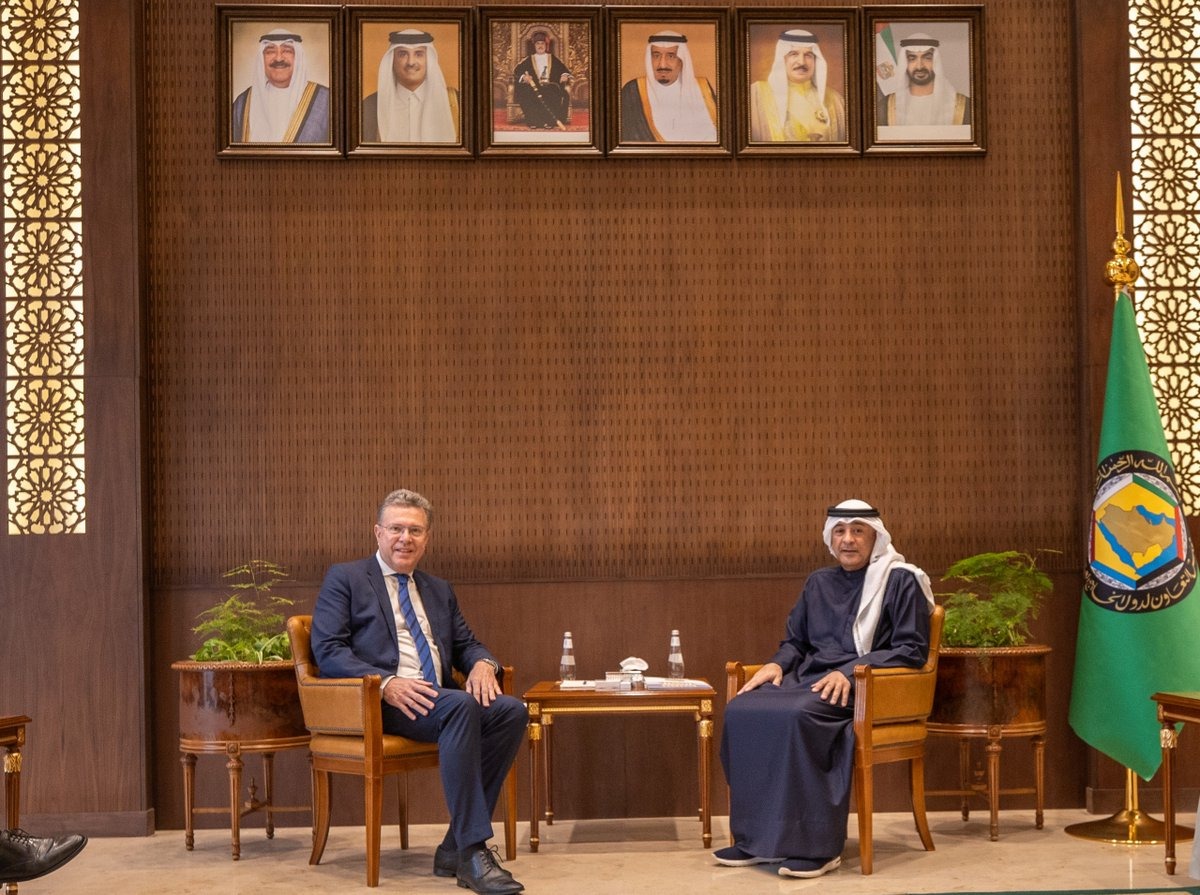

Riyadh – The Gulf Cooperation Council (GCC) is actively pursuing strengthened diplomatic and economic ties with European nations, as evidenced by a recent meeting between GCC Secretary-General Jasem Mohamed Al Budaiwi and Austrian Special Envoy Herbert Scheibner. Discussions focused on enhancing GCC-Austria relations and broader Gulf-European cooperation, taking place in Riyadh on December 15, 2023. The meeting underscores the GCC’s commitment to diversifying its international partnerships.
The meeting between Al Budaiwi and Scheibner addressed current regional and international developments, with both sides exchanging perspectives on key issues. While specific details of the discussions weren’t publicly released, the encounter signals a continued dialogue between the GCC and Austria following previous engagements aimed at fostering collaboration. This push for stronger ties comes amid evolving geopolitical landscapes and increasing economic interdependence.
Boosting GCC-Austria Relations: A Strategic Move
The GCC, comprised of Saudi Arabia, Kuwait, Oman, Qatar, Bahrain, and the United Arab Emirates, has been strategically expanding its relationships beyond traditional allies in recent years. Austria, a neutral European Union member state, presents a unique opportunity for the GCC to build partnerships based on mutual economic interests and political stability. This is particularly relevant given Austria’s role as a potential gateway for trade and investment within the EU.
Economic Cooperation as a Key Driver
Economic cooperation is expected to be a central component of the enhanced GCC-Austria relations. The GCC nations are actively seeking to diversify their economies away from oil dependence, and Austria’s expertise in sectors like technology, renewable energy, and tourism could be valuable. According to reports from the Austrian Federal Economic Chamber, trade volume between Austria and GCC countries has been steadily increasing, though still represents a relatively small portion of overall Austrian trade.
However, the relationship isn’t solely focused on economics. Security concerns and regional stability were also likely discussed, given Austria’s involvement in international peacekeeping efforts and the GCC’s role in maintaining security in the Gulf region. The ongoing conflicts in the Middle East and the broader implications for global security necessitate close collaboration between regional and international actors.
Meanwhile, the GCC is also working to strengthen its overall relationship with Europe. Negotiations for free trade agreements with the European Union have been ongoing for several years, though progress has been slow. The recent focus on bilateral relationships, such as the one with Austria, could be a tactic to build momentum for a broader EU-GCC trade deal. These efforts align with the EU’s own strategy to diversify its energy sources and strengthen economic ties with the Gulf region.
In contrast to some other European nations, Austria has maintained a consistent and pragmatic approach to its relations with the GCC. This has allowed for a constructive dialogue on a range of issues, including human rights and political reforms, without jeopardizing economic and security cooperation. The Austrian government has consistently emphasized the importance of a stable and prosperous Gulf region.
The meeting also comes as Austria prepares to host several high-profile international events in the coming years, providing further opportunities for engagement with GCC officials. These events could serve as platforms for discussing investment opportunities and addressing shared challenges. The GCC views these engagements as crucial for promoting its interests on the global stage.
Looking ahead, the next steps in strengthening GCC-Austria relations will likely involve follow-up meetings between officials to discuss specific areas of cooperation. The establishment of joint working groups focused on trade, investment, and security could also be on the horizon. The timeline for concrete agreements remains uncertain, dependent on ongoing negotiations and evolving regional dynamics. Monitoring the progress of EU-GCC trade talks and any further bilateral initiatives will be key to understanding the long-term implications of this developing partnership. Further developments in Gulf news will likely shed more light on these efforts.
The success of these endeavors will also be influenced by broader geopolitical factors, including the ongoing war in Ukraine and the evolving relationship between the United States and the Gulf region. Middle East affairs are complex and require careful navigation. The GCC’s ability to balance its relationships with different global powers will be crucial for achieving its strategic objectives. Council on Foreign Relations provides further analysis on the region.