




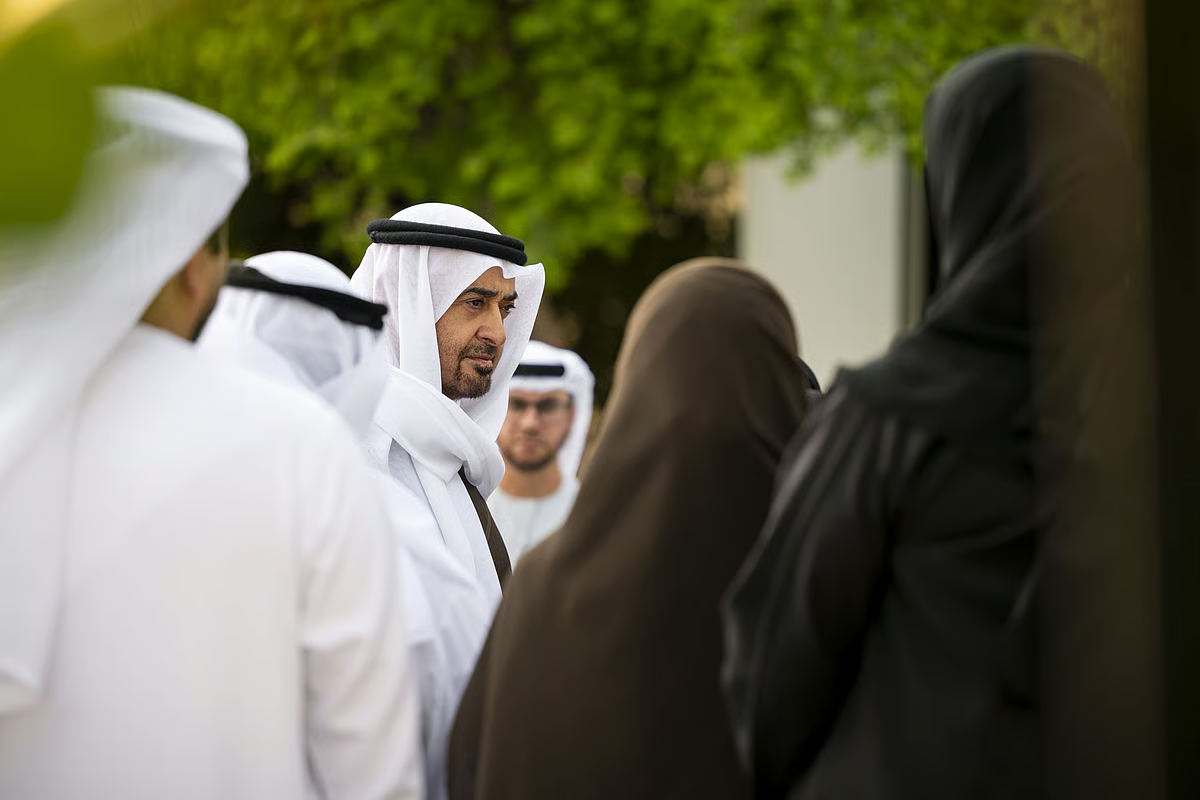

A high-profile meeting convened in Abu Dhabi this week brought together a significant portion of the United Arab Emirates’ ruling family and senior government officials, signaling continued focus on national unity and strategic development. The gathering, attended by numerous Sheikhs and ministers, underscores the UAE’s commitment to collaborative leadership as it navigates regional and global challenges. Discussions likely centered on economic diversification, social programs, and national security, though specific details remain unreleased. This display of unified leadership is a key aspect of the UAE’s leadership structure.
The meeting, held at an undisclosed location in Abu Dhabi, included Sheikh Khaled bin Mohamed bin Zayed Al Nahyan, Crown Prince of Abu Dhabi, and a broad representation of the Al Nahyan family, as well as key ministers and advisors. The extensive attendee list suggests a comprehensive review of current policies and future planning. While the official purpose wasn’t publicly stated, the presence of figures responsible for areas like interior affairs, tolerance, and humanitarian aid points to a wide-ranging agenda. The event highlights the importance of collective decision-making within the UAE’s governance framework.
Understanding the UAE’s Collective Leadership
The UAE operates under a unique system of governance, blending traditional tribal structures with modern administrative practices. The Federal Supreme Council, comprised of the rulers of the seven emirates, elects the President and Vice President. This latest meeting exemplifies the emphasis on consensus-building and the active participation of various branches of the ruling family in shaping national policy. The UAE’s political system prioritizes stability and long-term planning, often achieved through extensive consultation.
Key Attendees and Their Roles
Several attendees hold positions crucial to the UAE’s strategic direction. Sheikh Saif bin Zayed Al Nahyan, as Deputy Prime Minister and Minister of the Interior, oversees internal security and law enforcement. Sheikh Nahyan bin Zayed Al Nahyan, Chairman of the Zayed bin Sultan Al Nahyan Charitable and Humanitarian Foundation, leads significant philanthropic efforts. Sheikh Khalid bin Zayed Al Nahyan, Chairman of the Zayed Higher Organisation for People of Determination, champions inclusivity and social welfare programs.
Additionally, the presence of Sheikh Theyab bin Mohamed bin Zayed Al Nahyan, focused on development and fallen heroes’ affairs, and Sheikh Hamdan bin Mohamed bin Zayed Al Nahyan, handling special affairs, indicates attention to both economic progress and social responsibility. Sheikh Mohammed bin Hamad bin Tahnoun Al Nahyan, as an advisor to the President, likely contributed insights on current geopolitical dynamics. The breadth of representation suggests a holistic approach to national challenges.
The UAE has been actively pursuing economic diversification away from oil dependence, with significant investments in tourism, technology, and renewable energy. This strategy, known as “Vision 2030,” aims to create a sustainable and knowledge-based economy. The meeting likely addressed progress on these initiatives and potential adjustments to ensure continued success. Leadership within the UAE is heavily invested in achieving these long-term economic goals.
However, the UAE also faces regional security concerns, including ongoing tensions in the Gulf region and the broader Middle East. Maintaining stability and protecting national interests are paramount. The presence of security officials at the meeting suggests discussions related to defense policy and regional diplomacy. The country’s foreign policy emphasizes peaceful resolution of conflicts and regional cooperation.
Meanwhile, the UAE has recently increased its focus on social issues, including tolerance and coexistence, as exemplified by the Ministry of Tolerance and Coexistence led by Sheikh Nahyan bin Mubarak Al Nahyan. This reflects a commitment to building a diverse and inclusive society. The nation has also been actively promoting its image as a global hub for innovation and cultural exchange. These efforts are integral to the UAE’s long-term vision.
In contrast to some regional neighbors, the UAE has maintained a relatively stable political environment, fostering economic growth and attracting foreign investment. This stability is often attributed to the strong and unified leadership demonstrated by the ruling family and the government. The country’s proactive approach to governance and its commitment to social and economic development have contributed to its regional prominence.
The UAE’s commitment to humanitarian aid and international development is also noteworthy. The Zayed bin Sultan Al Nahyan Charitable and Humanitarian Foundation, under Sheikh Nahyan bin Zayed Al Nahyan’s guidance, plays a significant role in providing assistance to communities in need around the world. This reflects the UAE’s broader foreign policy objectives of promoting peace and stability. Leadership in this area is a key component of the nation’s global standing.
The lack of a formal statement following the meeting is consistent with the UAE’s tradition of discreet governance. However, the sheer number of high-ranking officials in attendance signals the importance of the discussions. Observers anticipate that any resulting policy changes or initiatives will be announced in the coming weeks or months. Further details regarding the meeting’s agenda are expected to emerge through official channels.
Looking ahead, the UAE is expected to continue prioritizing economic diversification, social development, and regional stability. The next major event to watch will be the annual Government Summit, scheduled for February 2024, where key policy announcements are often made. The effectiveness of the strategies discussed in this recent meeting will become clearer as the UAE progresses towards its Vision 2030 goals. The country’s ability to navigate complex regional challenges and maintain its economic momentum will be crucial in the years to come. The role of strong leadership will remain central to the UAE’s future success.