






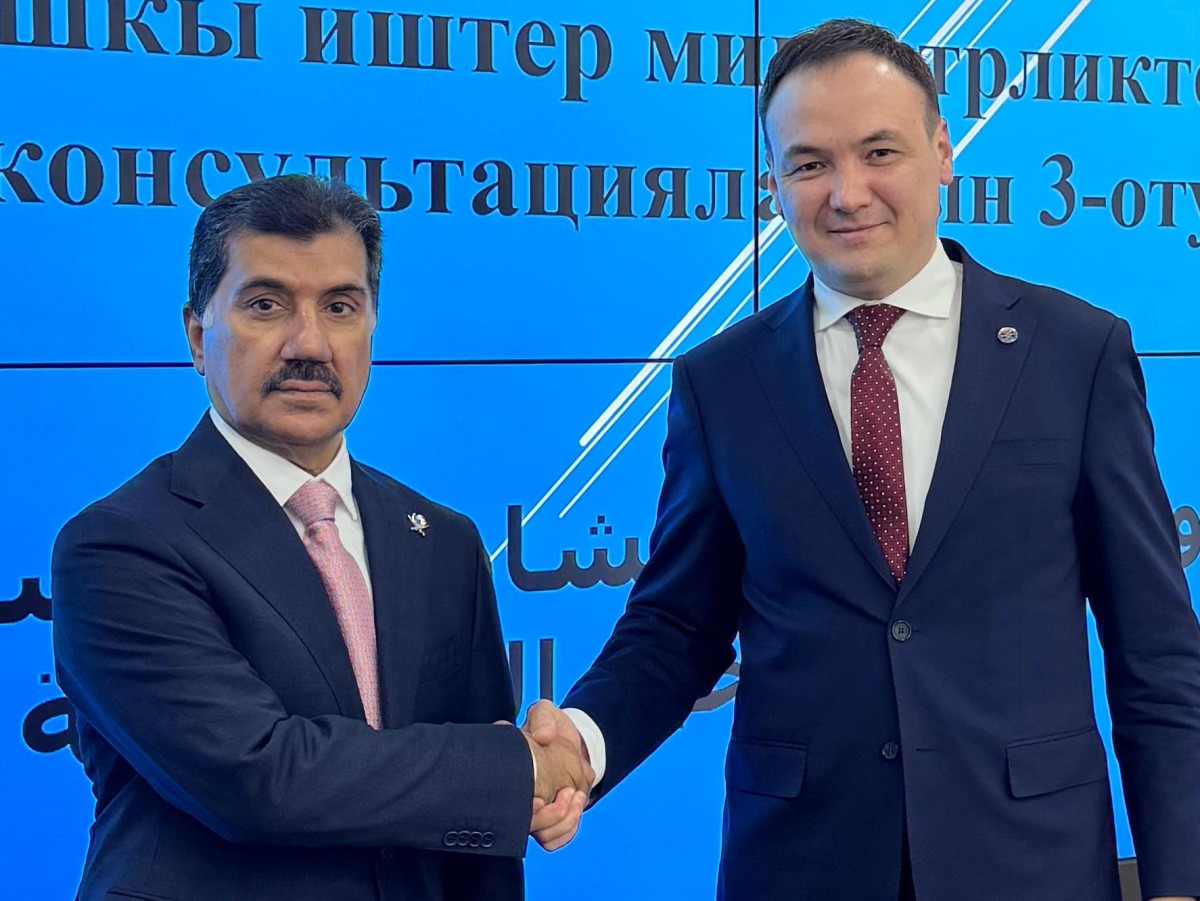

Bishkek, Kyrgyzstan – The State of Qatar and the Kyrgyz Republic held the third round of political consultations in Bishkek on Wednesday, signaling continued efforts to strengthen diplomatic ties and explore avenues for increased cooperation. The discussions focused on bolstering bilateral relations and identifying opportunities for mutual support, according to a statement released by the Qatari Ministry of Foreign Affairs. This latest round of talks underscores a growing partnership between the two nations.
Headed by Secretary-General of the Ministry of Foreign Affairs of Qatar, Dr. Ahmed bin Hassan Al Hammadi, and Deputy Minister of Foreign Affairs of Kyrgyzstan, Temirbek Erkinov, the consultations took place at the Ministry of Foreign Affairs in Bishkek. The meeting involved a comprehensive review of existing collaborative efforts and potential areas for future engagement, with both sides expressing a commitment to deepening their strategic partnership. Qatar’s Ambassador to Kyrgyzstan, Ali bin Jaber Al Marri, and Director of Asian Affairs at the Qatari Ministry of Foreign Affairs, Al Johara bint Yousef Al Obaidan Fakhro, also participated.
Strengthening Qatar-Kyrgyzstan Political Consultations
These political consultations are a key mechanism for regular dialogue between Qatar and Kyrgyzstan, allowing officials to address shared interests and challenges. The meetings provide a platform for open communication and the development of joint initiatives. According to sources familiar with the discussions, topics included regional security, economic development, and cultural exchange.
Areas of Bilateral Cooperation
While specific details of the discussions remain limited, the Ministry of Foreign Affairs indicated that both countries expressed satisfaction with the current state of their relations. Areas of potential cooperation identified include investment, energy, and education. Kyrgyzstan, a landlocked Central Asian nation, is seeking to attract foreign investment to modernize its economy, while Qatar is diversifying its international partnerships.
Additionally, the two sides likely discussed opportunities for collaboration within multilateral forums. Qatar and Kyrgyzstan share similar perspectives on several global issues, including the importance of peaceful conflict resolution and sustainable development. This shared outlook could lead to coordinated diplomatic efforts on the international stage.
However, the relationship is still developing. Trade volume between the two countries remains relatively modest, although it has been steadily increasing in recent years. The report indicates that both nations are keen to expand economic ties and create new opportunities for businesses.
Meanwhile, Qatar has been actively strengthening its relationships with Central Asian countries as part of its broader foreign policy strategy. This increased engagement reflects Qatar’s desire to play a more prominent role in regional affairs and diversify its economic and political partnerships. Kyrgyzstan, in turn, views Qatar as a valuable partner in attracting investment and promoting economic growth.
In contrast to some regional dynamics, Qatar and Kyrgyzstan maintain a stable and cooperative relationship. This stability is underpinned by a shared commitment to mutual respect and non-interference in internal affairs. The ongoing diplomatic relations are expected to continue fostering a positive environment for collaboration.
The meeting also touched upon the importance of people-to-people exchanges. Both countries recognize the value of cultural understanding and educational opportunities in strengthening bilateral ties. Increased student exchanges and cultural programs could further enhance the relationship between Qatar and Kyrgyzstan. International relations between the two countries are becoming increasingly important.
Looking ahead, both Qatar and Kyrgyzstan have agreed to continue the dialogue through future rounds of political consultations. A specific date for the next meeting has not yet been announced, but officials indicated a commitment to maintaining regular communication. Observers will be watching for concrete outcomes from these discussions, particularly in the areas of investment and economic cooperation. The success of future initiatives will depend on continued political will and effective implementation of agreed-upon strategies.