






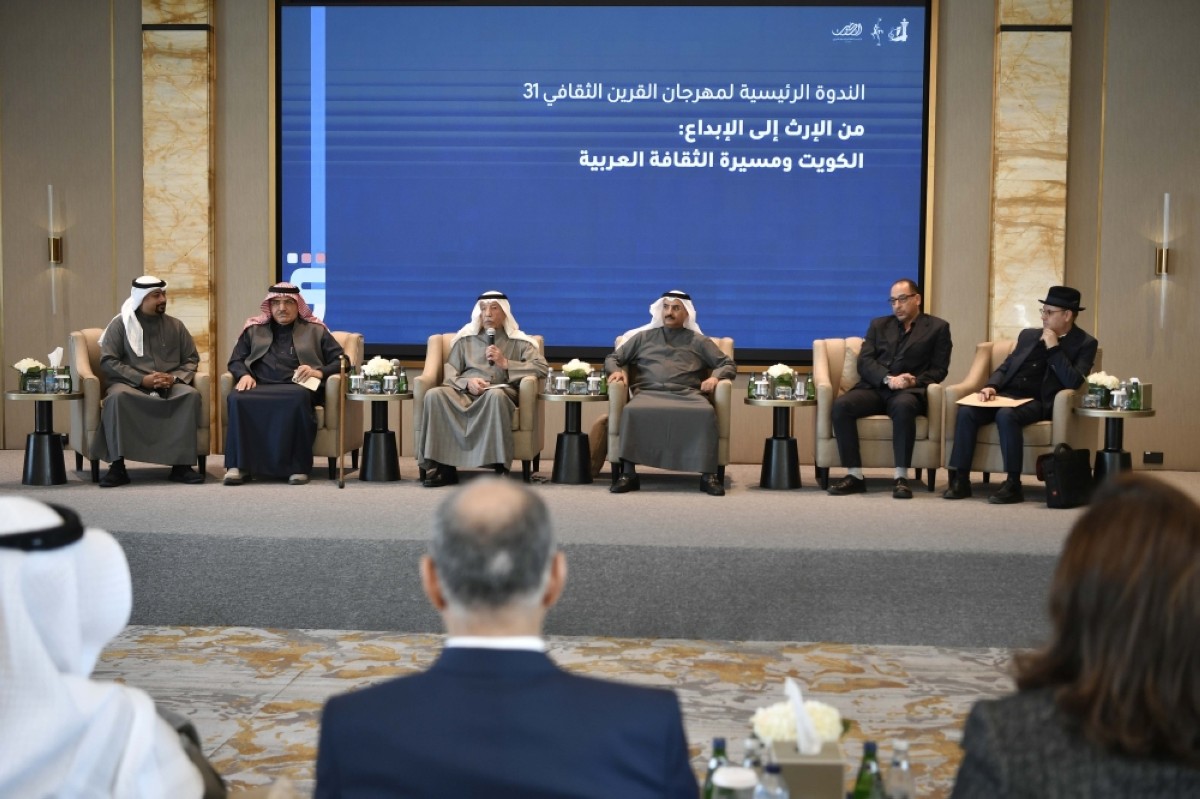

The Kuwait cultural symposium opened on Sunday as the central event of the 31st Al-Qurain Cultural Festival, gathering a distinguished group of academics and cultural specialists to examine “From Heritage to Creativity: Kuwait and the Journey of Arab Culture.” The three-day symposium places Kuwait’s cultural experience at the forefront, highlighting its historic role in Arab thought, publications and artistic innovation. Attendees explored how tradition and renewal have shaped national identity and regional cultural exchange.
Kuwait cultural symposium: Opening address and central themes
Dr Mohammad Al-Jassar, Secretary-General of the National Council for Culture, Arts and Letters (NCCAL), delivered the opening address on behalf of the Acting Minister of Information and Culture. He framed the festival as a long-standing cultural landmark and a platform for intellectual dialogue, knowledge exchange and debate on identity and creativity.
Al-Jassar emphasized Kuwait’s balanced approach — pride in heritage combined with openness to innovation. He noted that this philosophy has positioned culture as an integral pillar of Kuwait’s national project and comprehensive development. Additionally, he attributed Kuwait’s cultural dynamism to visionary leadership that consistently places culture at the heart of development policies.
Vision, institutional support and regional recognition
Kuwait’s cultural strategy, Al-Jassar argued, is more than rhetoric: it is institutionalized through funding, programs and partnerships. The state’s sustained support for cultural institutions, intellectuals and creative talents reinforces Kuwait’s image as a nation rooted in values yet outward-facing. Meanwhile, this approach has helped convert cultural influence into soft power across the Arab world.
He also highlighted Kuwait’s designation as Capital of Arab Culture and Media 2025 as a culmination of decades of organized cultural work. This honor, he said, reflects both institutional commitment and the country’s standing in Arab cultural consciousness. The NCCAL reaffirmed its commitment to foster serious cultural work and strengthen Arab cultural cooperation, underscoring culture’s role as a bridge for dialogue.
Leadership and cultural policy
The symposium traced how government policy and civil society initiatives converged to create a robust cultural ecosystem. From national museums and festivals to university programs, Kuwait’s ecosystem has supported research, publishing and the performing arts. This multi-faceted support helped cultivate a generation of thinkers, writers and artists who contributed to regional debates.
Highlights from the first session: Kuwait’s contribution to Arab culture
The opening session, moderated by Dr Ahmed Al-Faraj, focused on tangible contributions: publications, theatre, institutional planning and media. Festival honoree Dr Suleiman Al-Askari reflected on his tenure as editor-in-chief of Al-Arabi magazine, recalling how the periodical — launched in 1958 — became a milestone for Arab cultural communication despite trials such as the Iraqi invasion. His remarks underscored how resilient cultural institutions can anchor intellectual exchange.
Dr Saud Al-Harbi highlighted Kuwait’s role in the Comprehensive Plan for Arab Culture, pointing to the country’s early belief in culture as a driver of development and human capacity. Saudi writer Mohammed Nasrallah praised Kuwait’s pioneering theatrical efforts, which he described as foundational to Arab soft power. Algerian philosopher Dr Zouaoui Baghoura and Egyptian novelist Yasser Abdel-Hafez added that Kuwait’s modern cultural footprint is well documented through institutions like the Kuwait Foundation for the Advancement of Sciences and Kuwait University.
Publications, theatre and enduring networks
Speakers agreed that publications and theatrical experimentation helped broadcast Kuwaiti perspectives across the Arab world. However, they also noted that institutional continuity and regional cooperation were essential to sustain influence during times of upheaval. The symposium showcased archival photos and a photo exhibition on the sidelines, visually linking past initiatives to contemporary creativity.
Implications for Arab cultural exchange and future directions
The discussions made clear that Kuwait’s model — combining cultural pride with reformist openness — offers lessons for the region. By supporting free thought and responsible discourse, Kuwait has served as a knowledge hub and a bridge for Arab cultural exchange. Additionally, the NCCAL’s focus on institutional capacity-building suggests a roadmap for other states seeking to prioritize culture within development strategies.
For cultural policymakers and creatives alike, the symposium emphasized collaboration, resilient institutions and the need to adapt heritage for contemporary audiences. Meanwhile, the momentum behind the 31st Al-Qurain Cultural Festival points toward increased regional programming and partnerships in the run-up to 2025.
Conclusion
The Kuwait cultural symposium affirmed Kuwait’s long-standing role in shaping modern Arab culture, from influential magazines and theatre to organized cultural planning. As the festival continues over three days, it offers renewed opportunities for dialogue, research and partnership. Readers and cultural professionals are encouraged to follow the symposium’s outputs, engage with participating institutions like the NCCAL, and explore how heritage can be transformed into sustainable creativity across the Arab world.