





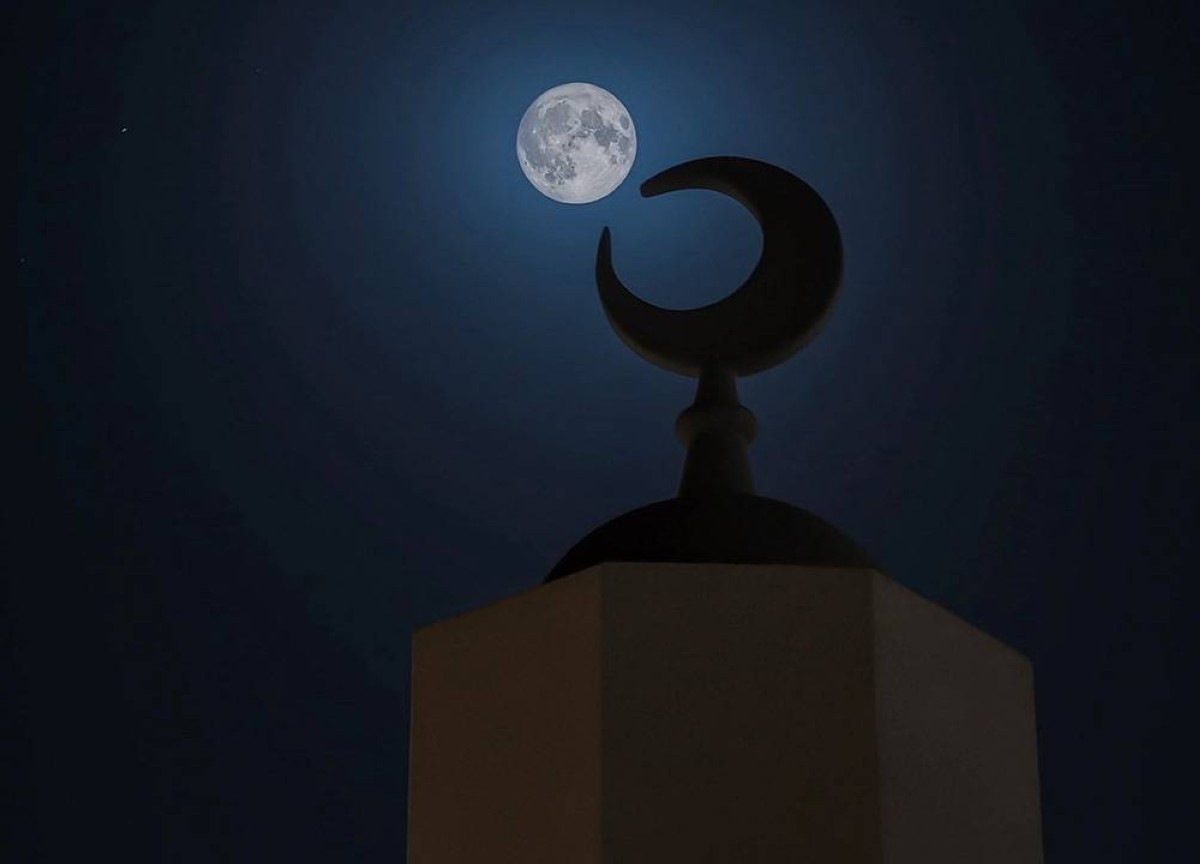

Kuwait witnessed a captivating celestial moment when the full moon aligned directly above the crescent of a local mosque minaret, a scene widely shared after being captured by KUNA photographers. The striking image, taken on the eve of a rare Blue Moon, brought together elements of architecture, faith, and astronomy. This natural artwork attracted attention across social media and among stargazers in the region.
## Blue Moon in Kuwait: a rare celestial spectacle
The Blue Moon in Kuwait drew both casual observers and astronomy enthusiasts outdoors on Saturday evening. As the moon rose, it appeared to perch perfectly above the mosque’s crescent-topped minaret, creating a visually balanced composition that emphasized the relationship between built and natural forms.
Photographs from KUNA photographers quickly circulated, and the synchronized display was described as a moment of peaceful harmony. Additionally, the timing — just before the month’s second full moon — made the event especially noteworthy for residents following lunar phases.
### Photographs and public reaction
KUNA photographers documented the alignment with clarity, highlighting the moon’s luminous disc against the mosque silhouette. Meanwhile, locals and tourists shared the images online, praising the coincidence of the architectural crescent and the lunar orb.
However, reactions varied: some viewers focused on the aesthetic beauty, while others reflected on the deeper cultural and spiritual resonance. In either case, the images stimulated conversation about astronomy and heritage in everyday life.
## Understanding the Blue Moon and the full moon cycle
A Blue Moon occurs when a second full moon falls within the same calendar month, and this lunar rarity happens roughly every two and a half years. The phenomenon is driven by the difference between the moon’s orbital period — about 29.5 days — and the structure of the Gregorian calendar.
When cities like Kuwait experience a Blue Moon, the term does not imply any change in the moon’s color. Instead, it signals an uncommon scheduling quirk. Additionally, atmospheric conditions can sometimes tint the moon during specific events, but the Blue Moon label remains strictly calendrical.
### Why the timing matters
Because most months are longer than the lunar cycle, occasional overlaps allow two full moons to occur in one month. Meanwhile, seasonal and cultural calendars that depend on lunar phases may observe and note these occurrences differently, emphasizing the diversity of human engagement with celestial cycles.
## Why the alignment looked so striking over a mosque minaret
The mosque minaret, with its signature crescent finial, served as a perfect foreground for the full moon’s ascent. Architecturally, Islamic motifs often use the crescent symbol, so the optical alignment created a poignant visual link between tradition and nature.
Moreover, the contrast of the illuminated lunar disc against the mosque’s silhouette enhanced the perception of symmetry. Observers noted how the design of the minaret guided the eye upward, making the moon appear as a deliberate element in the composition rather than a passing coincidence.
## Cultural and social significance of the moment
Such celestial alignments can carry layered meanings. For many observers in Kuwait, the image evoked reflections on the passage of time, religious calendars, and the shared human habit of finding meaning in the sky. Photographs by KUNA photographers helped extend the moment beyond a local occurrence to a wider audience.
Additionally, the event provided an opportunity for educational outreach. Astronomy clubs, schools, and local media used the Blue Moon in Kuwait as a teaching moment to explain lunar phases and promote public interest in stargazing.
Conclusion
The Blue Moon in Kuwait offered a memorable fusion of natural spectacle and cultural symbolism, captured and circulated by KUNA photographers for a broad audience. Whether appreciated for its aesthetic harmony, its astronomical curiosity, or its cultural resonance, the alignment above the mosque minaret illustrates how ordinary nights can become extraordinary. For readers intrigued by lunar events, follow local observatories and news outlets for future skywatching opportunities, and consider sharing images or reflections from any celestial moments you witness.