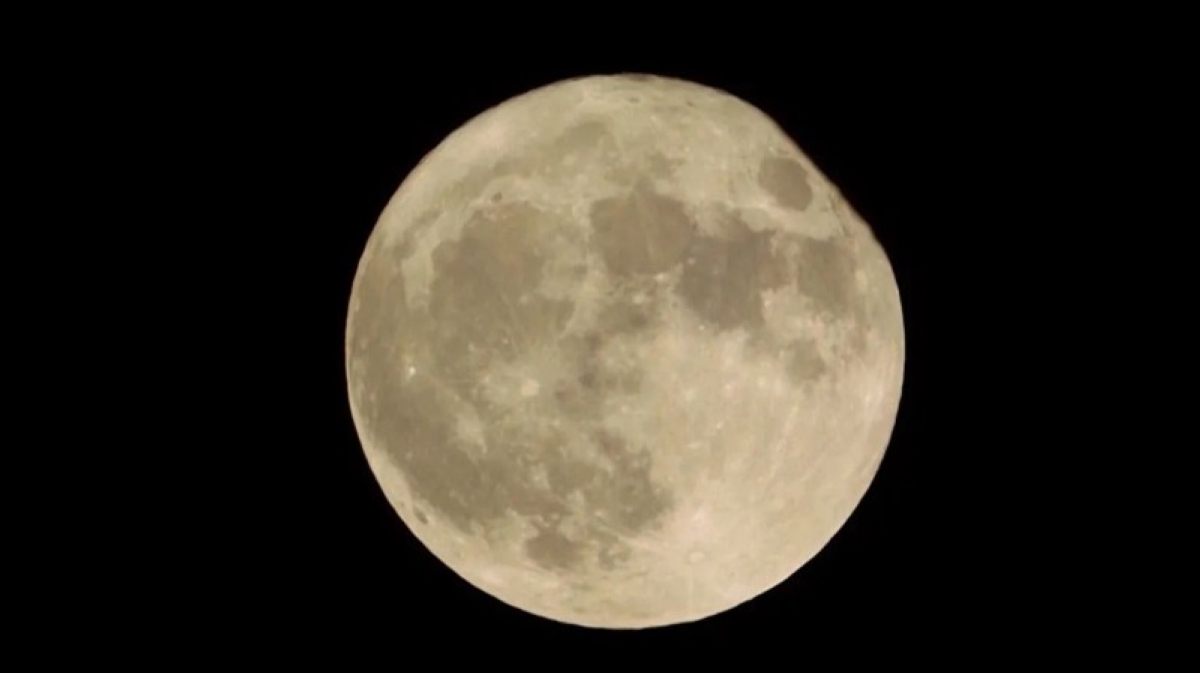

LONDON — New research suggests the ancient planet, Theia, believed to have collided with early Earth and formed the Moon, likely originated much closer to the Sun than previously estimated. An international team of astronomers has analyzed isotopes in lunar and terrestrial rocks to pinpoint Theia’s birthplace within our solar system. The findings, published recently, offer a refined understanding of the events that led to the formation of Earth’s natural satellite approximately 4.5 billion years ago.
The study, conducted by scientists in France, Germany, and the United States, focuses on the chemical composition of materials from the early solar system. According to Euronews, the research was able to “almost exactly pinpoint where this object came from.” This discovery contributes to the long-standing “giant impact theory” explaining the Moon’s origin.
Unraveling the Mystery of the Moon’s Formation
For decades, the prevailing theory has been that a Mars-sized object, Theia, collided with the proto-Earth. This catastrophic event ejected vast amounts of debris into space, which subsequently coalesced to form the Moon. However, the lack of direct evidence from Theia itself—which was largely vaporized in the impact—has left key questions unanswered about its composition and origin.
The core challenge lies in the similarity between Earth and Moon rocks. Scientists have long observed that the isotopic ratios of metals in both bodies are remarkably alike, making it difficult to distinguish between material originating from Earth and that contributed by the impactor, Theia. This new research attempts to overcome that difficulty through detailed isotopic analysis.
Isotopic Fingerprints and Planetary Origins
The team analyzed isotopes of iron, chromium, zirconium, and molybdenum present in samples of ancient Earth and lunar rocks. Isotopes are variations of an element with different numbers of neutrons, and their distribution can serve as a unique “fingerprint” of a material’s origin. Differences in isotope patterns arise due to varying temperatures and conditions prevalent in different regions of the early solar system.
By modeling hundreds of possible scenarios for the early Earth and Theia, researchers sought combinations that could accurately reproduce the observed isotope signatures. Their analysis indicates that Theia was not a randomly formed body. Instead, the study suggests it formed in the inner Solar System, closer to the Sun than the early Earth. This contrasts with some earlier hypotheses that posited a more distant origin for the impactor, potentially within the asteroid belt. This also provides new insight into planet formation.
The findings have implications for understanding the early stages of solar system evolution and the processes of planetary accretion. It supports the idea that the inner solar system was more dynamically active than previously appreciated, with significant mixing of materials. Studying the history of the Moon also allows scientists to infer conditions on early Earth, which was drastically different from the planet we know today.
The research also indirectly refines understanding of planetary differentiation – the process by which a planet’s interior separates into layers of different composition. The origin and composition of Theia strongly influence the degree of mixing between the proto-Earth and the impactor’s material, affecting the formation of Earth’s core and mantle.
Future research will likely focus on analyzing additional lunar samples, including those collected from more diverse regions of the Moon. Further refinement of the models used in this study, incorporating new data and improved understanding of early solar system dynamics, is also expected. While this study provides a strong indication of Theia’s origin, uncertainties remain regarding the precise details of the collision and the subsequent evolution of the Earth-Moon system.
Scientists will continue to search for subtle isotopic variations that might reveal more about Theia’s unique characteristics and its role in shaping our planet. The ultimate goal is to build a complete, detailed picture of the events that led to the formation of the Earth and its Moon, offering vital clues about the origins of habitable worlds throughout the universe.