






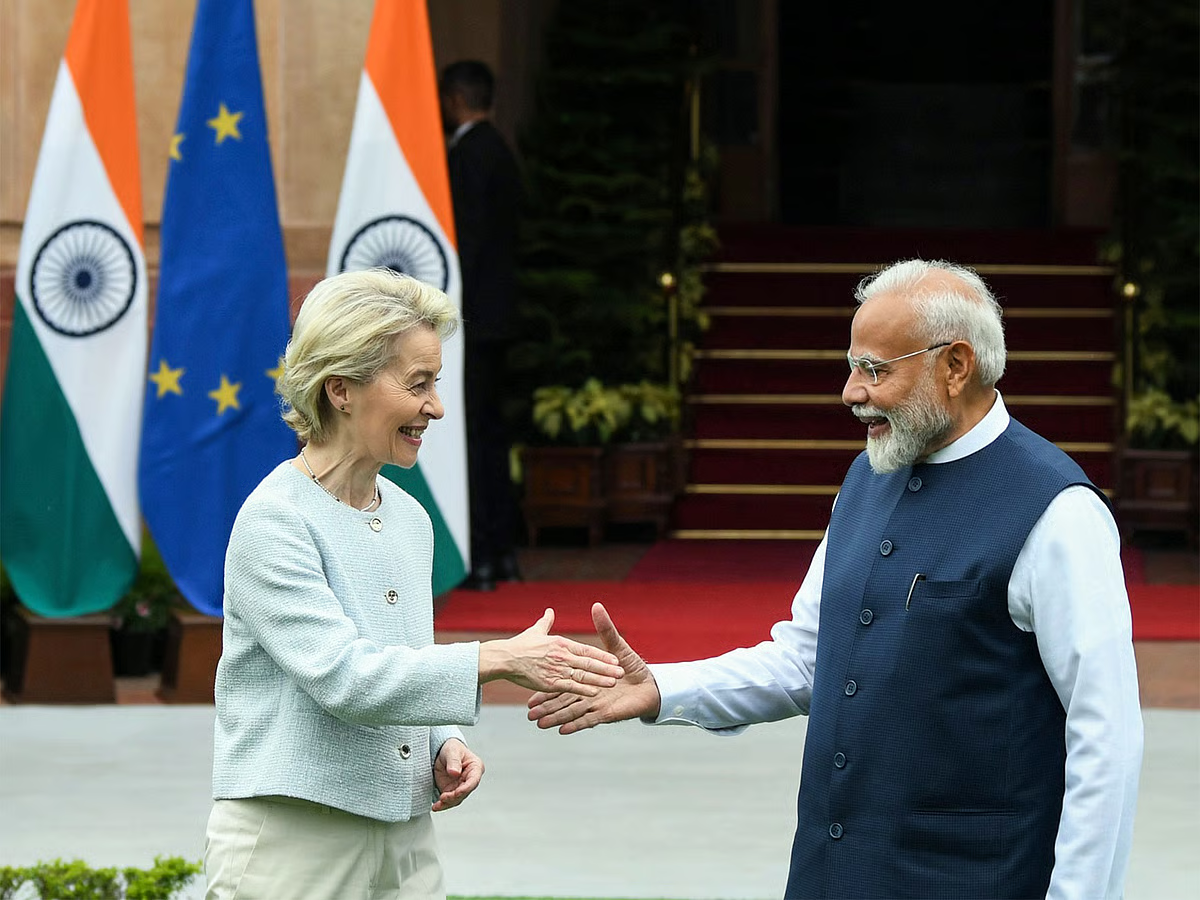

India and the European Union are actively pursuing a comprehensive trade agreement, ambitiously dubbed the “mother of all deals” by some observers, with negotiations gaining momentum in recent months. The potential India EU trade deal aims to significantly deepen economic cooperation between the two major global players, covering areas beyond just tariffs. Discussions are currently focused on bridging remaining gaps in key sectors like agriculture and data localization, with both sides expressing a desire for a mutually beneficial outcome.
Negotiations are taking place in Brussels and New Delhi, involving multiple rounds of talks at the chief negotiator level. While a firm deadline hasn’t been set, officials from both sides have indicated a strong push to finalize the agreement before the European Parliament elections in June 2024. The deal, if successful, would represent a major shift in global trade dynamics, impacting economies across Asia and Europe.
The Scope of the India EU Trade Deal
The proposed India EU trade deal is far-reaching, encompassing not only the reduction or elimination of tariffs on goods but also agreements on geographical indications, sanitary and phytosanitary measures, technical barriers to trade, and investment protection. A key objective is to streamline trade procedures and reduce non-tariff barriers, which currently hinder the flow of goods between the two regions. The agreement also seeks to establish a framework for cooperation on sustainable development and climate change.
Key Areas of Negotiation
Several areas are proving particularly challenging in the negotiations. Agriculture remains a sensitive topic, with the EU seeking greater access to the Indian market for its agricultural products, while India is keen to protect its farmers and ensure food security. According to sources familiar with the talks, discussions are ongoing regarding tariff rate quotas and the simplification of import procedures for agricultural goods.
Data localization requirements in India are another sticking point. The EU is advocating for the free flow of data, arguing that restrictions impede digital trade and innovation. India, however, maintains that data localization is necessary to protect the privacy of its citizens and ensure national security. Finding a compromise that addresses both concerns is crucial for the deal’s success.
Investment protection standards are also under scrutiny. The EU is pushing for stronger investor-state dispute settlement (ISDS) mechanisms, while India is seeking a more balanced approach that allows it to regulate investments in the public interest. The Ministry of Commerce and Industry has stated its commitment to a fair and equitable investment regime.
Beyond these core issues, intellectual property rights, government procurement, and competition policy are also being discussed. The aim is to create a level playing field for businesses in both regions and to foster innovation and economic growth. Progress in these areas is considered essential for a comprehensive and modern trade agreement.
Why Now? The Drivers Behind the Deal
Several factors are driving the renewed impetus for a trade agreement between India and the EU. Geopolitical shifts, including the ongoing war in Ukraine, have highlighted the importance of diversifying supply chains and strengthening economic partnerships. Both India and the EU are seeking to reduce their dependence on single markets and to build more resilient economies.
Additionally, the economic potential of a closer relationship is significant. The EU is one of India’s largest trading partners, accounting for around 11% of India’s total trade in goods in 2023, according to Eurostat data. India, with its rapidly growing economy and large consumer market, represents a valuable opportunity for European businesses.
Meanwhile, the EU is actively pursuing trade agreements with other major economies, including Australia and New Zealand. This has created a sense of urgency for India to secure a similar agreement and to avoid being left behind. The Indian government views a strong economic partnership with the EU as crucial for achieving its ambitious growth targets.
Implications for Businesses and Consumers
A successful India-EU economic partnership would have far-reaching implications for businesses and consumers on both sides. Reduced tariffs would lower the cost of goods, making them more affordable for consumers and boosting trade volumes. Businesses would benefit from increased market access and reduced regulatory burdens.
The agreement is expected to particularly benefit sectors such as machinery, chemicals, pharmaceuticals, and automobiles. Indian companies could gain access to the advanced technologies and expertise of European firms, while European companies could tap into the growing Indian market. The deal could also lead to increased foreign investment in both regions.
In contrast, some sectors may face increased competition. For example, European farmers could face greater competition from Indian agricultural products. However, proponents of the deal argue that the overall benefits outweigh the costs and that adjustments can be made to mitigate any negative impacts. The potential for increased foreign direct investment is a key consideration.
The agreement’s provisions on intellectual property rights are also expected to have a significant impact. Stronger protection of intellectual property would encourage innovation and investment in research and development. However, concerns have been raised about the potential impact on access to affordable medicines in India.
Challenges and Potential Roadblocks
Despite the progress made in recent months, several challenges remain that could derail the trade negotiations. The divergent views on agriculture and data localization are particularly difficult to reconcile. Political considerations on both sides could also complicate the process.
Furthermore, the upcoming European Parliament elections could introduce uncertainty. A change in the composition of the Parliament could lead to a shift in priorities and a less favorable stance towards the deal. The Indian government will need to navigate these political dynamics carefully.
The report indicates that maintaining momentum and addressing the remaining issues in a timely manner will be crucial for securing an agreement before the elections. Failure to do so could result in the negotiations being put on hold or even abandoned.
Looking ahead, the next few months will be critical for the India EU trade deal. Officials are expected to continue intensive negotiations in the coming weeks, with a focus on resolving the outstanding issues. The final outcome remains uncertain, but both sides have expressed a strong commitment to reaching a mutually beneficial agreement. The key to success will be finding compromises that address the concerns of all stakeholders and create a sustainable framework for economic cooperation.